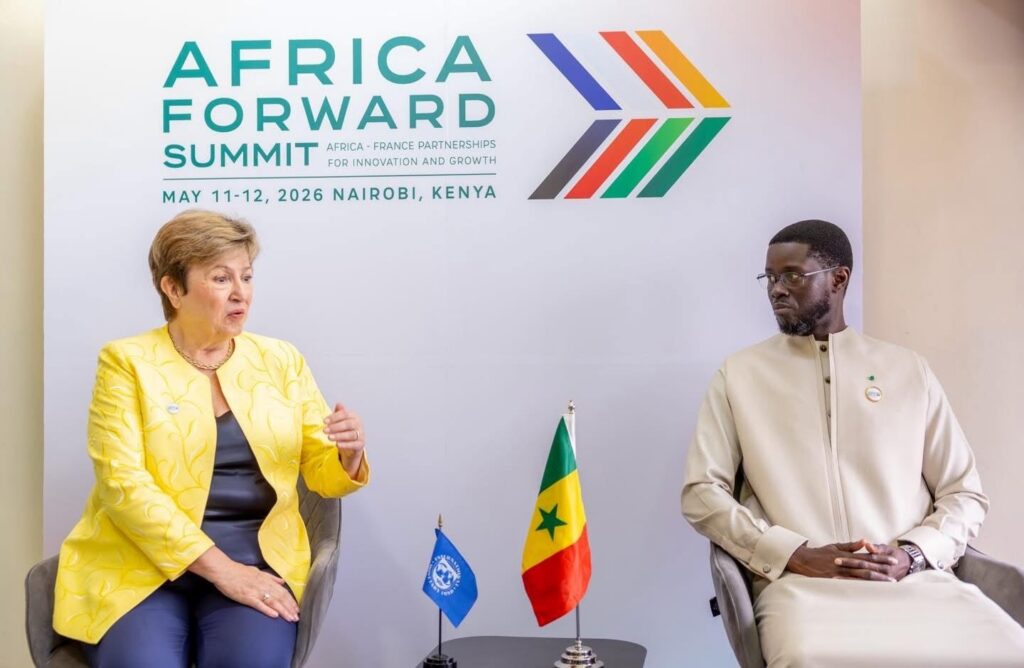
Senegal’s debt and reforms discussed by Kristalina Georgieva and President Diomaye
The International Monetary Fund’s Managing Director, Kristalina Georgieva, met with Senegal’s President Bassirou Diomaye Faye to address critical economic challenges, including debt management and structural reforms. While the dialogue was constructive, progress on Senegal’s financial program remains pending amid a volatile global economic climate.
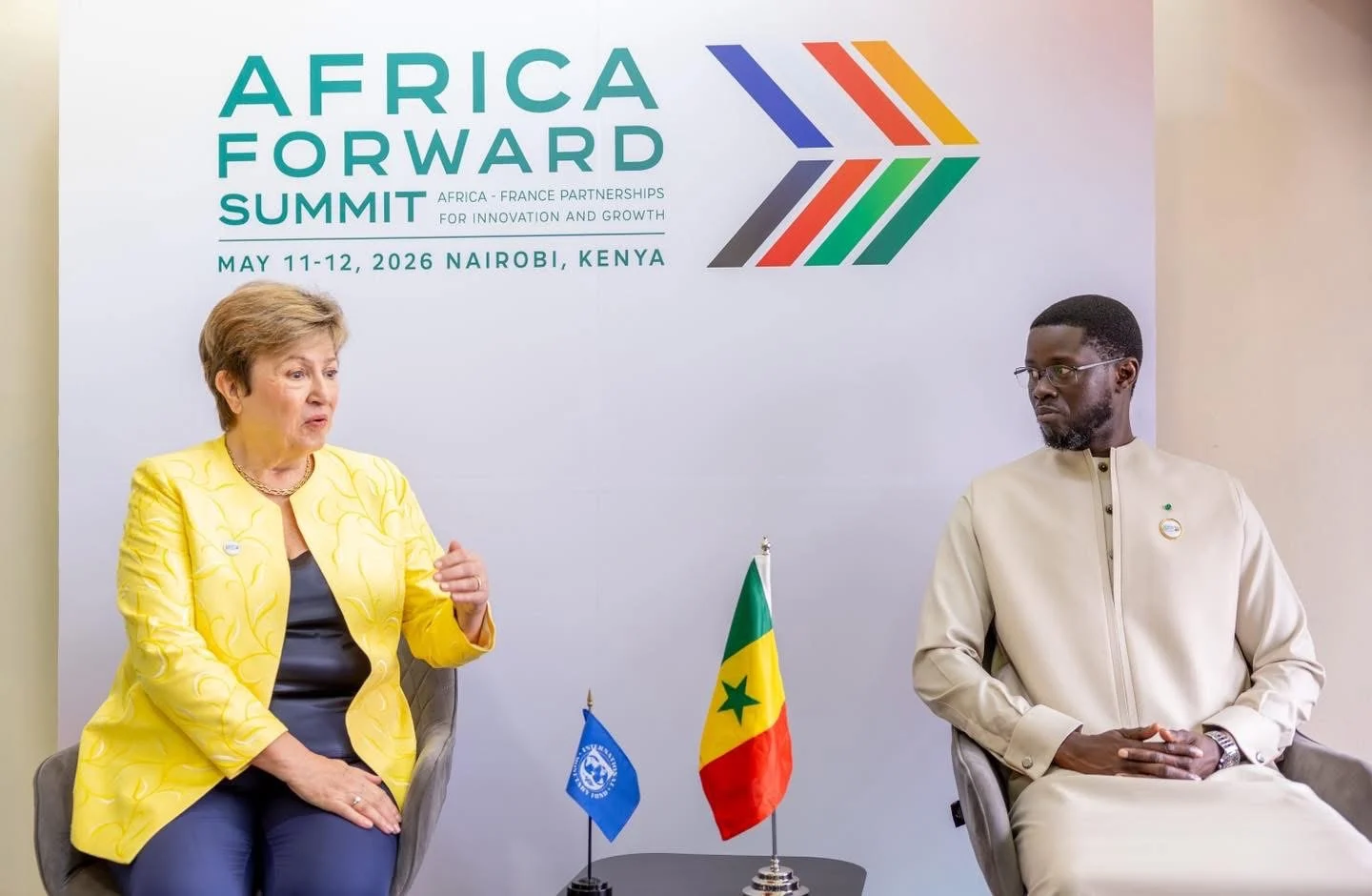
Senegal’s President Bassirou Diomaye Faye engaged in talks with Kristalina Georgieva during the Africa Forward summit in Nairobi. The discussions centered on pressing economic priorities, debt sustainability, and the need for transparent governance.
Following the meeting, Georgieva highlighted the key topics covered, stating, « We exchanged views on reform priorities, debt management, and Senegal’s commitment to transparency. » Her remarks, shared on platform X, underscored the importance of these discussions in shaping the country’s economic trajectory.
FMI’s commitment to Senegal’s economic stability
Georgieva reiterated the IMF’s dedication to supporting Senegal’s economic agenda. However, no concrete announcements were made regarding the long-awaited financial program, which Dakar has been pursuing for nearly two years.
Earlier this year, Abebe Aemro Selassie, Director of the IMF’s African Department, shed light on the delays in negotiations. He pointed to the turbulent global financial markets as a major factor complicating assessments of Senegal’s debt sustainability.
« The current market volatility demands meticulous analysis of economic outlooks and financing conditions, » Selassie explained. « For nations with limited market access, this process requires thorough scrutiny to avoid irreversible commitments that could exacerbate economic strain. »
Building a credible economic strategy
Selassie emphasized the IMF’s approach of granting Senegal time to develop a robust, credible economic strategy—one that balances fiscal responsibility with social equity. « We aim to ensure the government crafts a plan that is financially viable and avoids excessive austerity measures, » he noted. « This requires careful deliberation, and the initiative lies with the Senegalese authorities. »
The IMF official also acknowledged the heavy debt burden inherited by Senegal’s new leadership, stressing the urgency of identifying viable solutions to navigate these economic headwinds.
