
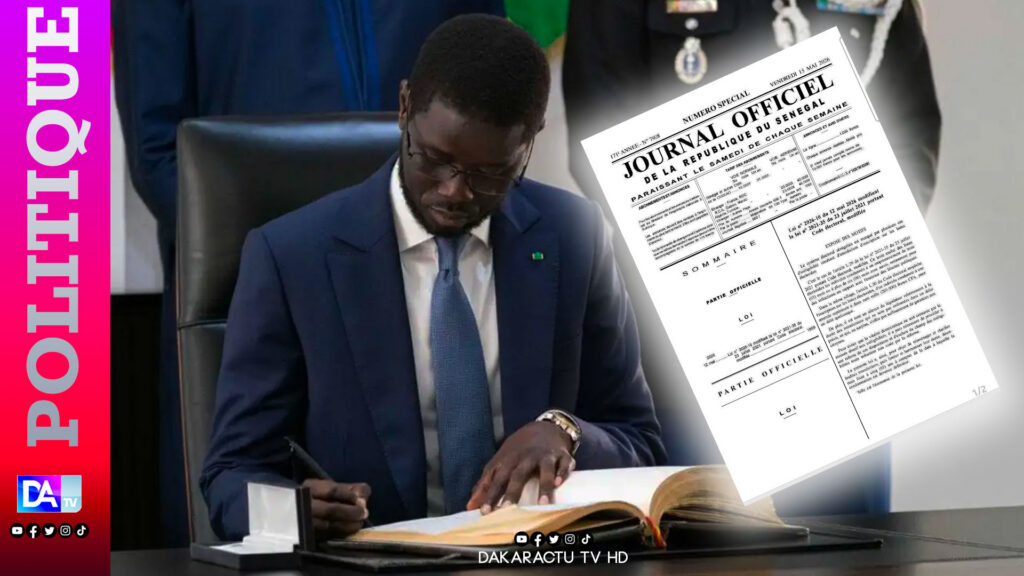
President Bassirou Diomaye Faye has signed into law a sweeping reform of Senegal’s electoral code, reshaping the framework for voter ineligibility. The new legislation, promulgated on May 12, 2026, follows its swift adoption by the National Assembly five days prior with a three-fifths majority. Published in a special edition of the Official Gazette on May 15, 2026, the law carries the signature of Prime Minister Ousmane Sonko and addresses longstanding criticisms of vague and overly restrictive exclusion criteria.
Key changes in voter eligibility rules
The overhaul centers on a complete rewrite of Article L.29, which now defines four distinct categories of individuals barred from voter registration:
- Individuals convicted of felonies
- Those found guilty of serious financial crimes, including theft, fraud, breach of trust, embezzlement, corruption, money laundering, and influence peddling
- Persons subject to a court-ordered revocation of voting rights
- Legally incapacitated adults
The reform introduces a fixed five-year prohibition period starting from the date a conviction becomes final—a departure from the previous system’s ambiguity regarding the duration of civic rights restrictions. Additionally, Article L.30, which previously excluded voters convicted of any offense punishable by fines exceeding 200,000 CFA francs, has been fully repealed.
Rationale behind the reform
Lawmakers justified the changes by highlighting flaws in the prior system. Previously, automatic exclusion applied after just three months of imprisonment—even with suspended sentences—or for minor offenses punishable by fines. This lack of clarity and proportionality was criticized for enabling excessive restrictions on citizens’ rights and undermining democratic resilience.
The updated law aims to align voter ineligibility strictly with grave offenses while ensuring transparency and predictability. By establishing clear, uniform penalties, the reform seeks to restore balance and prevent arbitrary disenfranchisement.
Political implications loom
The reform’s adoption with a qualified majority underscores broad parliamentary consensus, arriving amid heightened political sensitivities ahead of upcoming elections. The revised criteria may significantly alter the electoral standing of several figures convicted in recent years, potentially restoring civic rights to opposition leaders or other political actors.




More Stories
Niger: Tiani faces fallout from special forces anger after Russian intervention
Mali : 17 morts dans les rangs des dozos, le JNIM accentue sa pression
Sahel : le pari des juntes tourne-t-il à l’échec sécuritaire ?