International
Senegal’s president sacks prime minister Ousmane Sonko amid growing tensions
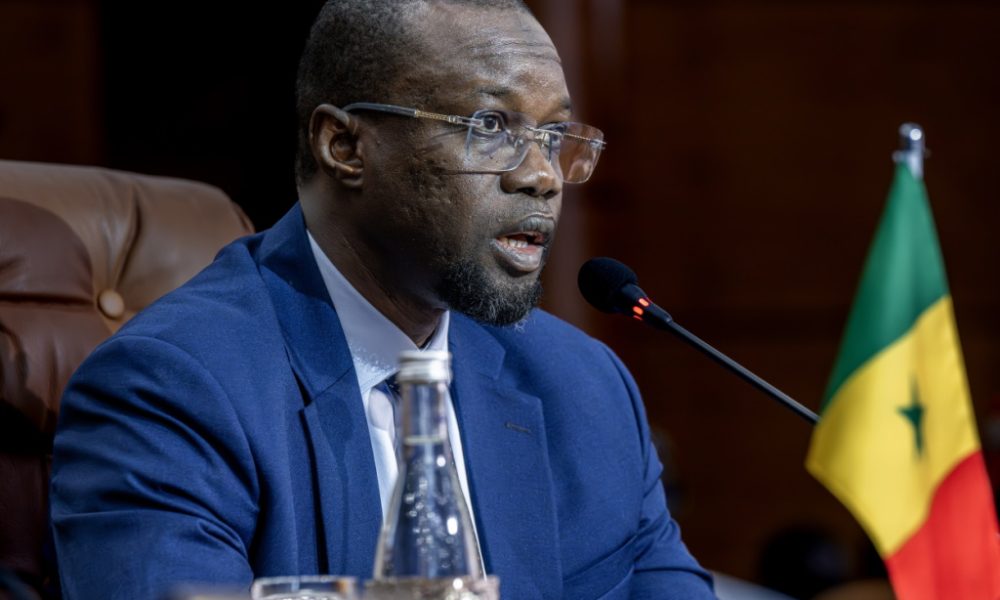
 Senegal’s prime minister Ousmane Sonko has been dismissed by President Bassirou Diomaye Faye. (© KEYSTONE/EPA/JALAL MORCHIDI)
Dakar, May 23, 2026 — President Bassirou Diomaye Faye of Senegal has abruptly terminated the mandate of Prime Minister Ousmane Sonko, a move announced Friday evening through a televised address delivered by the Secretary-General of the Presidency, Oumar Samba Ba.
In his statement, President Faye declared he had “ended the duties of Mr. Ousmane Sonko as Prime Minister, and consequently those of the ministers and state secretaries serving in the government.” The outgoing officials have been instructed to handle only routine administrative tasks until further notice.
The president did not specify when a new prime minister would be appointed, leaving the political landscape in uncertainty.
Escalating tensions between president and prime minister
The decision follows months of deepening rifts between the two leaders, who rose to power together in April 2024, fueled by a wave of popular hope. Sonko, a charismatic opposition figure, had been a key force behind their electoral victory, despite being barred from running due to a 2023 defamation conviction that stripped him of civil rights. He had endorsed Faye as his substitute in the presidential race.
Sonko’s panafricanist rhetoric resonated strongly with Senegal’s disillusioned youth, especially in the lead-up to the election. His persistent clashes with then-President Macky Sall and the violent suppression of pro-Sonko protests had further galvanized his support.
The duo campaigned under the slogan “Diomaye Moy Sonko” — “Diomaye is Sonko” in Wolof — symbolizing their unity. Both were released from prison in early 2024 as part of an amnesty law aimed at easing political tensions.
However, their alliance has visibly frayed. In early May, President Faye publicly criticized Sonko’s “excessive personalization” of the ruling party, warning: “As long as he remains Prime Minister, it is because I trust him. When that is no longer the case, a new Prime Minister will be appointed.”
A polarizing political figure
Sonko’s dismissal triggered immediate reactions. In a social media post, he declared, “Alhamdoulillah. Tonight, I will sleep peacefully in Keur Gorgui,” referring to his home neighborhood in Dakar. Hundreds of his supporters quickly gathered outside his residence, cheering his ouster.
Earlier in the week, Sonko had sharply criticized Western influence, accusing it of attempting to “impose homosexuality on the rest of the world,” just weeks after Senegal passed a law increasing penalties for same-sex relations — a move widely seen as targeting LGBTQ+ individuals in the predominantly Muslim nation.
Sonko’s party, the Pastef, maintains a dominant position in Senegal’s National Assembly following a landslide victory in the November 2024 legislative elections. Earlier this year, parliament approved electoral reforms allowing Sonko to potentially run in the 2029 presidential election, a move critics argue was designed to benefit him.
The debate over Sonko’s eligibility was reignited in July 2025 when the Supreme Court upheld his conviction, though he was elected as a deputy in November 2024 before ceding the seat to remain Prime Minister — a move his party claims preserves his eligibility.
Meanwhile, President Faye’s popularity has not matched Sonko’s, though the “Diomaye President” movement continues to grow. The new government faces daunting economic challenges, including a public debt exceeding 132% of GDP, according to the International Monetary Fund — one of the highest rates in sub-Saharan Africa. Critics allege the previous administration under former President Macky Sall had concealed the true scale of the fiscal crisis, leading to the suspension of a $1.8 billion IMF support program in 2024.