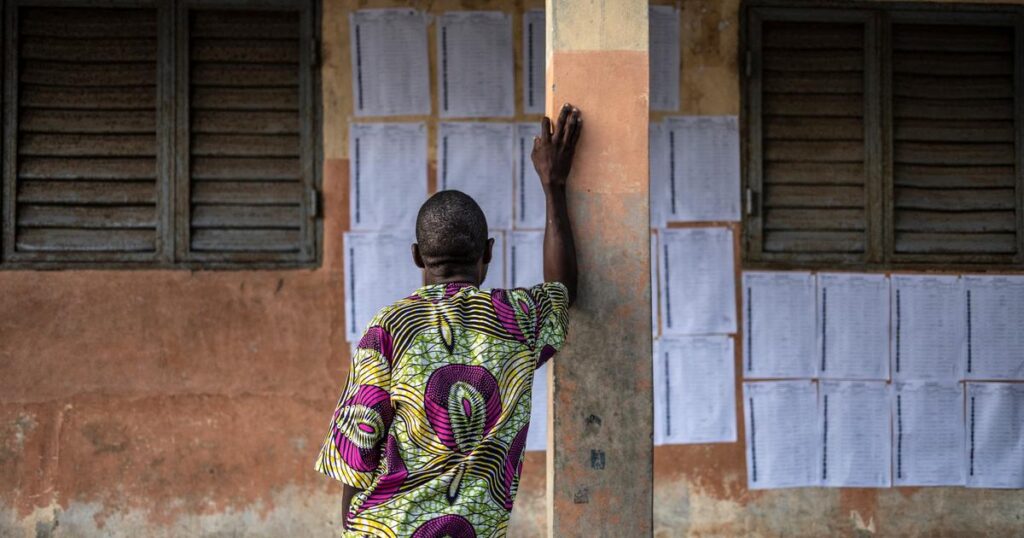
“Preordained outcomes,” “lack of suspense,” “incumbent victories in the first round.” The 2025 African presidential elections followed a troubling pattern: opposition candidates were systematically barred long before campaigning even began. The latest cases came in Djibouti on April 10 and Bénin on April 12, where incumbents claimed 97.8% and 94% of the vote, respectively—landslide victories in elections devoid of real competition.
In Djibouti, opposition leader Alexis Mohamed withdrew his candidacy just days before the vote, citing both safety concerns and an insurmountable financial hurdle: “the exorbitant nomination fees.” The move left the field wide open for incumbent Ismaïl Omar Guelleh, who secured his sixth term. Observers called the process a “purely ceremonial exercise,” with the deck stacked from the start.
ballot box or bank account?
Across Africa, rising campaign costs have become a silent but devastating weapon against political rivals. Candidates are routinely priced out of the race before a single vote is cast, transforming elections into contests where wealth—not policy—determines access. The trend isn’t limited to Djibouti; it’s reshaping electoral landscapes from North to Sub-Saharan Africa, where aspiring leaders face financial barriers that dwarf their campaign resources.
In Bénin, the opposition’s hopes were similarly quashed by a funding gap. Romuald Wadagni, long anointed successor to President Patrice Talon, claimed victory with 94% of ballots, as rivals struggled to meet the steep registration costs. The outcome underscored a harsh reality: in today’s African politics, the loudest voice isn’t always the most popular—it’s often the one backed by the deepest pockets.
the cost of democracy
The phenomenon isn’t new, but its scale is growing. Nomination fees that once served as a nominal gatekeepers have swollen into outright exclusionary tools. In some nations, fees now exceed the annual salary of a mid-level civil servant, making candidacy a privilege reserved for the elite. The result? Political monopolies where opposition voices are muted before the first campaign poster is printed.
Critics argue these financial barriers violate the spirit—if not the letter—of electoral integrity. With candidates forced to mortgage homes or liquidate assets just to run, the system increasingly favors dynasties and deep-pocketed insiders. Meanwhile, voters are left with a ballot that offers no real choice, turning elections into perfunctory rituals rather than contests of ideas.
As the 2020s progress, the question lingers: can Africa’s democracies survive when the cost of entry is higher than the price of participation?