Unfulfilled promises and the tragic fate of Togo’s children
The annual Day of the African Child, observed on June 16, serves as a poignant reminder of both progress and persistent challenges in safeguarding children’s rights across the continent. This year’s theme—universal access to water, sanitation, and hygiene—highlights systemic gaps that continue to undermine the well-being of young citizens. In Togo, however, the observance has become little more than a symbolic ritual, with government officials delivering hollow speeches while the reality for many children remains one of violence and neglect.
The erosion of child protection under Lomé’s regime
Established in honor of the 1976 Soweto youth uprisings, which demanded equitable education and resistance against linguistic oppression, the Day of the African Child was meant to champion the rights of young people. Yet in Togo, the state’s approach to dissent has too often been met with lethal force, reducing the protection of children to a mere political bargaining chip. The tragic irony is that while international bodies reiterate commitments to child welfare, Lomé’s leadership has repeatedly prioritized regime survival over the lives of its youngest citizens.
Inadequate healthcare infrastructure further compounds the crisis. Hospitals in Togo frequently operate beyond capacity, forcing mothers to give birth on bare floors due to shortages of beds and medical supplies. The situation resembles a precarious holding area where life hangs in a delicate balance, a stark contrast to the government’s public proclamations of progress.
Jacques Koutoglo: a life lost, a family denied justice
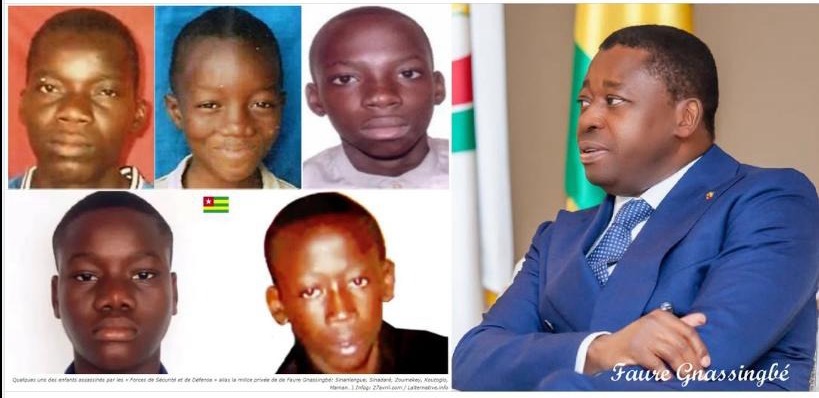
For the family of Jacques Koutoglo, justice has remained elusive for nearly a year. The 15-year-old was brutally beaten before being thrown into the Bè lagoon in Lomé during the initial protests of June 2025. Contrary to initial claims of accidental drowning amid unrest, the government later conceded to an official inquiry—only to abandon the process entirely. The former Minister of Human Rights, Pacôme Adjourouvi, who initially endorsed the drowning narrative, ultimately withdrew the statement and promised an investigation. Yet no findings have ever been disclosed, and the refusal to permit a memorial service for the deceased adolescent has deepened the family’s anguish.
Joseph Zoumekey and Rachad Maman: bullets that silenced innocence
The case of Joseph Zoumekey, a 13-year-old killed in 2017 while running an errand for his mother in the Bè-Kpota district, underscores the regime’s pattern of denial. An independent autopsy by Amnesty International confirmed he was shot, contradicting official assertions. Despite the NGO’s repeated calls for accountability, the government has remained silent. Similarly, in Bafilo, 14-year-old Rachad Maman was fatally struck by gunfire while marching alongside his father during pro-democracy demonstrations the same year. A global petition demanding justice garnered thousands of signatures, yet no action followed.
Anselme Sinandaré and Douti Sinalengue: a decade of unanswered cries
In the northern city of Dapaong, the memories of Anselme Sinandaré (12) and Douti Sinalengue (21) persist 12 years after their deaths. Both were shot during a peaceful student protest demanding teacher attendance in classrooms. Despite the passage of time, no official investigation has identified the shooters within the security forces, leaving their families in perpetual mourning.
From the northern savannas to the coastal cities, a disturbing pattern emerges: the lives of Togo’s children are treated as collateral in a broader struggle to maintain political control. Entire families are left shattered, their hopes for the future extinguished by a cycle of repression that has spanned generations under the Gnassingbé family’s rule.
Togo’s ratification of the African Charter on the Rights and Welfare of the Child in 1998 was a step toward aligning with continental human rights standards. However, the government’s failure to investigate these killings and hold perpetrators accountable sends a clear message: its adherence to international obligations is conditional, and the preservation of power supersedes the sanctity of childhood.