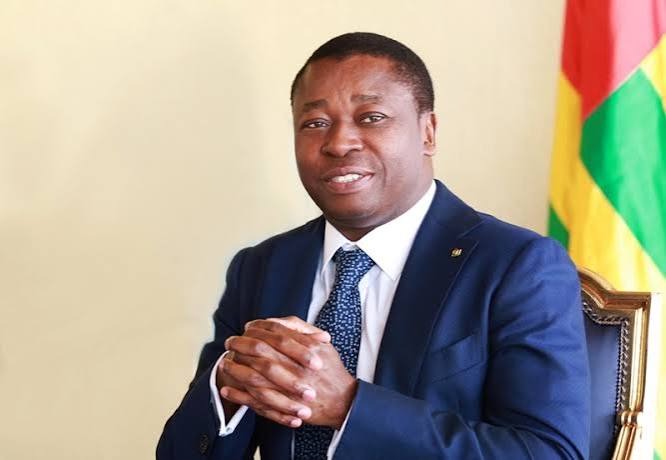
The political landscape in Lomé is reaching a boiling point as a historic ruling by the ECOWAS Court of Justice declares the 2024 Togolese constitutional revision an unconstitutional government change. This landmark decision has galvanized a coalition of 43 civil society organizations, both local and international, to demand immediate punitive measures against the Togolese authorities.
In early August 2026, these organizations—spanning human rights leagues, legal collectives, and pan-African civic movements—issued a joint statement directed at the Economic Community of West African States (ECOWAS) and the African Union (AU). Their core demand? The enforcement of sanctions against Lomé’s leadership for what they describe as a blatant constitutional coup disguised as institutional reform.
Judicial verdict and political uproar
Last May, the Togolese National Assembly hastily approved a shift from a presidential to a parliamentary system, a move the ECOWAS Court has now deemed an illegal maneuver to circumvent presidential term limits. The ruling underscores the president’s intention to retain power under the new title of Prime Minister, effectively sidestepping the constitutional two-term limit that has governed Togolese politics for decades.
The 43 organizations emphasize that the ECOWAS Court’s decision is not merely advisory but legally binding under the 2001 Supplementary Protocol on Democracy and Good Governance—an agreement Togo, as a founding member, has pledged to uphold. « This ruling exposes the regime’s manipulation of the constitution, » the coalition states in its open letter. « Africa cannot condemn military coups while turning a blind eye to constitutional overreach. Consistency is non-negotiable. »
Demands for regional action
The civil society alliance is not limiting its demands to rhetorical support for the court’s verdict. Their communiqué outlines a series of immediate steps they urge ECOWAS and the AU to take:
- Enforcement of sanctions: Activation of the ECOWAS Supplementary Protocol’s sanctions mechanism against Togolese officials involved in undermining democratic norms.
- Diplomatic isolation: Review of Togo’s participation in regional decision-making bodies until constitutional order is restored.
- UN special rapporteur: Appointment of a United Nations envoy to monitor human rights violations and restrictions on civic freedoms in Togo.
- Inclusive dialogue: Facilitation of a broad national dialogue, with international mediation, to restore political consensus and constitutional legitimacy.
A credibility test for West Africa
The unfolding crisis in Togo is more than a domestic political dispute—it tests the resolve of West Africa’s regional institutions. For over a decade, Togo has been a flashpoint for constitutional manipulations, with opposition figures and civil society accusing successive governments of undermining democratic checks and balances. The decision facing ECOWAS policymakers in the coming weeks will reveal whether the bloc prioritizes diplomatic pragmatism or uncompromising adherence to democratic principles.
The ECOWAS Court’s verdict has already set a precedent: constitutional coups are not immune from regional scrutiny. As Togo’s leadership faces mounting pressure, the international community is watching closely to see if action will match rhetoric—or if democratic norms will continue to erode under the guise of legal reform.