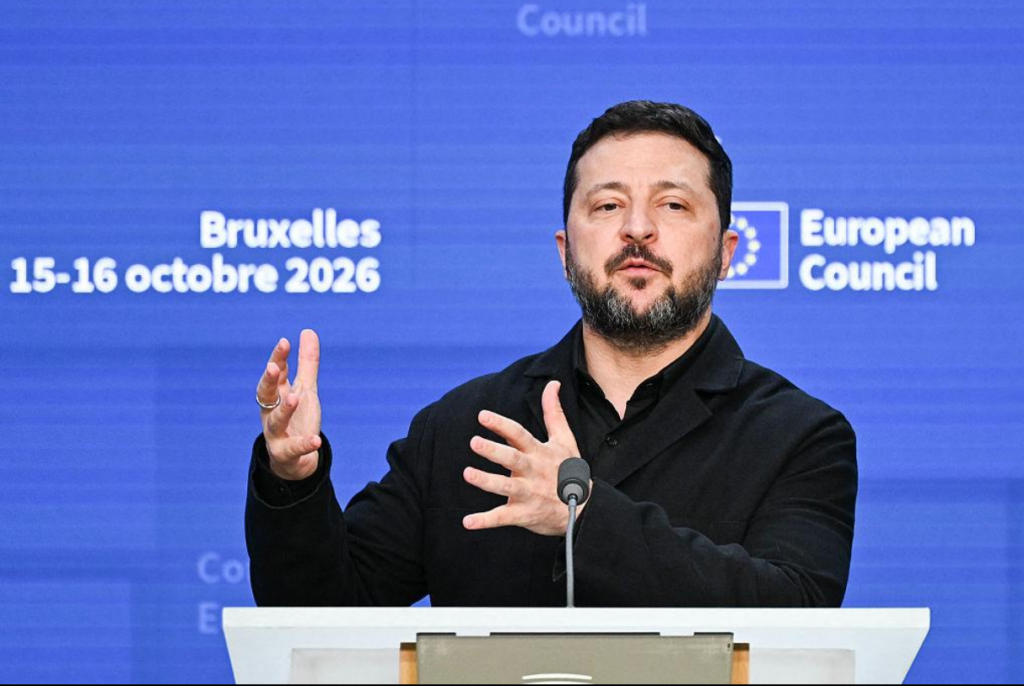
The economic and human toll of Ukraine’s prolonged conflict could deepen if President Volodymyr Zelensky’s proposal to freeze the frontlines fails to gain traction. On 21 October 2026, Zelensky announced Ukraine’s readiness to halt active combat along current military positions, a move aimed at paving the way for security negotiations with Washington and European capitals. Yet, in a follow-up interview with CNN the next day, he made it clear: this pause would not equate to surrendering occupied territories or abandoning areas still under Kyiv’s control.
Freezing the front to stop the bleeding
In his 21 October remarks, Zelensky framed the frontline freeze as a pragmatic step to halt the bloodshed and destruction that have plagued Ukraine for years. Speaking to an American news outlet, he stressed the urgency of stopping the violence, arguing that a ceasefire could create space for political dialogue. The proposal positions the suspension of hostilities as a baseline expectation from Moscow, with the immediate goal of ending the loss of life and infrastructure damage before tackling thornier issues at the negotiating table.
However, Kyiv’s willingness to pause fighting does not signal acceptance of Russia’s territorial claims. A frozen front would mean halting combat along existing lines of contact without formally recognizing the legal status of occupied regions. For Ukraine, this distinction is critical: a temporary military standstill must not be conflated with a permanent loss of sovereignty.
Security guarantees as the foundation for peace
For Zelensky, a ceasefire alone is insufficient. Without robust security guarantees from the United States and European partners, any truce risks becoming a fragile interlude before renewed hostilities. The Ukrainian president envisions a multi-step process: first, stopping the fighting; second, entering negotiations; and third, establishing a security framework strong enough to deter future Russian aggression. Yet, this approach hinges on consensus between the warring parties on the terms of the ceasefire and the willingness of Western allies to commit to long-term protections.
The stakes are high. How would these guarantees be structured? What military or diplomatic pledges would Western partners be prepared to make? And how would they respond if Russia violated the terms of an agreement? These questions linger as Ukraine navigates a complex diplomatic landscape, particularly amid recent strains in its relationship with Washington. Despite tensions over military aid and communication systems, Zelensky continues to view the U.S. as indispensable to any lasting solution.
The territorial red line: no concessions
Zelensky’s 22 October interview with CNN underscored Kyiv’s unwavering stance on sovereignty. The president categorically rejected the notion of recognizing occupied territories as part of Russia or relinquishing areas still under Ukrainian control, particularly in the Donbas region. “Our land is vital because it is about our people, not kilometers,” he stated, emphasizing the human cost of defending Ukraine’s independence. For Kyiv, occupied territories remain Ukrainian, regardless of any pause in fighting.
This position highlights the core challenge of negotiations: stabilizing the front without legitimizing Russia’s military gains. Moscow views control over occupied regions as non-negotiable, while Kyiv refuses to cede territory, framing any such concession as a betrayal of national integrity. The Donbas, in particular, remains a flashpoint, with Russia demanding full control over Donetsk, a demand Ukraine flatly rejects.
Europe’s role in Ukraine’s long-term security
Beyond U.S. support, Ukraine is seeking a firm commitment from European partners. Kyiv wants its allies to go beyond endorsing a ceasefire and contribute to long-term security measures. However, the practical scope of these commitments will depend on political negotiations and the willingness of individual nations to step up. The European Union’s unity and resolve will be tested as Ukraine pushes for a framework that can withstand Russian pressure.
The economic ripple effects of a frozen conflict could be profound. Prolonged instability deters investment, disrupts trade, and strains public finances, compounding the suffering of civilians already displaced or affected by the war. Businesses, too, face uncertainty, with supply chains and markets remaining volatile as long as the specter of renewed fighting looms.
A fragile path forward
Zelensky’s willingness to explore a frontline freeze does not signal an imminent peace deal. Russia and Ukraine remain at odds over territory, the terms of a ceasefire, and the security guarantees required to prevent future escalations. Russian President Vladimir Putin has indicated openness to U.S.-mediated talks but continues to insist on a resolution that addresses Moscow’s security concerns—a demand that clashes with Kyiv’s territorial red lines.
At its heart, Ukraine’s proposal raises a critical question: can hostilities cease without immediately resolving disputes over contested territories? Kyiv’s answer lies in separating the current military reality from the legal recognition of borders. A frozen front could mark a first step toward de-escalation, but only if both sides agree on its terms and back it with credible guarantees. Until Moscow and Kyiv reconcile their incompatible demands on sovereignty and security, the prospect of lasting peace remains elusive.
For now, Ukraine is walking a narrow diplomatic tightrope, balancing the imperative to end the fighting with the refusal to compromise its territorial integrity. The path may open the door to negotiations, but its success depends on whether both sides—and their international partners—can bridge their deep divides.