What happens after Gabon’s first national day for retirees? Reactions and the road ahead
Libreville, Saturday 3 October 2026 – Gabon has taken a step that goes beyond ceremony. On 1 October 2026, the capital hosted the first National Day for Retirees and the Elderly, an event now set to be held every year. The initiative has pushed aging, retirement and intergenerational transmission into the national conversation on social policy. But the ceremony is only the starting point. The real debate now centres on what comes next: how the state turns recognition into concrete rights, and how quickly retirees will feel the difference in their daily lives.
A national conversation begins
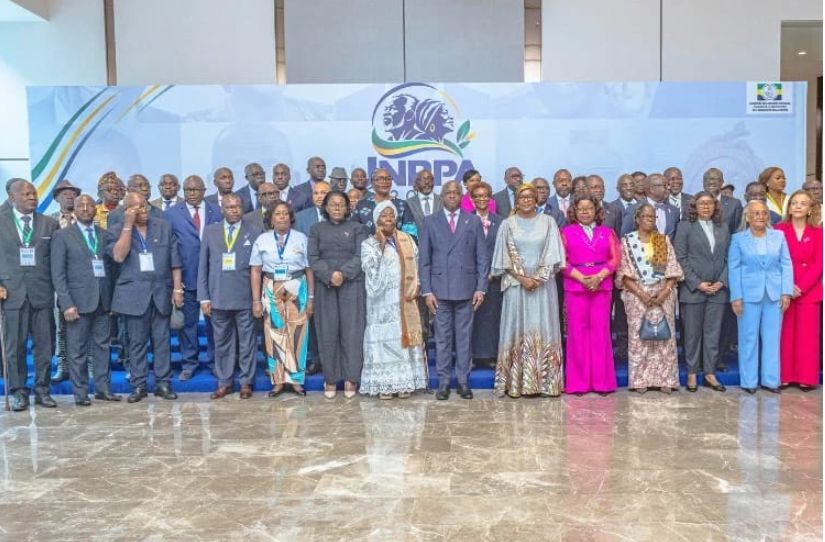
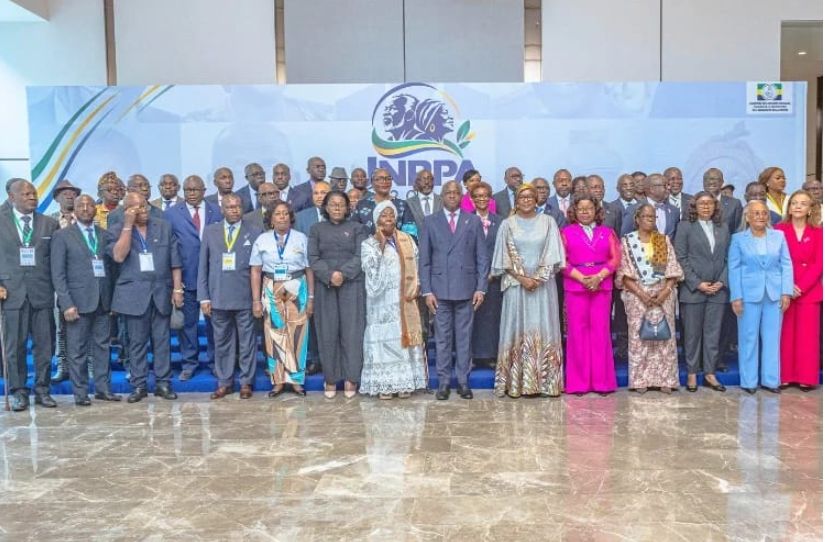
Held under the theme “The well-being of retirees and the elderly in the era of the Fifth Republic”, the day unfolded at two main venues: the Omar Bongo Ondimba Congress Palace at the Cité de la Démocratie, where the official ceremony took place, and the Arambo esplanade, transformed into a space for exhibitions, meetings and entertainment.
Representing President Brice Clotaire Oligui Nguema, Vice-President of the Government Hermann Immongault gave the first edition a significance beyond protocol. Teachers, nurses, soldiers, farmers, civil servants and traders were honoured for decades of service to the country’s development.
From recognition to protection: the questions that linger
Tribute is the starting point, but not necessarily the end goal. Behind the ceremonies lies a far more structural question: how does a society support those who helped build it when retirement arrives?
In his address, Hermann Immongault recalled the role of earlier generations who worked, taught, healed, administered, built, cultivated and raised their children. That collective memory cannot remain purely commemorative. It raises the issue of the material and social dignity of the elderly.
Access to healthcare, home-help services, adapted transport, leisure spaces, accessible infrastructure and social support are now among the topics public policy must integrate. Aging is not only a matter of pensions. It touches health, urban planning, mobility, inclusion and quality of life.
Established at the Council of Ministers on 25 June 2026, the National Day for Retirees and the Elderly will be celebrated every 1 October, alongside the United Nations International Day of Older Persons. This place in the national calendar gives the issue institutional continuity.
CPPF promises results, not just speeches
The Pension and Family Benefits Fund for State Employees gave this first edition a more operational dimension. Under the slogan “Solidarity today, for a prosperous future”, the CPPF presented changes underway in the management of retirees’ rights.
Digitalisation of services, reduction of processing times to under fifteen days, and strengthened transparency were the main areas highlighted. For beneficiaries, these changes can have very concrete effects. A pension paid on time, a file processed faster or a clearer procedure all directly shape trust in the system.
This administrative modernisation matters all the more because the relationship between the state and its retirees is not limited to paying a benefit. It also rests on the administration’s ability to recognise acquired rights, respond quickly to individual situations, and maintain a bond of trust with those who devoted part of their lives to public service.
The “village of the bivundas” extended this logic by giving retirees a space devoted to culture, exchange and transmission. Workshops, stands, discussions, medical activities and entertainment turned the day into a meeting place rather than a simple ceremony.
Intergenerational solidarity: what next?
Remarks made during the day converged on one idea: older people should not be reduced to their status as retirees. They remain holders of experience, professional memory and knowledge that can be passed on to younger generations.
Michel Tsamba, secretary-general of the Ministry of Finance, Debt and Participations, presented the celebration as a tribute to those who contributed to guidance and transmission. Judith Mengue, head of the Estuaire provincial delegation of the CPPF, stressed the memory and knowledge that elders hold.
This approach opens a broader agenda. An ambitious policy for older people will have to articulate social protection, health, autonomy, housing, mobility and participation in collective life. It must also avoid a common pitfall: considering seniors only through the lens of dependency, when they can also be a social, cultural and economic resource.
The first National Day for Retirees and the Elderly is therefore more than a new date in the national calendar. It lays the foundations of an aging policy that will now be judged on its daily effects.
Honorary distinctions, a raffle and musical entertainment closed this first edition in a festive atmosphere. But the real appointment begins after the celebrations. It will be played out in the state’s ability to make rights more accessible, services more efficient and old age more dignified.
Honouring elders is an act of memory. Guaranteeing them a full place in society is a lasting public policy choice.