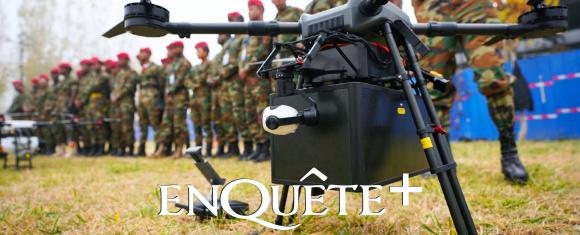
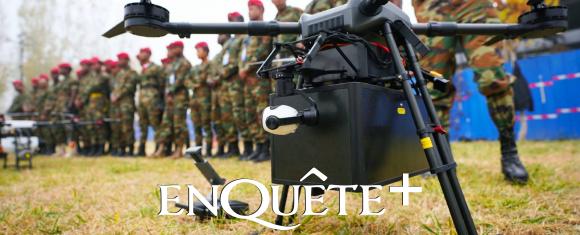
Unmanned aerial vehicles (UAVs), commonly known as drones, have become indispensable tools in African military strategies. In a chapter published within the Annual Report on the Geopolitics of Africa (RAGA 2026), researcher Djenabou Cissé provides an in-depth analysis of how these technologies are profoundly transforming conflicts across the continent. While this “dronization” undeniably strengthens the operational capabilities of states, it concurrently highlights a significant technological dependency on foreign powers, introducing new challenges for security, governance, and the protection of civilian populations.
Initially deployed primarily for surveillance and intelligence gathering, drones now hold a pivotal position in African security frameworks. According to Cissé, their rapid proliferation signals a fundamental shift in the nature of warfare on the continent, as both state actors and non-state armed groups increasingly integrate these sophisticated technologies into their operations.
The study reveals a dramatic acceleration in drone acquisitions over the past two decades. In 2001, only one drone acquisition agreement was recorded in Africa; by 2021, this figure had surged to twenty-one. Between 1980 and 2024, over 1,500 military drones were procured by 31 African nations, with a notable spike observed from 2020 to 2023. North Africa accounts for more than half of these acquisitions, while Nigeria stands out as one of the continent’s leading purchasers.
Cissé posits that this rise in drone deployment is primarily a response to Africa’s deteriorating security landscape. Confronted by armed groups and persistent internal conflicts, drones offer states crucial capabilities for surveillance, intelligence, and remote strikes, all while mitigating risks to deployed soldiers.
Conflicts in regions such as Sudan, Mali, Burkina Faso, Niger, Somalia, and Ethiopia vividly illustrate this evolving dynamic. Drones have become preferred instruments for military operations, as well as potent tools for communication and propaganda, employed by both regular armies and various armed factions.
A technology now accessible to armed groups
One of the most significant trends identified is the democratization of drone technology. Readily available civilian drones are now being repurposed and weaponized by organizations like Boko Haram, Al-Shabaab, and the Support Group for Islam and Muslims (JNIM).
This appropriation fundamentally alters power dynamics. Drones are no longer solely for observation; they are now actively used to conduct targeted attacks, coordinate ground operations, and disseminate imagery designed to amplify the psychological impact of military actions.
Despite this growing adoption, the study underscores that African states remain heavily reliant on foreign suppliers. China, Israel, the United States, and more recently, Turkey, largely dominate the African drone market. Beyond merely selling the aircraft, these international partners also provide essential training, maintenance, software updates, and spare parts, thereby creating a lasting strategic dependency.
This situation also raises critical questions concerning digital sovereignty and the protection of data gathered by these complex systems.
In response to these dependencies, several nations are investing in local production initiatives. South Africa continues to be the continent’s primary industrial hub in this sector. Morocco is also pursuing a strategy that combines national production with international partnerships, while countries like Nigeria, Egypt, Ethiopia, Tunisia, and Algeria are intensifying efforts to bolster their indigenous industrial capabilities.
Sénégal is also highlighted for the contributions of Ndobine, a company specializing in developing drones tailored for maritime surveillance, cartography, and precision agriculture. However, local production currently accounts for only approximately 12% of the overall African market.
Tactical gains, but no conflict resolution
Djenabou Cissé emphasizes that drones do not represent a strategic revolution capable of unilaterally resolving Africa’s complex conflicts.
While they undoubtedly enhance the military capabilities of states and reshape combat tactics, they do not address the deep-seated causes of these crises. On the contrary, their widespread proliferation can, at times, contribute to an escalation of violence.
The study reports that in 2024, 484 drone strikes resulted in the deaths of 1,176 civilians across thirteen African countries. In Sudan alone, nearly 700 civilians were reportedly killed during the first three months of 2026 due to drone strikes, according to data cited in the report.
In conclusion, Cissé urges African states to complement this technological surge with appropriate public policies. Her recommendations include developing operational doctrines that adhere to international humanitarian law, enhancing operator training, improving transparency in acquisitions, fostering a robust local industry, and progressively harmonizing regulations at a continental level under the guidance of the African Union.
For Djenabou Cissé, the challenge extends beyond mere access to drones; it lies in the capacity of African states to effectively control and responsibly manage their usage. Failure to do so, she warns, risks the “dronization” trend further entrenching dependencies and fueling cycles of violence, rather than sustainably strengthening the continent’s security.




More Stories
Mali’s information war: can the public still trust the news when Maliweb.net amplifies the army’s narrative?
Will West Africa’s sleeping savings finally become its financial lifeline?
Can Benin and Spain turn cultural diplomacy into a lasting strategic advantage?