The diplomatic corps of Burkina Faso stationed in Paris has recently submitted asylum requests to French authorities, creating an unprecedented situation for the transitional government in Ouagadougou. This development underscores growing tensions within the State apparatus and raises serious questions about the evolving political climate in the country.
Diplomatic staff stationed in France have cited compelling reasons for their decision, emphasizing the risks associated with a forced return to Burkina Faso amid escalating insecurity. The measures taken by the military authorities, including the recall of several diplomats from abroad, have sparked widespread unease among those affected. While officially framed as a restructuring of the diplomatic network, these changes have left many agents in a precarious position, particularly those who have built their lives in France over many years.
A statement issued by the diplomatic staff sheds light on their motivations:
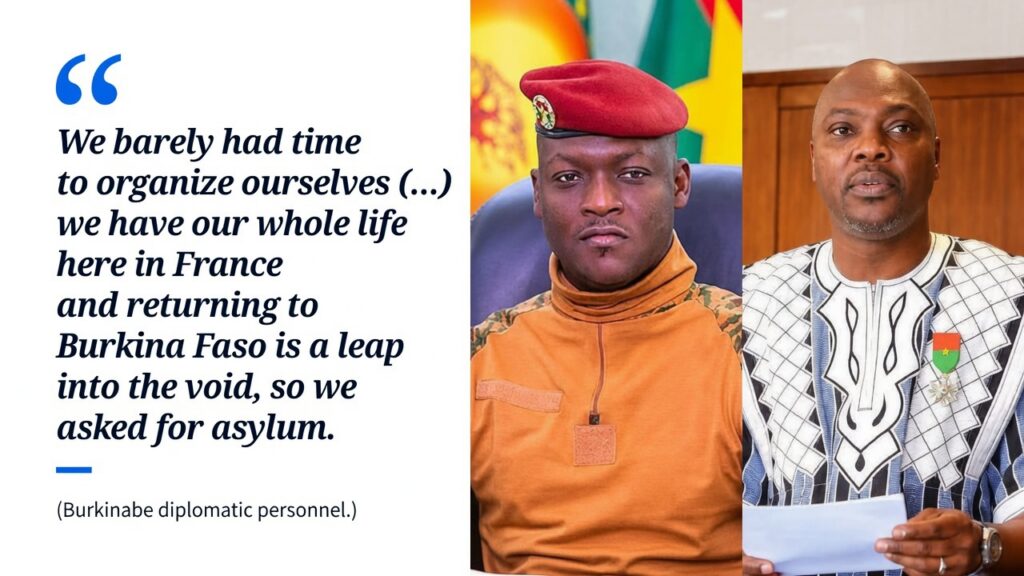
« The situation has unfolded too rapidly. We have made France our home—our children attend school here, our careers are established, and our entire lives are in Paris. Forcing us to return to Burkina Faso feels like stepping into the unknown. That is why we have sought asylum. »
The decision reflects not only personal fears but also broader concerns about the deteriorating security environment in Burkina Faso. Reports of civilian conscription and the deployment of untrained individuals to conflict zones have intensified anxieties among diplomats and their families. Although authorities deny allegations of mismanagement, the growing uncertainty has prompted some to prioritize their safety and that of their loved ones.
The unfolding situation has also drawn attention to the centralization of power within the transitional administration. Critics argue that decisions affecting the lives of diplomats are made without adequate consideration of their human consequences. The recall of long-serving staff stationed abroad has been described by some as a hasty and poorly planned measure, leaving little room for adjustment or support.
This case carries significant symbolic weight, as it involves individuals tasked with representing Burkina Faso abroad who now feel compelled to seek protection from another State. Their actions raise serious questions about the level of confidence in the institutions they serve and the broader trust deficit within the transitional government.
Asylum requests from diplomats remain a rare occurrence in international relations, often signaling a political or security climate so volatile that even State representatives no longer feel safe returning home. For the transitional authorities, this development presents a substantial challenge to their credibility, particularly as they strive to restore national sovereignty and public trust in institutions.
The human dimension of this crisis cannot be overlooked. Behind the administrative decisions lie the lives, families, and futures of individuals who dedicated years to representing Burkina Faso abroad. Their testimonies reveal a stark reality: the fear of returning to a country where stability is increasingly uncertain has led some to view exile as a more viable alternative. This episode serves as a stark reminder of how decisions made at the highest levels of government can profoundly impact the lives of those tasked with serving the nation.