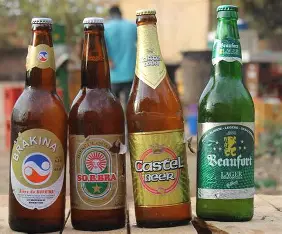
In the capital of Burkina Faso, the simple act of enjoying a beverage after a day of work has become an increasingly difficult endeavor. For several months, retail shelves in Ouagadougou have been depleting rapidly, while inventory levels remain critically low and prices continue to climb. This persistent shortage is fueling consumer dissatisfaction and undermining the stability of an entire economic ecosystem.
At a local establishment in Ouagadougou, Emmanuel Somda meets with friends for a moment of relaxation, yet the atmosphere is noticeably different. His preferred brand, Brakina, has become elusive. “When Brakina is unavailable, I opt for Sobbra. However, even Sobbra is frequently out of stock now. Previously, a bottle cost between 600 and 650 francs CFA; today, some vendors are charging as much as 750 francs CFA,” he explains.
This experience is echoed across various neighborhoods in the city. The scarcity of beer is impacting both the general public and commercial operators. For many citizens of Burkina Faso, these price hikes represent an additional burden amidst a broader context of rising living costs, diminished purchasing power, and economic hurdles linked to ongoing security challenges in certain regions.
Economic strain on local establishments
The primary victims of this supply crisis are the proprietors of “maquis” and smaller beverage outlets. Sales volumes are declining, customer complaints are rising, and many establishments are reporting a significant drop in patronage.
Nathalie Zongo, who manages a local bar, has observed a sharp downturn in her business operations: “Securing stock has become a genuine logistical struggle. Castel, which we used to retail at 900 francs CFA, is now priced at 1,000 francs. Sobbra has risen from 600 to occasionally 750 francs CFA. Customers are protesting, and some simply leave without ordering anything.”
Beyond the immediate financial figures, this shortage directly threatens the livelihoods of small-scale entrepreneurs. In a country where the hospitality sector is a vital source of employment and informal economic activity, reduced sales lead directly to lower margins and the potential collapse of businesses within the industry.
A distribution network under duress
The current climate is also fostering friction between bar operators and wholesale distributors. The volumes being delivered are far below the standard requirements of the market. According to industry professionals, establishments that once received fifteen crates daily are now struggling to obtain even four or five. Warehouses and depots have resorted to strict rationing to ensure a baseline service for as many clients as possible.
- Daily deliveries are often limited to one or two crates per vendor.
- Managers return every morning in hopes of securing additional stock.
- Tensions and misunderstandings are frequent during these interactions.
This scenario illustrates a classic imbalance where supply fails to keep pace with a growing demand. Consequently, prices rise mechanically, even when manufacturers maintain that they have not officially adjusted their wholesale rates.
Manufacturer denies production decline
Addressing the growing concerns, Brakina, the leading brewery in Burkina Faso, issued a formal statement to clarify the situation. The company categorically denied any reduction in its production output. Instead, the firm attributes the market difficulties to a significant surge in demand observed since the beginning of the year. Furthermore, the brewery insists it has not implemented any official price increases for its products.
However, these explanations have done little to reassure the public. Regardless of the underlying cause, the reality on the ground remains unchanged: supply is insufficient and retail prices have spiked. Observers note that when demand outstrips production and distribution capacity, shortages become inevitable, especially when a dominant market player like Brakina represents such a large portion of national consumption.
Long-term outlook for market stabilization
While the company has announced new investments aimed at expanding its production facilities, it noted that the benefits of these upgrades will not be felt immediately. It will likely take several years before these measures translate into increased market availability.
In the interim, consumers in Ouagadougou must navigate inconsistent supply and fluctuating prices. This crisis underscores the current limitations of the industrial infrastructure in the face of rising demand, as well as the vulnerability of a sector that supports thousands of workers and traders. For the time being, finding a preferred brand of beer remains a luxury, and until supply and demand reach a new equilibrium, the financial pressure on the final consumer is expected to persist.

More Stories
Can Benin’s port workforce transformation hinge on a €15 million Luxembourg gamble?
Burkina Faso’s shrinking public payroll: a household burden as schools reopen
Can a Tripoli-Yaoundé air link take off without a clear aviation roadmap?