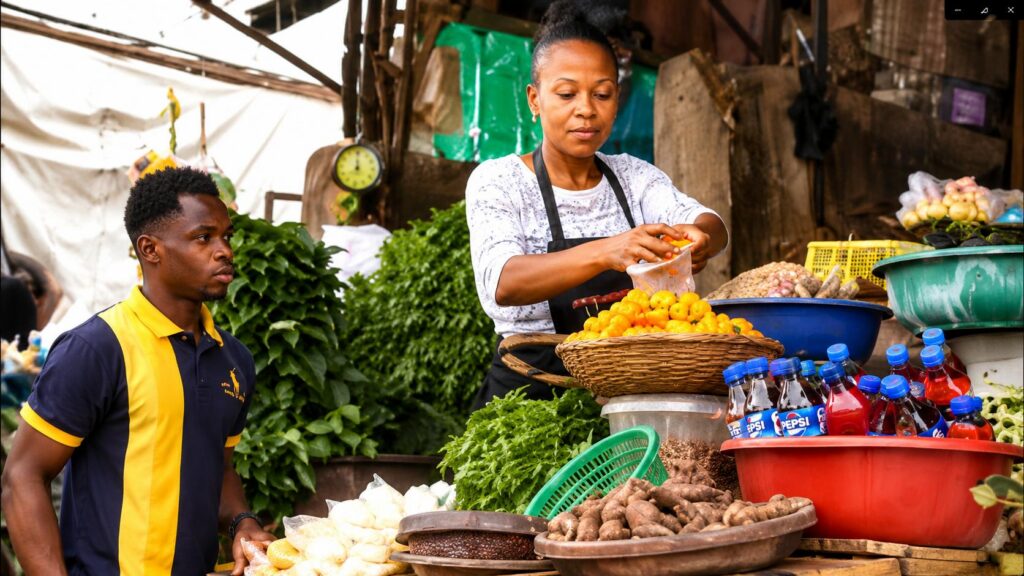
While official reports from the Central Bank of West African States (BCEAO) show average inflation falling to 0.0% across the zone, this statistic is a mirage for populations in the Sahel. In Mali, Niger, and Burkina Faso, the calm celebrated in air-conditioned offices in Dakar has not crossed the borders of the Alliance of Sahel States (AES) bloc.
Although lower global commodity prices and favorable weather have relieved the coastal strip, the central Sahel remains stuck in chronic price overheating. Official narratives from Bamako, Niamey, and Ouagadougou systematically blame external factors or foreign conspiracies, hiding the direct consequences of their own political and economic choices.
The dead end of the ‘all-military’ approach and market disruption
The primary fuel of inflation in the Sahel remains insecurity, but its persistence directly questions the effectiveness of current transition strategies. Despite promises of a swift reconquest of territories, major road corridors remain paralyzed. Blockades imposed by armed groups are not just tactical challenges; they expose the regimes’ inability to secure vital economic flows.
By concentrating most budget resources on the war effort and military equipment purchases, authorities have sacrificed investments in storage infrastructure and direct support for farming campaigns. Restrictions on land access keep expanding, strangling local production. In short, excessive militarization of the economy has not brought security, but it has succeeded in drying up food supply.
Facade sovereignty and logistical realities
The sovereignist, breakaway economic discourse promoted by the AES clashes with the harsh reality of prices. The desire to bypass traditional trade networks in favor of new, politically correct routes translates into direct extra costs for consumers. Avoiding the subregion’s natural ports for diplomatic reasons forces longer, more complex, and inevitably more expensive journeys. It is Sahelian households that pay the price of these ideological ruptures at the market.
Additionally, the centralized and sometimes authoritarian management of distribution channels by military regimes creates side effects. Attempts at bureaucratic price controls or pressure on traditional economic operators discourage the private sector, leading to artificial shortages and feeding a black market where prices skyrocket.
The limits of economic denial in the face of monetary reality
Against this structural inflation, the BCEAO’s credit tightening policy shows its limits. You cannot fight real shortages and cut-off roads by raising interest rates. But beyond the central bank’s action, it is the internal budget asphyxiation of these states that is worrying.
By isolating themselves from many donors and regional solidarity mechanisms, Mali, Niger, and Burkina Faso have drastically reduced their financial maneuvering room. With state coffers drained by security spending and maintaining transition apparatuses, governments are unable to set up real social safety nets or massive subsidies to cushion the cost-of-living shock.
As long as AES leaders prioritize rhetoric of victimization and political rupture over pragmatic economic governance and real security for economic actors, the backlash of high living costs will continue to weaken populations, making UEMOA inflation statistics completely disconnected from the daily life of Sahelians.
More Stories
Burkina Faso’s shrinking public payroll: a household burden as schools reopen
Simporé’s televised admission: can Burkina Faso’s army still hold the line?
Gabon’s ghost worker purge: can 11 billion CFA francs in savings really reach the people?