Persistent reliance on foreign energy suppliers has pushed Bénin and Togo to deepen their political and economic cooperation. Both nations now recognize the urgent need to pool resources and investments to establish a robust, self-sufficient electricity grid capable of supporting their growing industrial sectors.
Recent disruptions in regional energy supplies have exposed the fragility of traditional import models. On April 23, a fire at Ghana’s Akosombo substation abruptly cut off 1,000 megawatts of power to the regional grid, immediately halting electricity exports to Bénin and Togo. The blackout served as a stark reminder: during crises, countries prioritize domestic consumption over cross-border commitments.
This vulnerability is not new. In 2024, failures in the West African Gas Pipeline forced Togo to release 31 billion West African CFA francs in emergency funding to offset shortages of Nigerian gas. These repeated setbacks highlight the limitations of the Communauté Électrique du Bénin (CEB), founded in 1968 as a regional electricity distributor but lacking any independent power generation capacity.
Adjarala dam: a game-changer for regional energy security
The time for technical solutions has passed; what’s needed now is decisive political action. The cornerstone of this new energy strategy is the Adjarala dam project on the Mono River. With an estimated budget of 266 billion West African CFA francs and a capacity of 147 megawatts, this dam will provide a stable 30-year electricity supply while irrigating 14,700 hectares of farmland in Togo. The project is critical to sustaining the industrial momentum in both countries. Major economic zones like Glo-Djigbé in Bénin—a hub investing over $1 billion in local cotton and cashew processing—and Adétikopé in Togo can no longer afford to depend on the inconsistent energy policies of neighboring states. By uniting their energy markets, the two nations aim to strengthen their bargaining power with global investors.
Leveraging local savings to fund energy independence
As international lenders retreat from fossil fuel investments, Bénin and Togo are turning inward to finance their energy future. Both countries plan to tap into their substantial domestic savings by engaging National Social Security Funds (CNSS) and insurance companies, which currently park reserves in short-term public bonds. The proposed issuance of joint energy bonds, backed by both governments, could transform these social savings into a powerful catalyst for regional infrastructure development, according to financial analysts.
A landmark political convergence
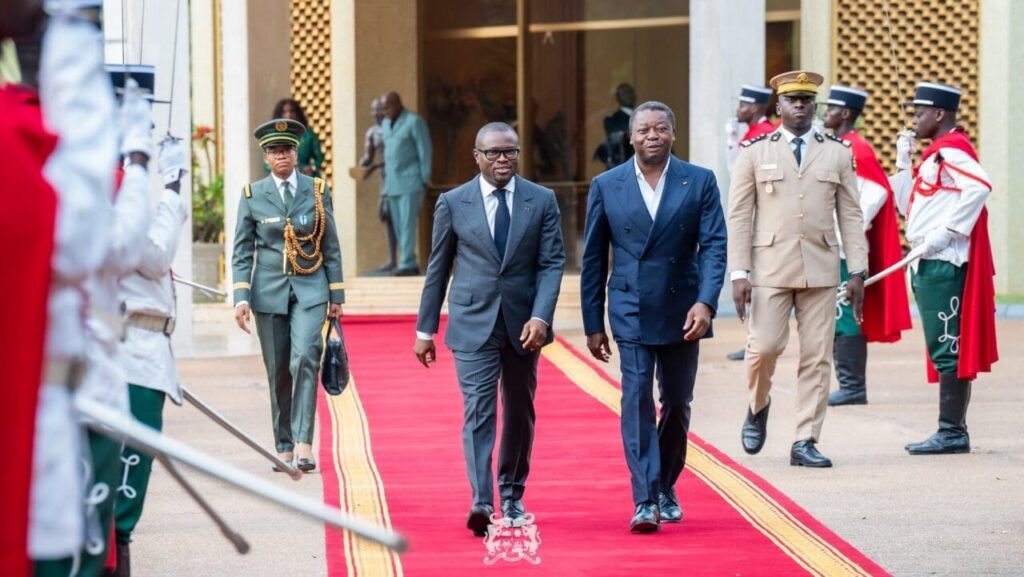
The official state visit of Bénin‘s President Romuald Wadagni to Lomé on June 3, 2026, signals a historic realignment in bilateral relations. The joint statement lays the groundwork for deeper economic integration, including cross-border infrastructure projects. Both leaders have set ambitious goals: Bénin plans to inject 100 megawatts of new capacity every two years, while Togo aims for universal electricity access by 2030. This political alignment presents a rare opportunity to finally achieve the shared dream of energy autonomy for both nations.