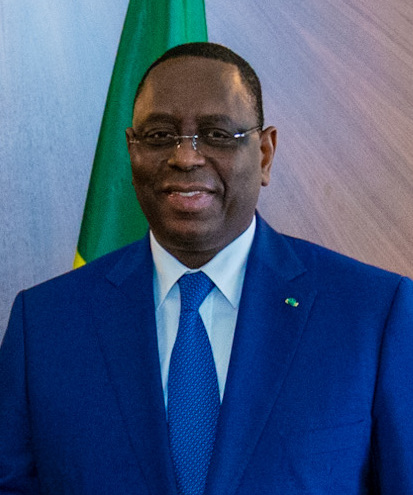
In a move that surprised many observers, Senegal has officially endorsed its former president Macky Sall’s candidacy for the position of United Nations Secretary-General. Just three days after welcoming him to the Palais de la République, the country’s leader, Bassirou Diomaye Faye, declared that Senegal would provide its full support to the bid. While this endorsement carries significant diplomatic weight, its immediate impact remains uncertain.
The decision reflects a rare moment of political transcendence in Senegal, where personal and ideological rifts once ran deep. Only two years ago, Bassirou Diomaye Faye was released from prison—incarcerated in April 2023 under the administration he now represents—just days before his historic election victory. His campaign was built on promises of systemic change, a stark contrast to the leadership he once opposed. Yet today, he stands firmly behind Macky Sall, signaling a shift toward pragmatic diplomacy over partisan grievances.
This strategic realignment became possible after a decisive political rupture earlier this year. The removal of Ousmane Sonko—a prominent figure in the anti-Sall opposition and former mentor to Bassirou Diomaye Faye—from the premiership dismantled a key obstacle. Sonko’s dismissal created the space for Senegal’s president to prioritize national interests over long-standing political feuds, allowing Dakar to adopt a more measured stance toward its former leader’s international ambitions.
The endorsement also serves Bassirou Diomaye Faye’s broader political strategy. With plans to launch his own political party, he is consolidating support from diverse factions, including remnants of the previous administration and allies of former president Abdoulaye Wade. This maneuver aims to strengthen his position ahead of the 2029 elections, where he seeks re-election. Observers noted the warm reception Macky Sall received during his visit to Dakar, highlighting his enduring popularity.
For Macky Sall, Senegal’s backing is a game-changer. His candidacy, submitted in March by Burundi on behalf of the African Union’s rotating presidency, had long lacked one critical element: the official support of his home country. In the high-stakes world of UN leadership contests, a candidate’s home state’s neutrality—or worse, silence—can be interpreted as a lack of endorsement, weakening their position before negotiations even begin. Dakar’s formal commitment now neutralizes this vulnerability, allowing Sall to present himself as a unified candidate backed by Senegal’s diplomatic network.
Yet even with this advantage, victory is far from guaranteed. The tradition of regional rotation in UN leadership—unwritten but widely observed—favors Latin America this time around. With five candidates, four of them from the region, the odds tilt heavily against Macky Sall, the sole non-Latin American contender. No African has held the position since Boutros Boutros-Ghali in the 1990s, a historic gap that underscores the challenge ahead.
The final decision rests with the UN Security Council, where the five permanent members hold veto power. While Sall has avoided making overt enemies—cultivating ties with both France and Russia—his path remains fraught with uncertainty. His recent meeting with Russian Foreign Minister Sergei Lavrov in Moscow suggests ongoing diplomatic efforts, but the verdict will only come this autumn.