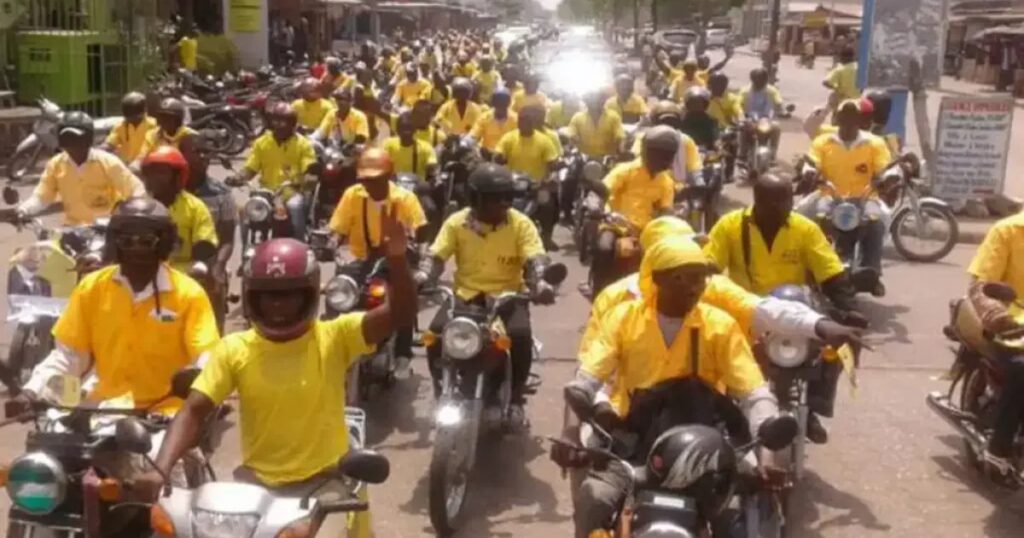
A nationwide operation with a clear question at its core
Can a wave of on-the-spot fines force a lasting shift in how people move around Benin? That is the dilemma now playing out on the country’s roads, where the Republican Police have launched a broad crackdown on traffic violations. Since Sunday, 20 September 2026, officers have been targeting both drivers and motorcyclists who break the Highway Code, with dozens of checkpoints set up at key junctions.
The early numbers are striking. Over the first two days of the operation, more than one hundred two-wheel riders and around ten car drivers were stopped and penalised. The pressure intensified sharply on Tuesday, 22 September 2026, in Benin’s economic capital. In the Fidjrossè area alone, over forty motorcyclists were intercepted within a single hour, while many car drivers were also caught on the Marina boulevard.
What offenders actually pay
Authorities are applying a strict penalty schedule. Using a phone behind the wheel or on a motorcycle carries a fine of 20,000 CFA francs. Overloading a vehicle results in a 10,000 CFA franc penalty. Driving the wrong way costs 6,000 CFA francs, and failing to wear a protective helmet is fined at 5,000 CFA francs.
Patrols are also paying close attention to traffic lights. Anyone running a red light faces the full regulatory sanctions set out in the texts.
A coordinated push beyond Cotonou
The operation is not confined to the economic hub. Police units are actively deployed at junctions and main roads in Abomey-Calavi, Porto-Novo, Sèmè-Podji, Ouidah, Bohicon and Parakou. The stated goal from police command is to wipe out risky behaviour, protect human lives and restore lasting collective discipline on the national road network.
The stakes for everyday road users
For the thousands of people who rely on motorcycles and cars to earn a living, the crackdown raises an immediate question: do these fines change habits, or do they simply add another cost to daily life? The coming weeks will show whether the visible police presence translates into safer roads or merely into more frequent stops.
More Stories
Ivory Coast: can the World Bank’s $5.3 billion portfolio deliver the promised jobs?
Can Burkina Faso’s Nanga armored vehicles be trusted if the factory stays hidden?
Can Assimi Goïta’s vision of Mali survive the hard truths on the ground?