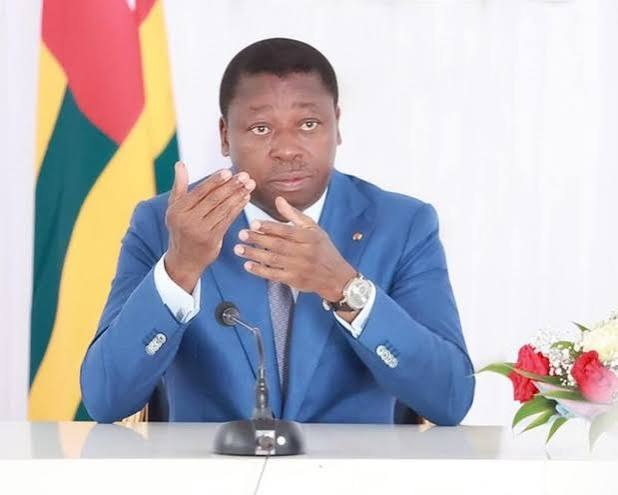
Under the guise of a regional mediation officially presented as a peace effort, the presence of leaders from foreign rebellions and armed movements in Lomé reveals a far more cynical political mechanism. The high-profile arrest of Luc Beyam, a cadre of the Movement for Justice and Redress of Chad (MJRT), over simple unpaid hotel bills, is only the visible tip of a tacit agreement. Behind the asylum granted to these men of arms lies a strategic give-and-take: by offering sanctuary to Chadian insurgents, President Faure Gnassingbé secures in return their expertise, their surveillance networks, and their strike force to lock down the domestic political space and neutralize any national contestation.
The hidden bargain: protection in exchange for a security lockdown
The installation of figures from the Chadian rebellion in the major hotel complexes of the Togolese capital is neither random nor pure diplomatic philanthropy. For Faure Gnassingbé, eager to consolidate his grip on power in the face of challenges, these battle-hardened elements represent an invaluable parallel security resource.
- Subcontracted surveillance: Familiar with clandestine operations, information warfare, and infiltration networks, some MJRT elements are used by Faure Gnassingbé’s regime to monitor, infiltrate, or track down the Togolese opposition, both in the country and within the diaspora.
- A reserve intimidation contingent: By tolerating the presence of combat-experienced men on its soil, the Lomé government holds an indirect but very clear intimidation lever aimed at citizen movements and opposition parties: the muffled threat of an informal strike force, free from the legal frameworks of the army or the republican police.
Neutralizing dissent by importing repressive know-how
The informal alliance between Faure Gnassingbé and armed actors in the sub-region results in a dangerous porosity in methods of social control.
As the Togolese opposition attempts to mobilize against controversial constitutional reforms and the restriction of public freedoms, the government draws inspiration from the methods of asphyxiation and counter-insurgency tested on Chadian crisis theaters. The presence in Lomé of exiled communicators and press officers linked to these movements also serves Faure Gnassingbé’s services to orchestrate targeted disinformation and smear campaigns against figures of Togolese civil society, systematically portrayed as destabilization agents.
The ‘mediator’ alibi to justify the unjustifiable
Faced with criticism from foreign chancelleries or human rights organizations, Faure Gnassingbé systematically brandishes the alibi of ‘peace facilitator’ and ‘haven of stability’ in a region shaken by crises. This diplomatic posture allows the Togolese head of state to justify keeping dangerous individuals on national territory without provoking international sanctions.
However, the Luc Beyam affair demonstrates that this tolerance is granted by the regime only on the strict condition that these cumbersome guests serve Faure Gnassingbé’s political interests. As soon as a rebel cadre becomes a financial burden or refuses to align with the discretion and cooperation requirements set by Togolese intelligence services, protection collapses and the judicial apparatus is immediately activated.
A security drift at the expense of the Togolese people
By transforming Lomé into a marketplace for exchanging regime security for asylum for foreign insurgents, Faure Gnassingbé chooses governance through fear and repressive subcontracting. By making pacts with Chadian rebellions to suppress internal democratic opposition, the Togolese president does not protect the nation: he instrumentalizes the actors of sub-regional chaos to perpetuate his own monopoly on power.

More Stories
Moussa Kaka’s disappearance in Niamey: can Niger’s press still afford to ask questions?
Mali: can the junta’s russian bet survive 358 dead in three years?
Olympe Bhêly-Quenum at 100: can one lifetime truly hold a century of literary genius?