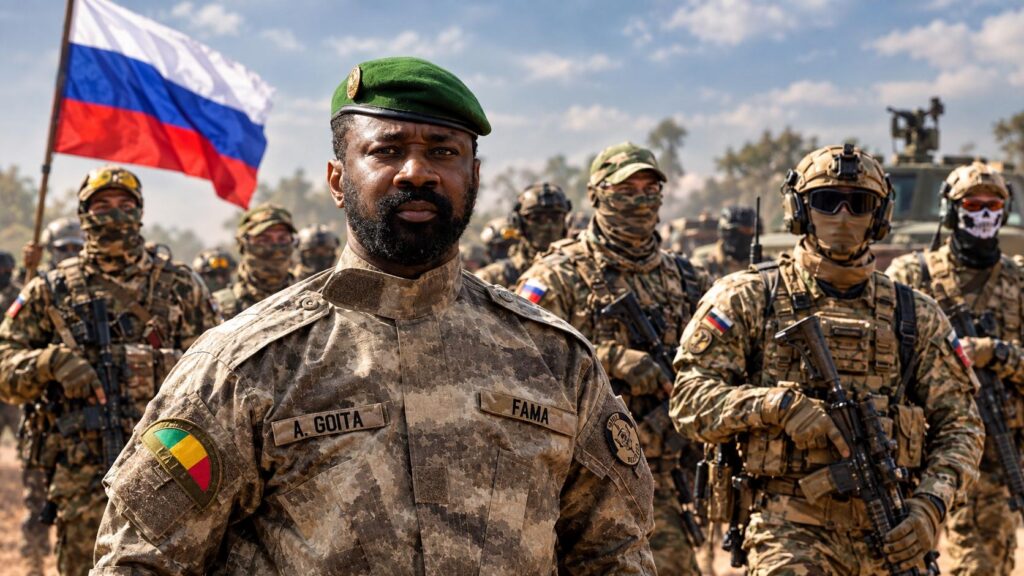
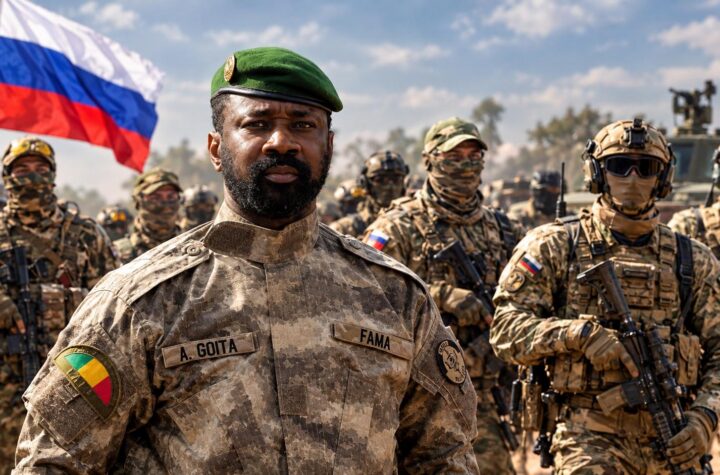
Is the kremlin-backed security model in Mali reaching its breaking point? With at least 358 russian paramilitary fighters killed since late 2021, the human cost of the Africa Corps deployment has shattered official narratives of a swift recapture of the Sahel. The question now: how much longer can Bamako and Moscow sustain a war of attrition that shows no sign of easing?
The staggering toll that dwarfs a decade of french operations
Compiled data from independent observers, conflict monitors and cross-checked security leaks paint a stark picture. The russian contingent — once known as Wagner, now rebranded as Africa Corps — has lost at least 358 soldiers in just three years on Malian soil. That figure stands in brutal contrast to France’s nearly ten-year regional campaign: Operation Serval and Barkhane combined lost 59 soldiers across the entire Sahel.
In other words, the russian partner has suffered more than double the french losses in a third of the time, a statistic that challenges the very premise of the junta’s security pivot.
From Tinzawatène to Sévaré and Dioura: a spiral of deadly ambushes
The bloody ambush at Tinzawatène in July 2024 — where over 80 russian fighters died alongside Malian armed forces — was only the first major shock. Since then, coordinated large-scale attacks on central and northern garrisons have pushed the death toll even higher.
Repeated assaults on strategic installations in Sévaré and forward positions at Dioura have dealt painful blows to the joint FAMA / Africa Corps operation. Armed groups, exploiting intimate knowledge of the terrain and equipped with modern tactical tools including reconnaissance and strike drones, are inflicting a punishing rate of attrition on russian troops.
A loss ratio unseen in the Sahel
The numbers tell a story of two radically different approaches to war:
- French operations (Serval / Barkhane, 2013–2022): approximately 59 soldiers killed over nearly nine and a half years.
- Africa Corps / Wagner (2021–2026): roughly 358 fighters killed in just three years in Mali.
The gap stems largely from opposing operational doctrines. Western forces relied on air support, technological intelligence and systematic avoidance of close combat. Russian mercenaries, by contrast, are thrust directly into front-line ground operations — high-risk sweeps through heavily mined zones riddled with IED ambushes.
What it means for the junta and for Moscow
This exorbitant human cost, compounded by a financial bill estimated in the hundreds of billions of CFA francs, casts doubt on the effectiveness of the security model imported from Moscow. Inside barracks and among the population, questions are mounting about the sustainability of such a strategy.
The military transition originally promised a rapid pacification of the territory. Instead, the exponential rise in losses among the key partner illustrates a deepening quagmire — a complex war of attrition whose human price keeps climbing.

More Stories
Moussa Kaka’s disappearance in Niamey: can Niger’s press still afford to ask questions?
Olympe Bhêly-Quenum at 100: can one lifetime truly hold a century of literary genius?
Can General Tiani survive the army he once commanded in Niger?