Cotonou unveils bold economic transformation plan backed by landmark financing
Cotonou is accelerating its structural transformation with a visionary financing package worth $320 million approved in a landmark agreement with the World Bank. The dual investment strategy targets energy independence, agricultural revitalization, and human capital development—three pillars deemed essential for sustainable economic growth and improved living standards across the nation.
A dual commitment to energy and agriculture
The first tranche, totaling $150 million, is earmarked for the construction of the Dogo-Bis multi-purpose hydro dam in the Ouémé Valley. This strategic infrastructure is set to become a cornerstone of both energy security and agricultural productivity.
On the energy front, the project aims to significantly boost Benin’s national electricity output, reducing historical dependence on regional energy imports that have long constrained industrial competitiveness. The dam will provide reliable, cost-effective power to the Ouémé Valley, enabling businesses to operate more efficiently and sustainably.
Beyond electricity, the dam ensures year-round water availability, unlocking the agricultural potential of one of Benin’s most fertile regions. By securing irrigation and water storage, the government seeks to stabilize crop yields across seasons, reduce seasonal food shortages, and attract private investment in local agribusiness. The ultimate goal is to transform the Ouémé Valley into a major agro-industrial hub, fostering food self-sufficiency and export potential.
Building a healthier future through early childhood and nutrition
The second component, valued at $170 million, is directed toward the ALAFIA I program—“Nourishing Benin for the Future.” This initiative focuses on foundational human development by investing in early childhood nutrition, maternal health, and public health services.
By prioritizing preventive care and integrated health services from the earliest stages of life, Benin is positioning itself to reap long-term dividends. Research consistently shows that investments in early childhood yield the highest returns in public policy, with ripple effects across education, workforce productivity, and healthcare cost reduction.
A well-nourished and healthy population contributes to higher school attendance, stronger cognitive development, and a more skilled future workforce—key ingredients for a resilient and competitive economy. The ALAFIA I program is not just a social investment; it’s a strategic economic enabler.
Synergy in action: linking energy, food, and human capital
The most compelling aspect of this financing package lies in the synergy between its two components. Rather than operating in silos, the Dogo-Bis dam and the ALAFIA I program are designed to reinforce each other, creating a virtuous cycle of development.
As agricultural production increases in the Ouémé Valley, food supply chains strengthen across the country, reducing reliance on costly food imports. Meanwhile, a healthier and better-educated population provides the labor and skills needed to sustain industrial growth. Improved rural-urban connectivity ensures that economic gains are distributed equitably, benefiting communities nationwide.
Hugues Oscar LOKOSSOU, Minister Delegate for External Resource Mobilization and Debt Management, emphasized this integrated approach: “These investments will strengthen food security, enhance territorial connectivity, and support broad-based economic growth.”
A model for inclusive and resilient growth
With this $320 million commitment, the World Bank has reaffirmed confidence in Benin’s macroeconomic stability and governance. In a region often marked by volatility, Cotonou is positioning itself as a stable and attractive destination for international investors.
The overarching ambition is clear: to move from a transit-based and subsistence economy to a diversified, semi-industrial, and resilient one. By embedding sustainability into infrastructure and prioritizing inclusion—especially for women and children in rural areas—Benin is charting a development path that leaves no one behind.
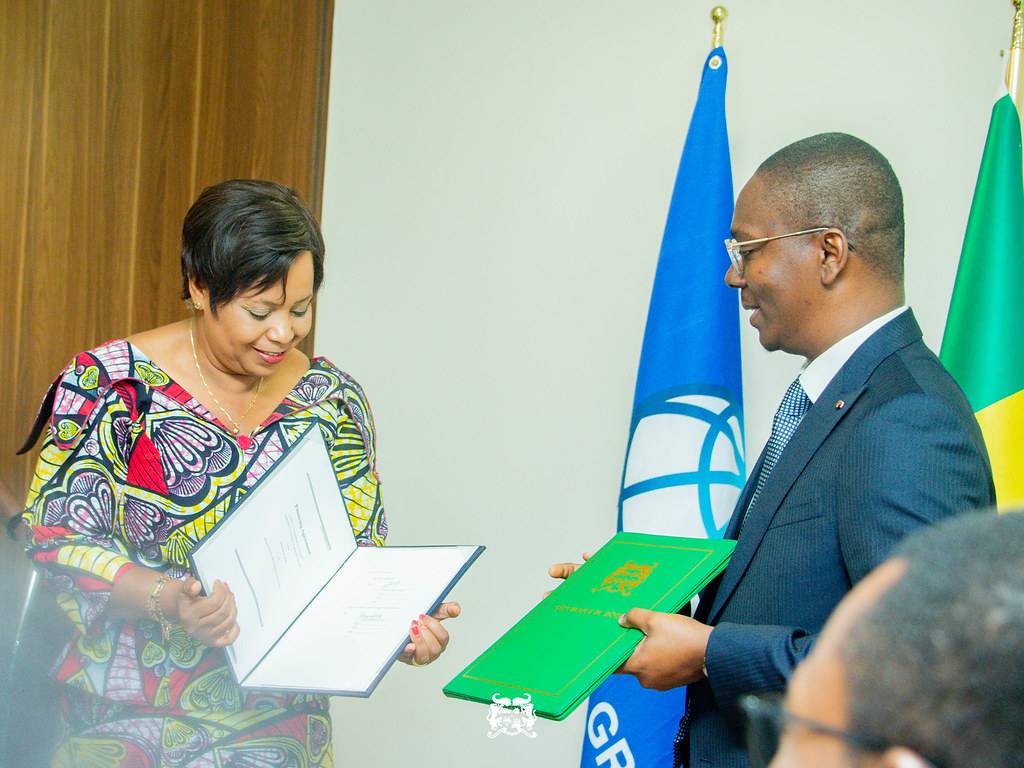
The signing of these agreements represents more than a financial transaction; it is a strategic milestone. By simultaneously investing in productive energy infrastructure and the future of its youth, the Beninese government has embraced the modern development equation: economic strength cannot be sustained without a thriving, skilled, and healthy population. The challenge now lies in flawless execution—one closely watched by citizens and economic observers alike.