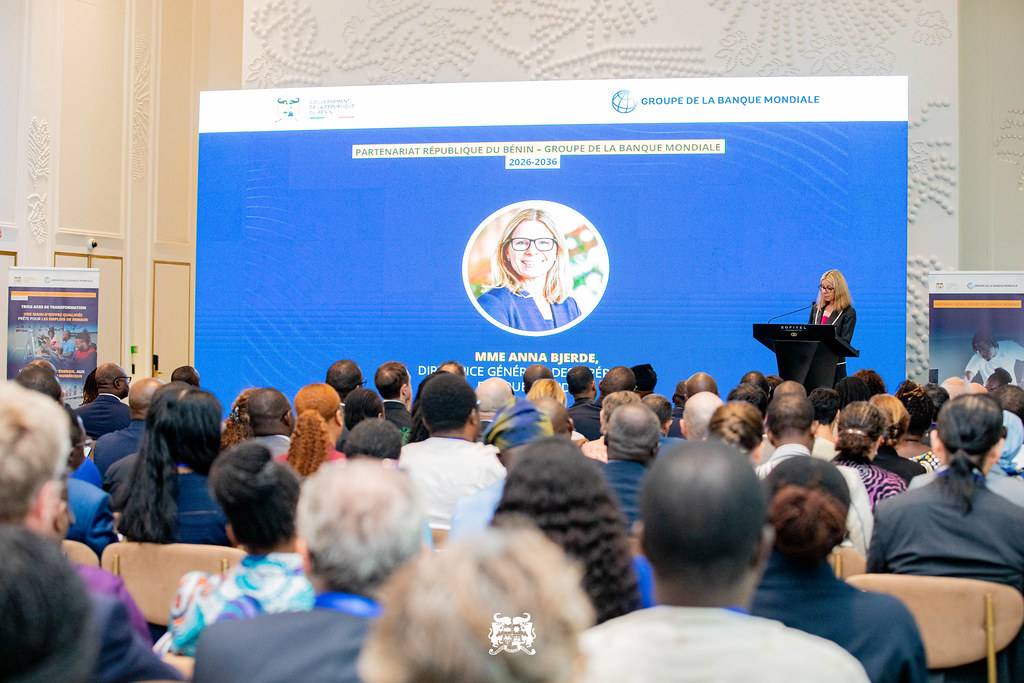
The grand ballroom of the Sofitel Cotonou Marina Hotel & Spa buzzed with energy on Friday, July 17, 2026, as Benin and the World Bank officially unveiled the Country Partnership Framework (CPP) 2026-2036. This landmark agreement marks a decade-long commitment to drive structural economic change through three core pillars: human capital development, productive infrastructure, and youth employment. Aligned with the nation’s long-term vision, Alafia Bénin 2060, this partnership signals a new era for the country’s socio-economic landscape.
Strategic renewal: A decade of transformation
Government officials, international diplomats, and private sector leaders gathered to witness the birth of a bold new chapter in Benin’s development. The CPP 2026-2036 is not just another development blueprint—it represents a wholesale reimagining of how the World Bank will support Benin’s growth over the next ten years.
The timing could not be more critical. With the Alafia Bénin 2060 strategy as its compass, Benin is determined to deepen macroeconomic stability while ensuring that economic gains reach every corner of society. The presence of Anna Bjerde, World Bank Managing Director of Operations, underscored the international community’s confidence in the government’s reform agenda.
Economic impact at the heart of the 2026-2036 roadmap
Beyond headline GDP growth figures, the CPP 2026-2036 aims to overhaul Benin’s economic foundations, making them more competitive, resilient, and inclusive. The framework’s most transformative feature is its decade-long financial commitment, providing the stability needed to execute large-scale infrastructure projects without compromising fiscal health.
This infusion of capital and expertise is designed to unlock private investment—both local and foreign—creating a self-sustaining cycle of growth. By bridging gaps in infrastructure, skills, and opportunity, the partnership seeks to position Benin as a regional economic hub.
Three pillars for structural change
The CPP’s success hinges on three interconnected priorities:
- Human capital enhancement: A skilled, healthy workforce is the bedrock of economic progress. The first pillar tackles malnutrition, healthcare access, and vocational training reforms to align education with labor market demands. The goal is clear—equip Benin’s youth with the tools to thrive in a rapidly evolving economy.
- Critical infrastructure development: From energy and digital networks to transport corridors, the partnership will prioritize projects that slash logistical costs and open new trade routes. By strengthening links between agricultural zones, urban centers, and the Port of Cotonou, Benin aims to boost exports and reduce poverty in rural areas.
- Private sector-led job creation: Small businesses, startups, and agribusinesses will receive targeted support to scale up operations, access credit, and integrate young workers. The framework emphasizes reforms that improve the business climate and empower women entrepreneurs.
Youth employment: The defining challenge of the decade
With over half its population under 25, Benin faces a demographic dividend that could either fuel progress or fuel instability. The CPP 2026-2036 places youth employment at its core, aiming to channel the energy of young Béninois into high-value sectors like agro-processing and value-added agriculture.
Aristide Medenou, Minister of Economy, Finance, and Cooperation, emphasized this urgency during the launch. By leveraging World Bank technical assistance, the government plans to replicate successful industrial zones—such as the Glo-Djigbé hub—into new growth clusters. The focus is on creating durable jobs, not temporary gains, to anchor young workers in Benin’s economic fabric.
Resilience and stability: Safeguarding growth
Sustainable development requires more than economic metrics—it demands social cohesion and regional balance. The CPP 2026-2036 embeds resilience principles to address West Africa’s security and climate vulnerabilities. Investments will extend beyond Cotonou and the south, targeting northern and peripheral regions to reduce disparities.
Projects will prioritize basic services—clean water, electricity, and rural roads—while offering youth in these areas viable economic alternatives. The strategy aims to dismantle the drivers of social unrest and reinforce national stability.
Global recognition and long-term partnership
Anna Bjerde praised Benin’s leadership for its strategic vision, highlighting the government’s commitment to translating macroeconomic reforms into tangible benefits for entrepreneurs, farmers, and families. Her remarks reinforced Benin’s reputation as a reform champion among Bretton Woods institutions, signaling the World Bank’s readiness to adapt financing mechanisms to ground realities.
Can Benin emerge by 2036?
The CPP 2026-2036 sets the stage for a transformative decade. By synchronizing human capital, infrastructure, and private sector growth, Benin and the World Bank are betting on an integrated approach to development. Success will hinge on flawless execution, robust project governance, and the country’s ability to absorb and deploy investments effectively.
If Benin delivers on its promises, it could emerge as a model for inclusive economic transformation in West Africa—a beacon of stability and opportunity for the region.