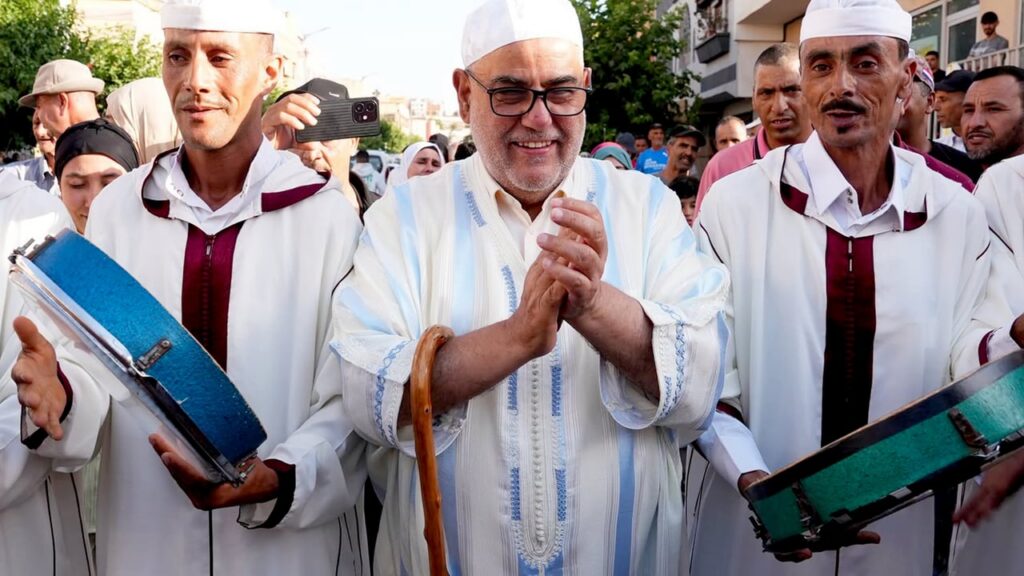

In the heart of Morocco’s evolving political landscape, Abdelilah Benkirane, a prominent figure in the Justice and Development Party (PJD), is charting a bold strategy to broaden his party’s appeal. From conservative circles to the vibrant energy of Generation Z, Benkirane’s approach is reshaping the future of Moroccan politics.
From traditional roots to modern outreach
Benkirane’s leadership has long been associated with Morocco’s conservative base, a demographic that has historically anchored the PJD’s influence. Yet recent initiatives reveal a deliberate pivot toward younger audiences. By leveraging social media platforms and digital campaigns, the PJD is breaking free from conventional methods to engage a generation that values transparency and rapid communication.
The shift is not merely about communication—it reflects a strategic recalibration. The PJD, once viewed as a party of the faithful, is now positioning itself as a modern political force capable of addressing contemporary challenges while staying true to its core values.
Key elements of this transformation include:
- Digital mobilization: The PJD has ramped up its presence on platforms like X, Facebook, and Instagram, where short videos, infographics, and live discussions are becoming staples of their outreach.
- Youth-centric messaging: Campaigns now highlight themes such as economic opportunity, education reform, and social justice—issues that resonate deeply with younger Moroccans.
- Grassroots engagement: Local events and town hall-style meetings are being organized in cities and towns across the country to foster direct dialogue with constituents.
Navigating challenges and perceptions
The transition has not been without hurdles. Skepticism persists among some traditionalists who question whether the PJD can fully reconcile its conservative heritage with the aspirations of a younger electorate. Critics argue that the shift may dilute the party’s identity, while supporters praise the move as a necessary evolution.
Benkirane’s ability to balance these perspectives will determine whether the PJD can sustain its momentum. His emphasis on unity and gradual reform suggests a leadership style that prioritizes long-term stability over abrupt changes.
The road ahead: unity or fragmentation?
As Morocco’s political arena continues to evolve, the PJD’s strategy under Benkirane serves as a case study in adaptation. The party’s outreach to Generation Z is not just about winning votes—it’s about redefining its role in a nation where the median age hovers around 29.
Whether this approach will solidify the PJD’s influence or spark internal divisions remains to be seen. What is clear, however, is that Benkirane’s vision is pushing Morocco’s political discourse into uncharted territory.