DRC at UN: critical minerals governance must curb Rwanda army’s impact
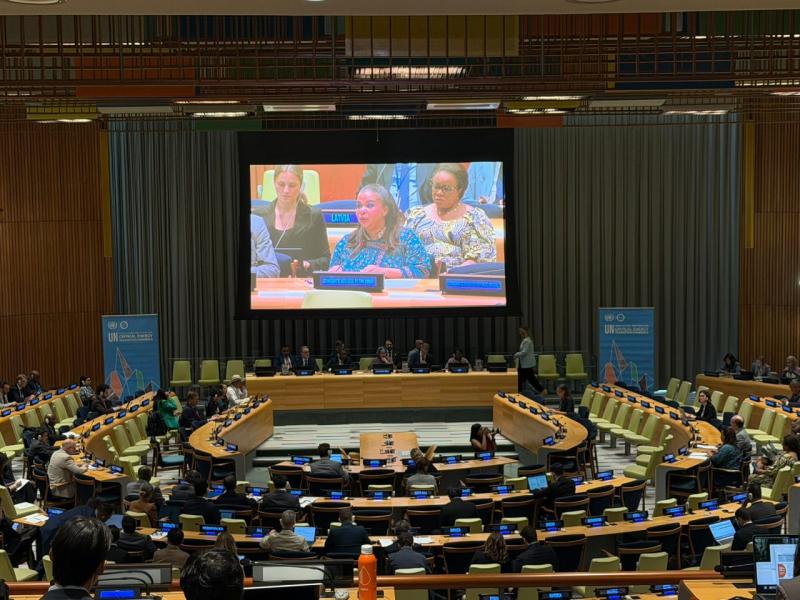
The Democratic Republic of the Congo has taken center stage at the United Nations to address the critical issue of mineral governance in the context of global energy transition. On July 14, 2026, during a high-level UN meeting in New York, the Congolese delegation, led by Foreign Minister Thérèse Kayikwamba Wagner, highlighted the urgent need for a governance framework that aligns mineral resource management with peace, security, and sustainable development.
Minerals as a driver of conflict and instability
The DRC, a nation blessed with vast mineral wealth—including some of the world’s most sought-after critical minerals—faces a paradox. While its resources are vital for the global transition to clean energy, their exploitation has fueled conflict, weakened state authority, and compromised national sovereignty.
« For countries like ours, this is no longer just an economic issue. The illicit exploitation of our minerals erodes state authority, undermines sovereignty, and can even threaten territorial integrity, » declared Thérèse Kayikwamba Wagner during her address.
Rubaya: a case study in mineral-driven conflict
The Minister cited Rubaya, a key coltan mining hub in eastern DRC, as a stark example. Despite international sanctions and UN monitoring, coltan production in the region continues to fund armed groups, particularly the M23, which the DRC and UN experts accuse Rwanda of supporting.
« Rubaya alone accounts for 15% of global tantalum demand. Between 2023 and 2024, at least 1,400 tons of coltan were smuggled into Rwanda, generating an estimated $800,000 per month for armed groups. Yet, despite these documented violations, the Rwanda Defence Forces remain unscathed by UN sanctions, »
Demanding accountability and a new governance model
The DRC is calling for a fundamental shift in how the international community addresses mineral governance. The country, which currently holds the rotating presidency of the UN Security Council, advocates for a model that directly links mineral resource management to conflict prevention, peacebuilding, and shared prosperity.
« The principles outlined by the UN Secretary-General are commendable, but they must translate into measurable action. We need a framework that ensures mineral governance contributes to peace and security—not to the financing of armed groups, »
A call for balanced partnerships and traceability
Minister Wagner also stressed the need for equitable partnerships with mineral-importing nations and multinational corporations. She emphasized that responsibility must extend across the entire value chain—from mining to manufacturing—to ensure that local communities benefit from their resources.
- Partnerships must go beyond access to raw materials. They should support local and regional value addition, infrastructure development, technology transfer, skills training, industrialization, and access to financing and markets.
- Traceability systems must combat fraud and armed group financing. These systems should not penalize legitimate artisanal miners or create new barriers to market access.
The human cost of inaction
The DRC’s plea at the UN is not merely about economic or geopolitical interests—it is about the safety and prosperity of its people. The Minister warned that the global energy transition must not come at the expense of the communities whose resources make it possible.
« The success of the energy transition cannot be measured solely by the number of electric vehicles or wind turbines produced. It must also be measured by whether the people and communities in resource-rich countries are safer, more sovereign, and more prosperous as a result, »
As the DRC continues to navigate a complex web of regional tensions, diplomatic agreements, and ongoing conflicts, its message to the international community is clear: effective mineral governance is not optional—it is essential for peace, security, and sustainable development.