French ambassador reaffirms Paris support for peace efforts in DRC at Bastille Day event
- Politics
During a special event marking Bastille Day, France’s ambassador to the Democratic Republic of Congo (DRC), Rémi Maréchaux, delivered a keynote address emphasizing France’s unwavering commitment to peace in eastern DRC, enhanced Franco-Congolese cooperation, and the promotion of multilateralism.
In his opening remarks at the ambassador’s residence, attended by dignitaries and key figures, Maréchaux clarified that the July 14 celebration in France transcends national pride or presidential homage. Rather, it commemorates the 1789 Revolution and the enduring values of liberté, égalité, fraternité that have shaped the French Republic.
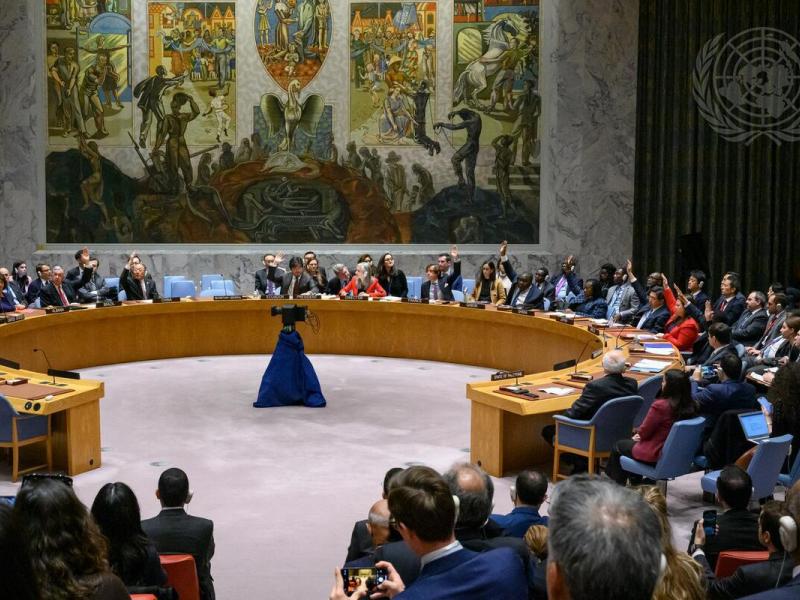
Addressing the security crisis in eastern DRC, the French diplomat reaffirmed his country’s active role within the United Nations Security Council to secure a lasting resolution to the conflict. He highlighted France’s pivotal contributions in drafting and adopting critical resolutions aimed at restoring peace.
« The Democratic Republic of Congo today faces profound challenges, foremost among them a protracted war in the eastern regions. France has been at the forefront at the UN Security Council, advocating for and securing the adoption of pivotal resolutions. Resolution 2773, unanimously adopted, lays the groundwork for a negotiated settlement: the M23 must immediately cease hostilities, withdraw its forces, and dismantle all parallel administrations. The Rwandan army must halt its support for the M23 and withdraw entirely from Congolese territory, » declared the French ambassador.
He also referenced resolutions 2808, which extended the mandate of MONUSCO for another year, and 2825 (2026), which renewed sanctions against armed groups in DRC until July 1, 2027. The latter resolution extends the mandate of the Group of Experts tasked with monitoring sanctions implementation.
« Two additional resolutions empower MONUSCO to support the implementation of the Washington Agreement and renew sanctions against armed factions, while extending the mandate of the Group of Experts to document the realities on the ground. France commends and supports ongoing mediation efforts led by the United States, Qatar, and the African Union. As President Tshisekedi reiterated on June 30, diplomacy is not a sign of weakness—it embodies the only viable path to a negotiated solution grounded in the sovereignty and territorial integrity of the DRC, » emphasized Maréchaux.
Beyond multilateral engagements, the ambassador underscored France’s commitment to strengthening bilateral cooperation with Kinshasa, particularly in security. He recounted a recent visit to Kisangani in March 2026 to oversee the regeneration of a Jungle Brigade battalion by French instructors, with plans to regenerate a second battalion in October 2026.
« France’s multilateral commitments are complemented by robust bilateral initiatives to bolster state authority and capacity through police and military cooperation. Our goal is to empower Congolese institutions to restore peace and stability, » he affirmed.
Maréchaux also celebrated the DRC’s renewed prominence on the global stage, noting its current presidency of the UN Security Council, membership in the UN Human Rights Council, and leadership in the International Conference on the Great Lakes Region. Additionally, the DRC’s candidacy for Madame Juliana Lumumba as Secretary-General of the Organisation internationale de la Francophonie reflects its growing diplomatic influence.
« These developments are not only a source of pride for the DRC but also for the international community. In an era marked by power imbalances where stronger states impose their will on weaker ones, France champions inclusive multilateralism—a framework that integrates Africa more deeply into global governance. The DRC’s return to the international stage comes at a critical juncture, as the world recognizes its strategic role in the energy transition and climate action, despite ongoing internal challenges, » he stated.
France’s stance aligns with recent diplomatic milestones, including the Washington Peace Agreement mediated by the United States between the DRC and Rwanda. The accord outlines measures for de-escalation, the phased withdrawal of Rwandan forces from Congolese soil, and the neutralization of armed groups in eastern DRC, including the FDLR, which Kigali views as a security threat. While the agreement has been widely praised, the security situation in eastern DRC remains volatile.
Meanwhile, the Doha Process, facilitated by Qatar to foster dialogue between the Congolese government and the AFC/M23 rebellion, has yet to yield tangible progress. On the ground, the AFC/M23 rebels—accused by Kinshasa, the UN, and international partners of receiving Rwandan support—maintain control over Goma, Bukavu, and multiple localities in North Kivu and South Kivu. Clashes persist in several areas, and diplomatic initiatives continue to struggle to translate into concrete results on the ground.
This persistent gap between diplomatic commitments and ground realities underscores the urgency of coordinated action to address the root causes of instability in eastern DRC.