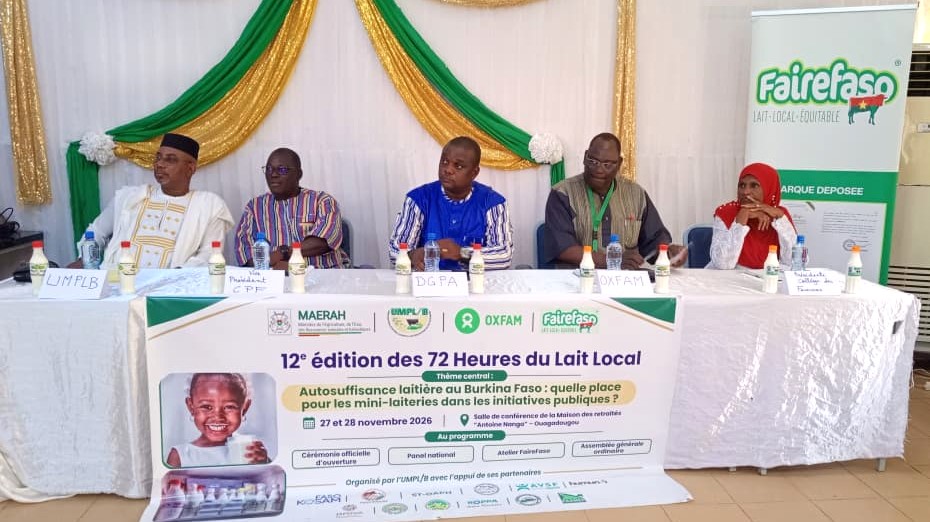
Ouagadougou hosts critical dialogue on Burkina Faso’s dairy independence, spotlighting small-scale milk processors as economic and social game-changers.
Small Milk Processors Take Center Stage in Burkina Faso’s Economic Transformation
Ouagadougou is buzzing this week as the 12th edition of the 72h du lait local unfolds. Running from November 27–29, 2026, the annual event gathers dairy farmers, processors, policymakers, and development partners to assess progress in the local dairy value chain and chart a course toward greater self-sufficiency.
The theme—“Local dairy self-sufficiency: unlocking the full potential of mini-dairies in public policy”—reflects a growing recognition of small-scale milk processors as engines of rural employment, food security, and inclusive growth.
A Growing Network with Real Economic Footprint
The national union behind the event, the Union nationale des mini-laiteries et producteurs de lait du Burkina (UMPLB), now oversees 101 registered mini-dairies and 94 producer organizations, representing nearly 4,000 members. Women make up 80 percent of these members, while young people account for 35 percent, signaling strong demographic inclusion.
In 2025 alone, the network collected 1,838,849 liters of fresh local milk and generated over 1.3 billion West African CFA francs in revenue. With each mini-dairy supporting an average of five direct jobs and seven indirect ones, the sector now sustains approximately 612 livelihoods—250 directly employed and 357 indirectly.
The professionalization of the dairy workforce has accelerated since 2021 through targeted training programs. Over 700 producers and workers have earned Certificates of Professional Qualification (CQP), while green-skills initiatives have reached seven core dairy occupations, preparing the sector for sustainable expansion.
From Local Sourcing to Market Recognition
UMPLB’s initiatives extend beyond collection and processing. Nine “restolait” units—community milk bars—have opened, offering healthy, affordable dairy options in high-traffic areas. A collective brand, “Faire Faso lait local équitable”, was officially registered with the African Intellectual Property Organization (OAPI) in late 2023, strengthening market identity and consumer trust.
Despite progress, structural barriers persist. Access to finance, cold-chain equipment, reliable energy, quality inputs, and technical advisory services remains uneven. Mini-dairies also face challenges securing contracts with public-sector institutions such as school canteens and collective catering services, even when their products meet required quality standards.
Policy Integration Holds the Key to Scale
UMPLB leadership is urging deeper alignment with national programs like Faso Kosam and Faso Guulgo. El Hadj Ibrahim Adama Diallo, president of UMPLB, emphasized the need for mini-dairies to be formally recognized as partners in public food and nutrition strategies.
“We are at a turning point,” Diallo stated. “Mini-dairies are not just small businesses—they are pillars of food sovereignty and job creation nationwide. We must institutionalize their role across public procurement, rural development, and social safety nets.”
Technical and financial partners echoed this call. Speaking on behalf of the development community, Adama Zim stressed that local dairy self-sufficiency transcends production targets: “It is a project of economic justice and social transformation that aligns with our mandate of equitable growth.”
What Decision-Makers Must Deliver Next
The event’s opening session, led by Yisso Ulrich Bakoné, Director General of Animal Production, set clear expectations. He called for a results-oriented agenda, including:
- Priority basins and services: mapping high-potential zones for milk collection, processing, and distribution to maximize efficiency.
- Partnership frameworks: clear agreements between mini-dairies and public programs to strengthen integration and avoid duplication.
- Implementation roadmap: defined timelines, responsible entities, and monitoring mechanisms to track progress and accountability.
“We are listening,” Bakoné affirmed. “The Ministry remains committed to turning these discussions into tangible support for the sector.”
Toward a More Resilient and Inclusive Dairy Future
As the 72h du lait local enter their final day, the emphasis is on moving from dialogue to delivery. For Burkina Faso’s growing network of small-scale milk processors, the stakes are high—not only for economic output, but for the daily diets of millions of families, the empowerment of rural women and youth, and the nation’s path to lasting food sovereignty.