
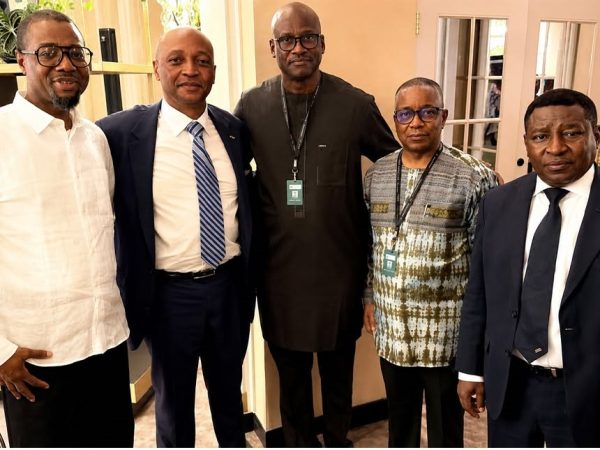
In a landmark administrative move, the Confederation of African Football (CAF) has officially recognized the joint bid of Burkina Faso, Mali, and Niger to host the African Nations Cup (CAN) in 2032. This validation, confirmed on July 18 in New York, marks the first procedural milestone for the three Sahelian nations, who now face the challenge of proving their readiness in infrastructure and security.
From declaration to long-term vision
The three federations—led by Colonel Oumarou Sawadogo (Burkina Faso), Mahamadou Cissé (Mali), and Issaka Adamou (Niger)—met with CAF President Patrice Motsepe to secure the formal acknowledgment of their bid. While this step does not guarantee the eventual hosting rights, it ensures their participation in the formal selection process, in line with CAF’s Article 7.3 on bid requirements.
Why the 2032 bid matters for the Sahel
The joint candidature reflects a broader strategy by the Alliance of Sahel States (AES) to strengthen regional cooperation beyond political and economic spheres. With the CAF’s decision to open bids for CAN 2028, 2032, and 2036 simultaneously, the three countries have gained a strategic window to build competitive bids over the next six years. However, their success hinges on addressing critical concerns—security, stadiums, hotels, and transportation—that will be scrutinized in the coming months.
A tested model for co-hosting
The CAF has prior experience with multi-country bids, as demonstrated by the upcoming CAN 2027 co-hosted by Kenya, Uganda, and Tanzania. This precedent could serve as a blueprint for Burkina Faso, Mali, and Niger, allowing them to share resources and reduce the financial burden of meeting CAF’s stringent standards. Regional unity, however, must now translate into tangible progress on the ground.
Football as a diplomatic tool
The Sahel’s bid is unfolding against a backdrop of shifting alliances. Since severing ties with the Economic Community of West African States (ECOWAS), the three military-led governments have pursued joint initiatives to assert their autonomy, from currency agreements to diplomatic alliances. A successful CAN bid would offer the AES an unprecedented international platform, despite persistent security threats—including recent attacks in Mali and Niger that underscored the region’s instability.
What’s next for the Sahel’s dream
The July 18 validation is merely the administrative green light: the real test lies in the years ahead. The three federations, in coordination with their governments, must now compile a technical dossier that meets CAF’s criteria for infrastructure, accommodation, and safety. While the path to 2032 remains long and uncertain, this bid represents more than a sporting ambition—it could symbolize the Sahel’s ability to turn regional solidarity into a global showcase.
More Stories
Paul biya’s extended absence fuels growing frustrations in Cameroon
Morocco and Benin strengthen ties with 14 landmark agreements in Cotonou
Russia appoints new ambassador to Bénin amid diplomatic shifts