The African Football Confederation (CAF) has officially recognized the joint bid submitted by Burkina Faso, Mali, and Niger to host the 2032 Africa Cup of Nations (CAN). This milestone, though largely symbolic at this stage, marks the beginning of a rigorous journey for the three Sahelian nations to prove their readiness.
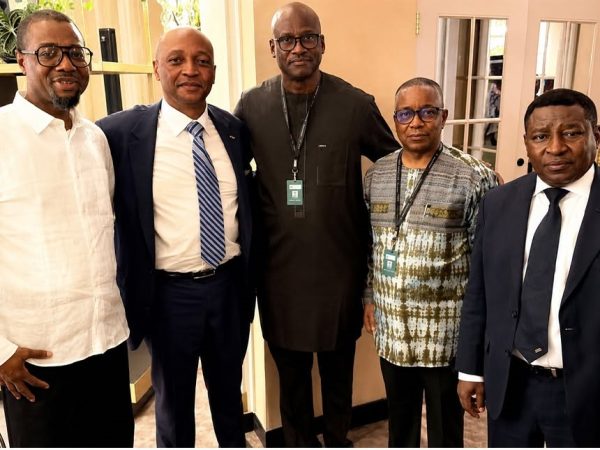
On July 18, leaders from the three countries convened in New York with CAF president Patrice Motsepe to secure the validation of their shared bid. The announcement, made public two days later by the Nigerien Football Federation (FENIFOOT), underscored the unity among the Alliance of Sahel States (AES) in pursuing this ambitious project. Yet, the road ahead remains demanding, with infrastructure and security assessments looming large in the evaluation process.
An early procedural win, not a final victory
Under CAF’s candidacy regulations, the approval of the declaration of intent is merely the first administrative hurdle. Compliance with Article 7.3 of the CAF bidding rules allows the three federations to proceed to the next phase, though it does not guarantee eventual hosting rights. According to FENIFOOT, this validation simply keeps their bid alive within the official allocation process, pending further technical scrutiny.
Why the CAF is planning three editions ahead
In early July 2026, the CAF simultaneously opened bidding windows for the 2028, 2032, and 2036 editions of the CAN. This long-term planning strategy gives member associations ample time to develop competitive bids. However, for the Sahel bid, the CAF’s decision hinges on critical factors: the condition of stadiums, hotels, and transportation networks across the three countries.
The feasibility assessment will determine whether the trio can meet the stringent requirements expected of a continental tournament host. No final decision has been set for the 2032 hosts, emphasizing the uncertainty still surrounding the process.
A regional precedent that offers hope
The concept of a three-nation co-hosting arrangement is not unprecedented. Kenya, Uganda, and Tanzania have already been selected to jointly organize the 2027 CAN, setting a potential model for Burkina Faso, Mali, and Niger. This collaborative approach could help distribute the logistical and financial burden while maximizing the use of existing facilities.
CAF leadership has praised the Sahel nations’ cooperative vision, highlighting the importance of adherence to established procedures. A statement from FENIFOOT on July 20, 2026, emphasized the need for meticulous compliance with CAF’s technical and organizational standards.
Football as a stage for Sahelian diplomacy
The joint bid reflects broader geopolitical ambitions within the AES. Since severing ties with ECOWAS, the military regimes in Ouagadougou, Bamako, and Niamey have intensified efforts to forge a unified Sahelian bloc. A successful hosting bid would provide the alliance with a rare international platform, especially amid persistent security challenges in the region. Notably, the African Union recently condemned deadly attacks in Niger and Mali, which occurred on July 17 and 18.
The CAF’s upcoming evaluation will focus not only on security conditions but also on the adequacy of sports venues, accommodation capacity, and transport infrastructure. These elements will determine whether the Sahelian bid can stand alongside competitors in the final selection.
What to expect next
The July 18 approval represents just the initial step for the Burkina Faso–Mali–Niger alliance. While the declaration of intent has been validated, the journey to 2032 is far from assured. The CAF’s final verdict will depend on the trio’s ability to deliver a technically sound bid that aligns with the federation’s high expectations.
The federations have pledged to collaborate closely with their respective governments to refine their technical proposals. Success will ultimately hinge on their capacity to address long-term infrastructure, organizational, and security demands—challenges that extend far beyond the confines of New York.
The 2032 CAN could serve as more than a sporting event; it may emerge as a testament to the Sahel’s potential to transform political unity into an international showcase.