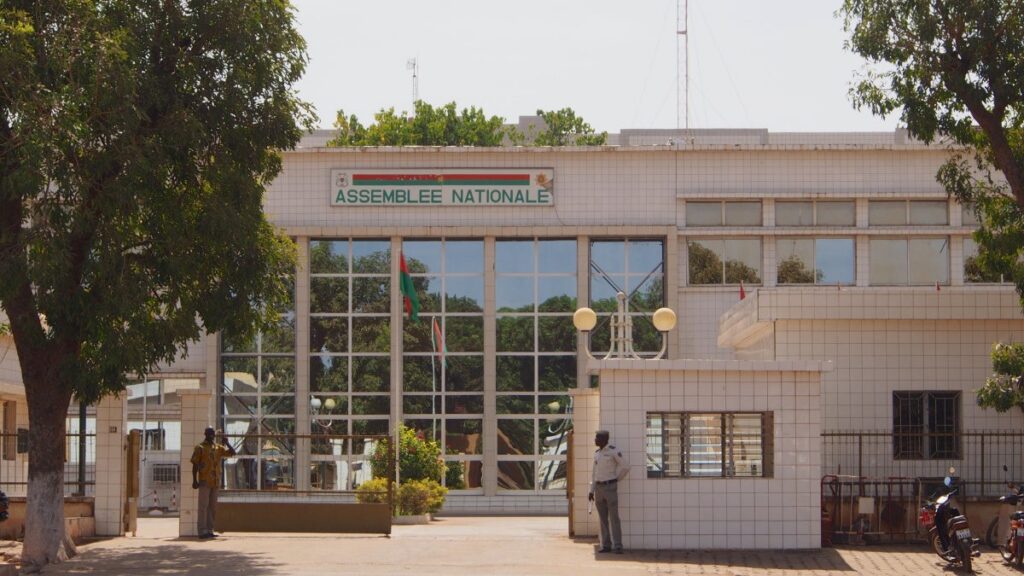
On September 1, the transitional legislative body in Burkina Faso passed a new law that classifies consensual same-sex acts as a criminal offense. This development signifies a major regression for the rights of lesbian, gay, bisexual, and transgender (LGBT) individuals. Under the new statute, those found guilty of homosexuality face up to five years in prison and significant fines.
The legislation directly threatens the rights to privacy and non-discrimination for the LGBT community. This vote took place against a backdrop of tightening civic restrictions and an ongoing crackdown by the military junta against political rivals, independent journalists, and peaceful protesters.
Historically, Burkina Faso did not have statutes that penalized private, consensual same-sex relations. Unlike many neighboring African countries, it never adopted a colonial-era penal code that outlawed acts described as sodomy.
Integrated into a broader revision of the Persons and Family Code, the criminalization clause was passed unanimously by the 71 members of the assembly. The law aims to punish any “behavior… intended to promote homosexual practices and related activities” with both incarceration and financial penalties.
The Minister of Justice and Human Rights, Edasso Rodrigue Bayala, argued that the new legal framework is a “response to the deep-seated aspirations of our society” and represents a commitment to “respecting cultural values.”
However, the junta’s decision to penalize same-sex intimacy contradicts international legal obligations, including the African Charter on Human and Peoples’ Rights and the International Covenant on Civil and Political Rights.
This move stands in contrast to recent legal progress in other African nations. Courts in Botswana, Mauritius, and Namibia have recently ruled that criminalizing homosexual behavior is an unconstitutional violation of equality and the right to a private life.
Beyond the legal ramifications, such laws often encourage hostility and physical abuse toward LGBT people. In 2014, the African Commission on Human and Peoples’ Rights (ACHPR) formally called on African Union member states to “end all acts of violence and abuse” targeting individuals based on their sexual orientation or gender identity.
The leader of the junta in Burkina Faso, Ibrahim Traoré, is being urged to withhold his signature from the Persons and Family Code. Instead, he should return the legislation to the assembly for a thorough review. A revised code must uphold the principles of non-discrimination and privacy for every citizen in Burkina Faso, regardless of their gender identity or sexual orientation.