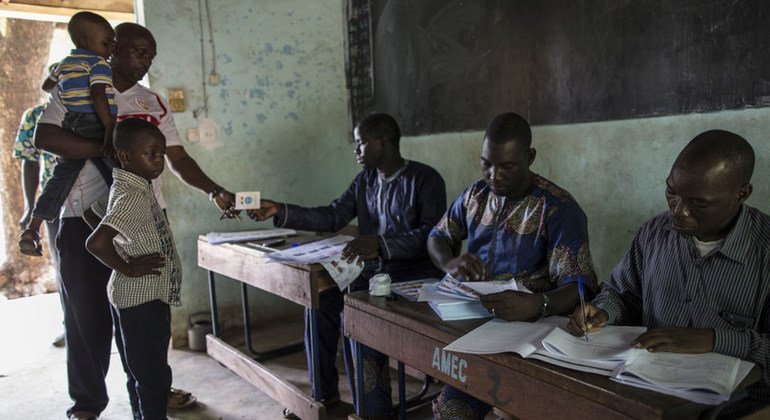
Mali’s democratic decline and mounting repression under military rule
The United Nations human rights chief has issued a stark warning about the rapid erosion of democratic norms in Mali, highlighting the junta’s escalating repression and the collapse of civilian governance.
Since seizing power in 2020, the military leadership under General Assimi Goïta has systematically dismantled democratic safeguards, concentrating authority in the hands of the presidency. “These legal overhauls have effectively shut the door on future elections,” warned Volker Türk, the UN High Commissioner for Human Rights, who urges the immediate restoration of civil liberties.
Indefinite election suspension deepens political crisis
Nearly five years after the ousting of President Ibrahim Boubacar Keïta—a coup widely condemned by the UN Security Council—Mali’s pledge to transition to civilian rule remains unfulfilled. Since Keïta’s election in 2018, no presidential vote has been held.
On July 8, a new law granted Goïta the power to extend his mandate indefinitely “until national pacification.” Months earlier, a presidential decree dissolved all political parties and “organizations with political affiliations.” These measures, Türk argues, violate citizens’ fundamental rights to participate in public life, vote, and run for office.
Crackdown on dissent intensifies
The junta’s authoritarian drift is matched by a sweeping security clampdown. Moussa Mara, a former prime minister and vocal regime critic, was arrested on August 1 for allegedly “undermining state credibility” after posting a social media message expressing solidarity with imprisoned activists. Türk condemned the tactic as a deliberate effort to silence opposition, noting a surge in detentions targeting Malians from diverse backgrounds under similar charges.
Civilian toll amid ongoing terrorism threats
While Mali continues to face relentless attacks by Al-Qaeda-affiliated groups like the Group for Support of Islam and Muslims (GSIM) and the Islamic State, military responses—including support from the Africa Corps (a Russian paramilitary group succeeding the Wagner Group)—often harm civilians. The UN reports hundreds of extrajudicial killings, forced disappearances, and arbitrary detentions since April, perpetrated by all conflict parties.
With elections indefinitely postponed and repression escalating, the UN warns that Mali risks descending into a prolonged cycle of political stagnation and violence, further destabilizing an already fragile nation.