
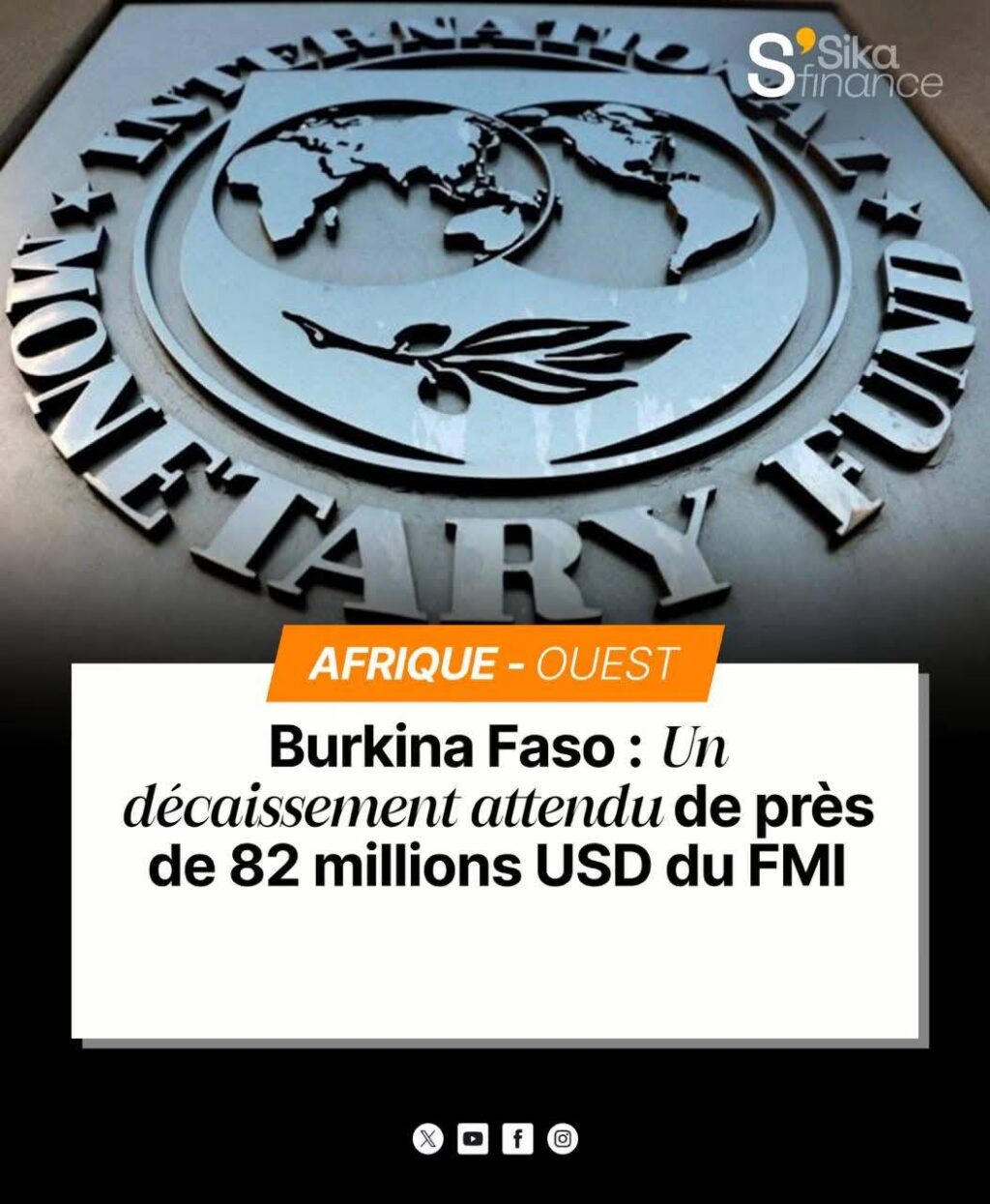
The transitional authorities in Ouagadougou have long championed a bold departure from traditional Western partnerships, yet Burkina Faso now stands on the brink of receiving a substantial financial lifeline from one of global multilateralism’s most prominent institutions. Following a recent technical mission, the International Monetary Fund (IMF) has provisionally approved a disbursement of nearly $82 million—a move that underscores a striking political paradox at a time when the nation’s economy grapples with the suffocating grip of a prolonged security crisis.
Washington’s final nod still pending for the financial boost
The IMF’s announcement is clear: while the staff-level agreement represents a critical milestone, it is not yet final. Before the full $82 million (equivalent to approximately 46.21 billion CFA francs) reaches Burkina Faso’s coffers, the proposal must receive formal approval from the Fund’s Executive Board. This standard procedure serves as a reminder that in the realm of international finance, approval is never a foregone conclusion.
The pending review by the IMF’s board will assess the feasibility of Ouagadougou’s commitments, framing the disbursement within the Extended Credit Facility (ECF). This program is designed to assist countries facing severe and prolonged balance-of-payments challenges, offering a lifeline when domestic resources fall short.
Sovereignty rhetoric clashes with fiscal reality
The decision to pursue this funding lays bare a glaring inconsistency in the current government’s political narrative. Since the military transition took hold, Ouagadougou has vigorously promoted an unwavering stance of sovereignty—severing ties with France, drastically scaling back cooperation with the European Union, and pivoting toward alternative geopolitical partners, most notably Russia.
Yet when the budget gap yawns wide and public services teeter on collapse, the limits of self-reliance become impossible to ignore. The IMF, frequently criticized by African sovereignists as a tool of Western dominance, once again becomes the lender of last resort. The arithmetic of survival forces a pragmatic reckoning that starkly contrasts with the rhetoric of absolute autonomy dominating public discourse.
How insecurity is strangling Burkina Faso’s economy
The transitional government’s decision to seek external aid stems from an alarming domestic reality: the unrelenting security crisis. For nearly a decade, Burkina Faso has been plagued by attacks from non-state armed groups, which now control vast swathes of the country’s territory.
This pervasive instability has shattered the nation’s economic momentum. Supply chains lie in tatters, rural access to farmlands is severely restricted, and the mining sector—the backbone of Burkina Faso’s economy—operates at a fraction of its capacity. The fallout is stark: scores of businesses have shuttered or relocated to more stable neighboring nations, leaving widespread technical unemployment in their wake. For the state, this means lost tax revenue and a suffocating squeeze on the private sector.
IMF demands: structural reforms under strict oversight
Securing the 46.21 billion CFA francs comes with stringent conditions. To unlock the funds, Burkinabe authorities have had to accept a series of binding reform agreements that place their economic governance under intense scrutiny.
The IMF’s traditional demands include rigorous fiscal consolidation. For Burkina Faso, this translates into tighter revenue mobilization—particularly through tax efficiency reforms—and the rationalization of public spending. Subsidies on energy and public sector wages are frequently targeted, forcing the transitional authorities to accept periodic evaluations of their economic performance. These oversight mechanisms starkly contrast with the government’s stated commitment to interference-free governance, exposing the tension between political ideals and fiscal necessity.
The path to disbursing these $82 million reveals the harsh realities of governing in a state of deep crisis. While Ouagadougou strives to project an image of absolute sovereignty, the pressing need to fund essential services and sustain its military efforts leaves little room for maneuver. If the IMF’s Executive Board grants final approval, the government will gain a vital financial reprieve. Yet this lifeline also underscores an enduring truth: until the security challenge is resolved at its core, Burkina Faso’s economy will remain shackled to international financial institutions it resists on the ideological battlefield.


More Stories
Niger: Tiani faces fallout from special forces anger after Russian intervention
Mali : 17 morts dans les rangs des dozos, le JNIM accentue sa pression
Sahel : le pari des juntes tourne-t-il à l’échec sécuritaire ?