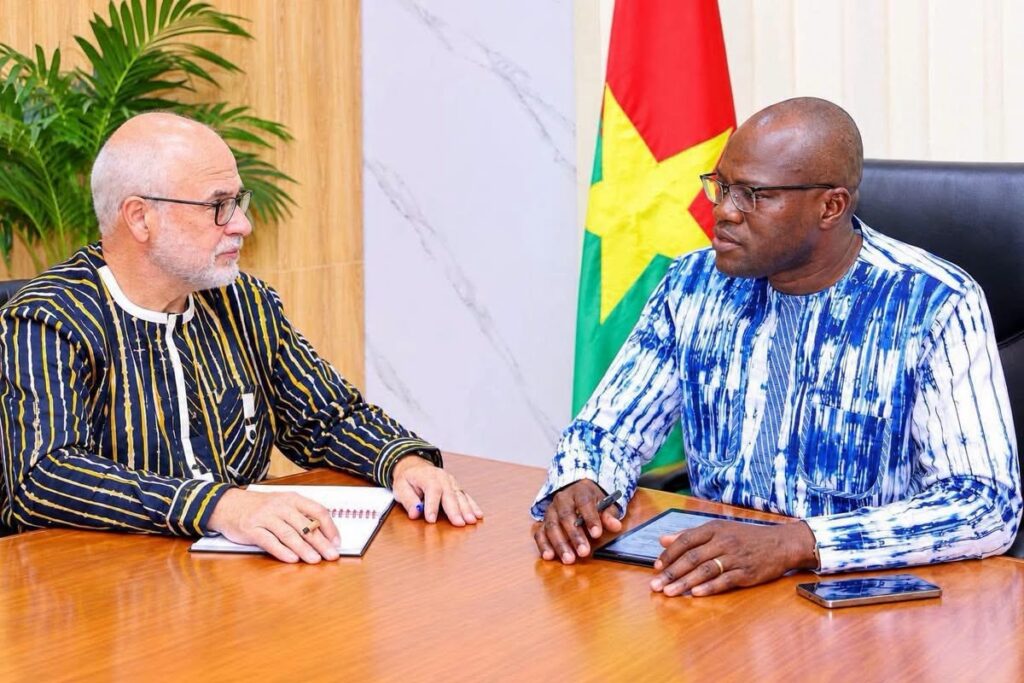
Between bold claims and fiscal dependency
Since seizing power, Burkina Faso’s transitional administration under Captain Ibrahim Traoré has centered its economic narrative on breaking free from traditional financial partners. Official communications repeatedly emphasize the nation’s commitment to self-sufficiency, asserting that domestic resources will now drive development, reclaim national wealth, and eliminate external financial dependence. Yet the economic data suggests a far more complex reality, one that demands closer examination.
New IMF funding looms despite sovereign rhetoric
The International Monetary Fund (IMF) disclosed on November 4, 2026, that it had finalized a technical agreement with Burkinabè authorities, potentially unlocking an $87.67 million funding package approximately 49.6 billion West African CFA francs. This facility stems from two concurrent economic programs: the Extended Credit Facility (ECF) and the Resilience and Sustainability Facility (RSF), with disbursement contingent upon IMF board approval expected by mid-January 2027.
Of this total, $65.38 million is designated under the ECF, while $22.29 million falls under the RSF. Importantly, funds remain theoretical until formal authorization is granted, yet their conditional framework is already firmly established.
How public declarations clash with financial dependence
While no nation should be faulted for seeking external financing amid pressing economic needs, Burkina Faso’s situation reveals a stark disconnect between policy proclamations and fiscal practice. If domestic revenues are adequate, why does the government continue to rely on international financial institutions? Conversely, if IMF support remains indispensable, why sustain a narrative of complete disengagement from conventional funding mechanisms?
This inconsistency calls for transparent justification rather than additional rhetorical assurances. Citizens deserve clear explanations not another layer of political messaging.
The limited power of natural wealth
Burkina Faso harnesses considerable gold reserves, which the IMF acknowledges as a critical driver for public revenue through sustained mining production and elevated global gold prices. However, resource ownership does not equate to liquidity. The challenge lies in transparently demonstrating how extractive revenues are mobilized, allocated, and translated into tangible public benefits.
Key accountability questions remain unanswered: What percentage of mining profits enters the national budget? How much finances critical infrastructure, education, or healthcare? What measurable improvements have Burkinabè households observed?
Genuine economic sovereignty demands more than political declarations it requires converting national wealth into visible enhancements in daily living standards.
IMF underscores accountability and governance reforms
In its mid-2026 assessment, the IMF outlined essential priorities for Burkina Faso: strengthening domestic revenue mobilization, enhancing public finance governance, institutionalizing transparency, and protecting social expenditures for vulnerable populations. The Fund further urged prudent debt management and clearer public financial disclosure.
These directives prompt a critical inquiry: beyond rhetorical sovereignty claims, what enforceable assurances exist for citizens regarding the responsible stewardship of public funds?
Citizens deserve facts, not slogans
While official discourse champions financial independence, Burkinabè citizens have a right to accurate information about the true state of public finances and the obligations assumed in exchange for international support. Accessing IMF resources is not inherently indicative of economic failure, but it heightens the importance of balancing rhetorical aspirations with evidence-based policymaking.
Genuine sovereignty does not mean publicly condemning international financial institutions while silently negotiating their assistance when fiscal gaps emerge. It means telling the truth about available resources, the conditions of external financing, and the concrete outcomes of government spending decisions.
Path forward: coherence over contradiction
The debate transcends the $50 billion figure. It centers on the consistency between political promises, economic strategy, and fiscal transparency. Burkina Faso’s challenge is not securing external funding it is aligning national ambitions with verifiable accountability and meaningful results for its people.
By Marguerite Ndongo — Journalist