Moscow’s unmet promises leave Ouagadougou scrambling for euros
After years of publicly distancing itself from European partners in favor of aligning with Moscow, Burkina Faso’s transitional government is now reversing course. Recent diplomatic maneuvers reveal a stark reality: despite anti-Western rhetoric, Ouagadougou remains critically dependent on European financing to sustain its economy and address pressing security and infrastructure needs.
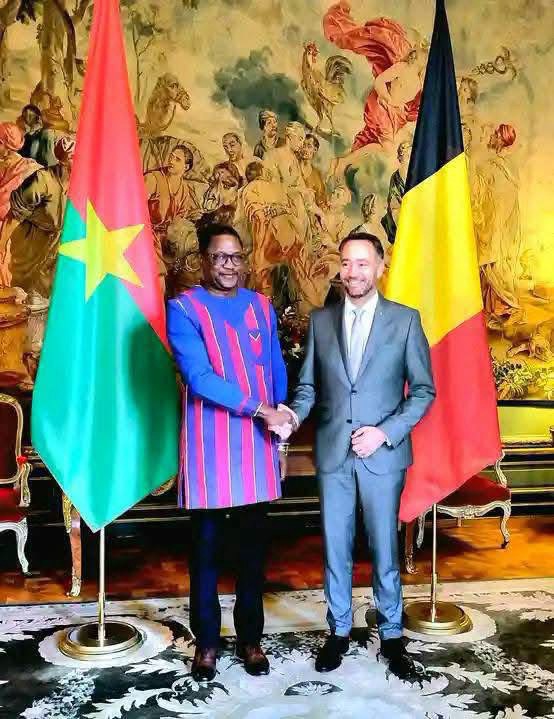
In early November 2026, Burkina Faso’s foreign minister, Karamoko Jean Marie Traoré, traveled to Brussels for a series of high-stakes meetings. The primary objective? Securing financial commitments from the European Union and Belgium to offset critical budgetary shortfalls. This diplomatic pivot comes just weeks after Burkina Faso participated in the Russia-Africa economic forum in Moscow, where grand promises of Russian investment were made but little tangible financial support materialized.
Russia’s empty promises vs. Belgium’s €40 million commitment
The stark contrast between Russian rhetoric and European action underscores Burkina Faso’s financial dilemma. While Moscow touted new cooperation agreements during the November forum such as a memorandum between the West African Economic and Monetary Union’s investment bank and Russia’s VEB.RF the tangible financial benefits remain elusive. Cooperation frameworks do not equate to immediate funding, leaving Ouagadougou’s economic vulnerabilities unaddressed.
In contrast, Belgium announced a concrete financial pledge: €40 million through Enabel, its international development agency, for the post-2027 period. This commitment highlights the persistent role of European partners in Burkina Faso’s financial landscape, despite the junta’s public rejection of Western influence.
Budget deficits expose the limits of anti-Western posturing
Burkina Faso’s 2026 budget starkly illustrates the financial strain. With projected revenues of 3.4 trillion FCFA against expenditures of 3.9 trillion FCFA, the country faces a deficit of nearly 500 billion FCFA. The International Monetary Fund forecasts a budget shortfall of 4% of GDP for the year, signaling deep fiscal challenges.
These figures reveal a harsh truth: ideological posturing cannot pay salaries, fund infrastructure projects, or address security threats. The government’s survival depends not on slogans, but on securing practical financial partnerships regardless of their origin.
Can Burkina Faso afford to turn its back on Brussels?
Despite years of criticizing European cooperation as exploitative or neo-colonial, the junta’s recent actions tell a different story. The decision to engage Brussels and renew partnerships with the EU and its agencies demonstrates that pragmatic economics outweighs political narratives.
What the Brussels talks mean for Burkina Faso’s future
The November 2026 meetings in Belgium were not merely symbolic. According to official statements, discussions focused on consolidating financial commitments, particularly in sectors like agriculture, healthcare, and education. The presence of Enabel and Bio Invest at the negotiations underscores the depth of cooperation that Burkina Faso continues to rely on.
This shift raises a critical question: If cooperation with the West is indispensable enough to justify high-level diplomatic engagement, why does the government maintain a public posture of confrontation? The disconnect between words and actions risks undermining public trust, especially when Burkinabè citizens bear the brunt of unmet economic needs.
The sovereignty paradox: developing through dialogue instead of division
Sovereignty, in economic terms, is not achieved by rejecting all Western partnerships. It is built through strategic alliances that deliver tangible results whether from Moscow, Brussels, or both. Yet Burkina Faso’s transitional leadership has yet to demonstrate how Russian partnerships are filling the financing gaps left by reduced European support.
The burden of proof lies with Ouagadougou. If the junta truly believes in its anti-Western stance, it must present concrete evidence of Russian financial contributions replacing European funding. Until then, accusations of hypocrisy risk overshadowing Burkina Faso’s efforts to navigate a complex international landscape.
Charting a course forward
For Burkina Faso to stabilize its economy and address its citizens’ needs, a flexible diplomatic approach is essential. The junta must choose between two paths:
Path one: Double down on ideological rhetoric, risking further financial isolation and deeper economic decline.
Path two: Acknowledge the necessity of diverse partnerships including Brussels and align public communication with economic realities.
The choice is clear. While Moscow may offer political alignment, only Brussels has delivered measurable financial support. Until Russian investments match European commitments, Ouagadougou’s strategy remains a gamble one that Burkinabè citizens cannot afford to lose.
In the end, Burkina Faso’s development will be measured not by the volume of its anti-Western speeches, but by the strength of its balance sheets and the prosperity of its people.
By Marguerite Ndongo — Journalist