From political boldness to financial reality: Burkina Faso’s gold gamble
The Burkina Faso government, led by Captain Ibrahim Traoré, made a historic move in 2024 by nationalizing the country’s two flagship gold mines—Boungou and Wahgnion. This decision marked a clear break from foreign control, aiming to redirect the nation’s mineral wealth directly into its coffers. Yet, two years later, Ouagadougou faces an unrelenting economic challenge: reviving dormant industrial giants demands colossal investment.
A sovereignty play with high stakes
The story of Boungou and Wahgnion mirrors the broader shifts sweeping across West Africa’s extractive sector. Once operated by Canada’s Endeavour Mining, these gold deposits were transferred in 2023 to Lilium Mining. However, disputes over operations and finances prompted Burkina Faso’s transitional authorities to take decisive action in 2024.
Through the Société de Participation Minière du Burkina (SOPAMIB), the government seized control, vowing to maximize state revenue and cement economic sovereignty in a sector critical to national development. But transforming these mines from foreign-run enterprises into national champions has proven far more complex than anticipated.
From stagnation to revival: the uphill battle for production
Under Endeavour Mining’s management in 2022, both sites thrived, collectively churning out 240,000 ounces of gold—116,000 from Boungou and 124,000 from Wahgnion. However, after the transition to Lilium Mining and amid rising regional insecurity, production plummeted. Boungou, in particular, lay idle for two years, its potential untapped.
It wasn’t until July 2025 that the first gold bars rolled off its assembly lines under state ownership. Now, the focus is on reclaiming lost ground. For 2026, SOPAMIB has set ambitious targets, especially for Wahgnion, where officials plan to extract 92,000 ounces. The Ministry of Mines is even more ambitious, projecting a combined output exceeding 7 metric tons (around 225,000 ounces) across both sites—a figure that would nearly match 2022’s peak performance. The catch? Achieving this hinges on one critical factor: funding.
Financing the dream: BOAD’s lifeline and state-backed investments
To turn these plans into reality, Burkina Faso’s parliament approved a €45.7 million (30 billion CFA francs) loan from the West African Development Bank (BOAD). This financial lifeline is complemented by a national contribution of 3.21 billion CFA francs (€4.9 million) from the state budget.
The funds aren’t earmarked for debt repayment but for high-impact infrastructure upgrades:
- Heavy machinery acquisition: Modernizing the mining fleet to boost efficiency.
- Tailings management enhancement: Strengthening waste storage systems to meet environmental and technical standards.
- Energy independence for Wahgnion: Connecting the mine to Burkina Faso’s national grid via a dedicated SONABEL power line, eliminating costly reliance on imported fossil fuels and reducing the site’s carbon footprint.
The latter is particularly transformative. Until now, Wahgnion’s operations depended on expensive diesel generators, inflating production costs and environmental harm. A grid connection could slash expenses and align with global sustainability trends.
The cost of outsourcing: a financial hemorrhage
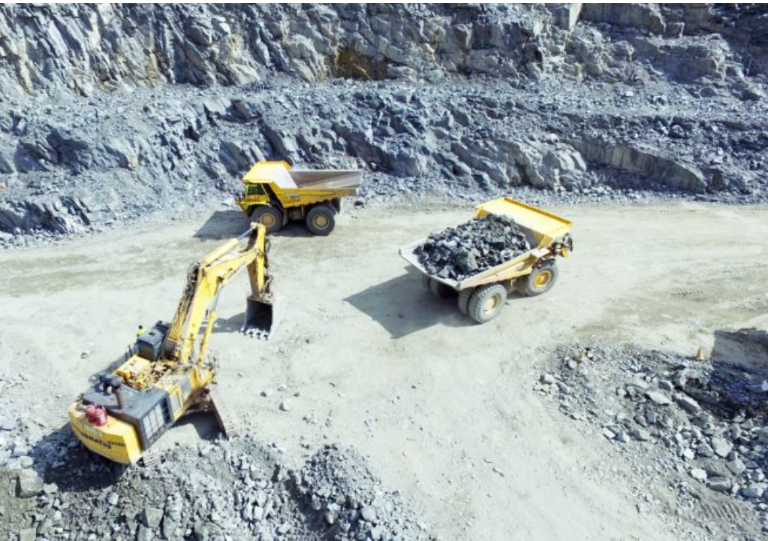
The urgency of these investments stems from an unsustainable financial model. By assuming control of the mines without owning the necessary equipment or logistical expertise, SOPAMIB has relied heavily on contractors and equipment rentals. The costs have been staggering.
According to the Mines Minister, Yacouba Zabré Gouba, renting machinery and hiring subcontractors for Wahgnion alone costs over 3 billion CFA francs (€4.57 million) per month. Such hemorrhaging of cash flow erodes profitability, even with gold prices riding historic highs. The BOAD loan aims to break this cycle by enabling the government to purchase its own fleet, internalize operations, and reduce dependency on external providers. This shift is crucial for restoring financial viability and justifying the initial investment.
A litmus test for Burkina Faso’s mining ambitions
Beyond technical hurdles, Boungou and Wahgnion serve as a real-world test for Burkina Faso’s state-led mining model. In a region where Western multinationals have long dominated extraction, Ouagadougou’s pivot toward direct operation is under intense scrutiny—both from its Sahel Alliance peers and international investors.
The success of this strategy hinges on a delicate balance. The government must demonstrate managerial rigor, avoiding bureaucratic inefficiencies or governance pitfalls that plague many state-owned enterprises. Simultaneously, it must ensure the security of sites and supply routes in a volatile regional climate—a factor that contributed to previous private operators’ reluctance to maintain operations.
From symbolism to sustainability: the road ahead
The nationalization of Boungou and Wahgnion was celebrated as a political victory, a tangible step toward reclaiming national resources. But symbolism alone won’t sustain an industry.
The BOAD-funded upgrades mark the beginning of the operational phase, but the hardest work lies ahead. To transform these mines into profitable, long-term assets, Burkina Faso must slash costs, stabilize production, and prove that state-run operations can outperform private multinationals in efficiency and accountability. If successful, the country could pioneer a new model of mineral governance in West Africa. If not, the dream of nationalized wealth risks becoming a financial albatross around the neck of an already strained state budget.