
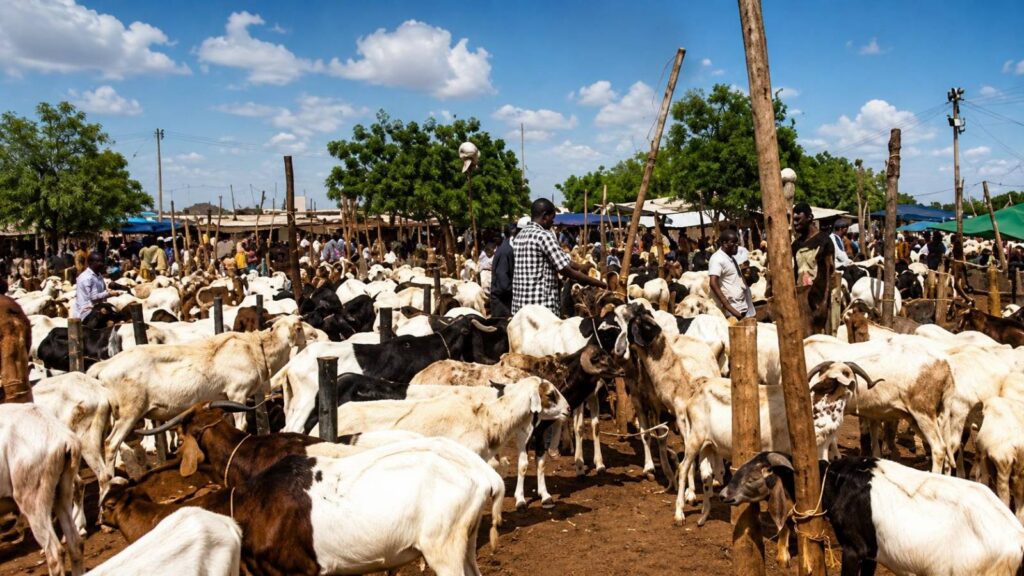
The government of Burkina Faso has taken a bold step by banning livestock exports ahead of Tabaski, prioritizing local consumers over regional market dynamics. While the move aims to ease financial burdens on urban households, it carries significant contradictions and economic pitfalls that could backfire spectacularly.
Urban relief, rural ruin: the cost of political gambits
A sharp divide has emerged: city dwellers in Ouagadougou benefit from lower sheep prices, a strategic move to ease consumer pressure during the festive season. Yet this comes at a dire cost for rural communities, particularly livestock breeders. Already grappling with spiraling insecurity, rampant cattle theft, and shrinking grazing lands, these producers now face another existential threat—the loss of lucrative export opportunities to Côte d’Ivoire and Bénin. By cutting off their primary revenue streams, the state is effectively subsidizing urban celebrations while deepening rural poverty.
Can Burkina Faso’s market absorb the livestock surge?
The government’s logic hinges on flooding the domestic market to drive prices down. However, Burkina Faso’s consumer base has finite capacity. Tabaski is a one-time surge in demand; what happens to the surplus animals once the celebrations end? Livestock is a perishable asset—each day without sales incurs feeding and maintenance costs. If breeders cannot offload their stock or are forced to sell at a loss, the entire sector risks financial asphyxiation within months. While plans to modernize abattoirs and boost local processing are commendable, current infrastructure is ill-equipped to handle such a sudden influx.
Regional tensions rise as Burkina Faso isolates itself
This decision underscores a growing trend: Ouagadougou’s willingness to sacrifice regional economic ties for perceived sovereignty. By halting cattle exports to neighbours, Burkina Faso wields its livestock sector as an economic bargaining chip. Yet trade is a two-way street. Côte d’Ivoire and Bénin are already exploring alternatives, with Côte d’Ivoire eyeing Mauritania as a potential replacement. Over time, Burkina Faso risks losing its long-standing trade partnerships permanently. This move also exposes the fragility of regional integration, where short-term self-sufficiency trumps long-standing West African trade agreements. Economically, it’s a high-stakes gamble that jeopardizes livestock farmers, imperils the sector’s future, and further isolates the country from its natural economic allies.


More Stories
Niger: Tiani faces fallout from special forces anger after Russian intervention
Crisis in Niger, IMF agreement in Sénégal, and Moroccan elections: Five essential stories
RDC-Israël : un rapprochement aux enjeux multiples