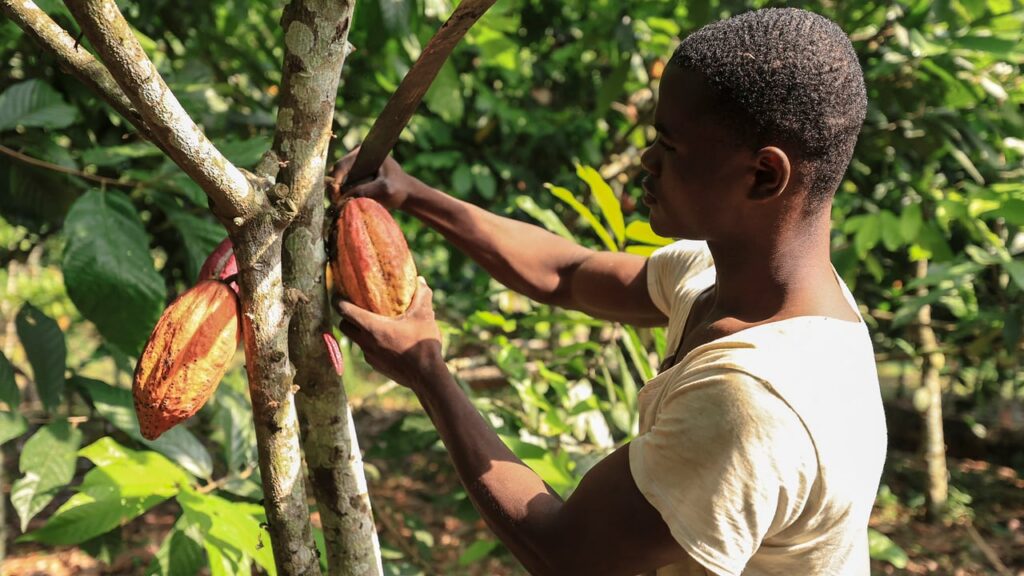

The cocoa sector in Cameroon stands at a critical crossroads as producers confront an array of pressing challenges. From fluctuating global prices to rising production costs, farmers in key growing regions are grappling with financial pressures that threaten their livelihoods. The crisis has deepened in recent months, leaving many questioning whether the industry can recover without urgent intervention.
Global market volatility weighs heavily on local farmers
International cocoa prices have experienced dramatic swings in the past year, creating instability for producers in Cameroon. While global demand for chocolate products remains high, the disconnect between retail prices and farmgate earnings has widened. Many Cameroonian cocoa farmers report receiving barely enough to cover basic expenses, despite their hard work in the fields.
Industry insiders highlight how price volatility has become a defining feature of the market. Exporters and cooperatives struggle to secure stable contracts, while smallholders face mounting uncertainty about future earnings. The situation is particularly acute in regions like Centre and South, where cocoa cultivation is a primary economic activity.
Production costs surge amid climate and logistical hurdles
Agricultural inputs such as fertilizers and pesticides have seen significant price increases, further squeezing profit margins. Farmers cite rising fuel costs and transportation challenges as major obstacles to bringing their harvests to market. The logistical bottlenecks are compounded by aging infrastructure, which slows the movement of goods from rural farms to processing centers.
Climate change has added another layer of complexity. Erratic rainfall patterns and prolonged dry seasons have reduced crop yields in some areas, forcing farmers to adapt their cultivation techniques. The combination of environmental pressures and economic strain has pushed many to reconsider their long-term commitment to cocoa farming.
Government support and industry collaboration: a path forward?
In response to the crisis, Cameroon‘s government has initiated discussions with industry stakeholders to explore potential solutions. Proposals include subsidized agricultural inputs and enhanced price stabilization mechanisms to protect farmers from extreme market fluctuations. Meanwhile, some cooperatives are investing in training programs to improve farming practices and boost productivity.
Yet, the road to recovery remains uncertain. Farmers emphasize the need for direct financial assistance and long-term contracts with buyers to ensure sustainable incomes. Without immediate action, the future of cocoa farming in Cameroon could face irreversible decline, with ripple effects on the national economy.
Voices from the field: farmers share their struggles
In a visit to Ebebda, a rural community in Cameroon‘s cocoa belt, local producers shared candid accounts of their challenges. Jean, a farmer with over two decades of experience, described how rising costs have made it nearly impossible to reinvest in his plantation. Marie, another smallholder, lamented the lack of access to affordable credit, which prevents her from expanding her operations.
These personal stories underscore the human toll of the crisis. For many families, cocoa is not just a crop—it is a lifeline that sustains generations. The current downturn threatens not only livelihoods but also the cultural heritage tied to cocoa farming in Cameroon.
Looking ahead: can Cameroon’s cocoa sector bounce back?
The path to recovery will require coordinated efforts from all stakeholders—farmers, government, and private sector actors. Key priorities include investing in modern farming technologies, improving market access, and strengthening climate resilience. While the challenges are daunting, there is cautious optimism that targeted interventions could revitalize the industry.
For now, cocoa farmers in Cameroon remain resilient, holding onto hope that better days are ahead. Their determination, paired with strategic support, could yet turn the tide and restore stability to one of the country’s most vital agricultural sectors.




More Stories
Simporé’s televised admission: can Burkina Faso’s army still hold the line?
Gabon’s ghost worker purge: can 11 billion CFA francs in savings really reach the people?
Is Burkina Faso’s anti-terror drive becoming a war on moderate imams?