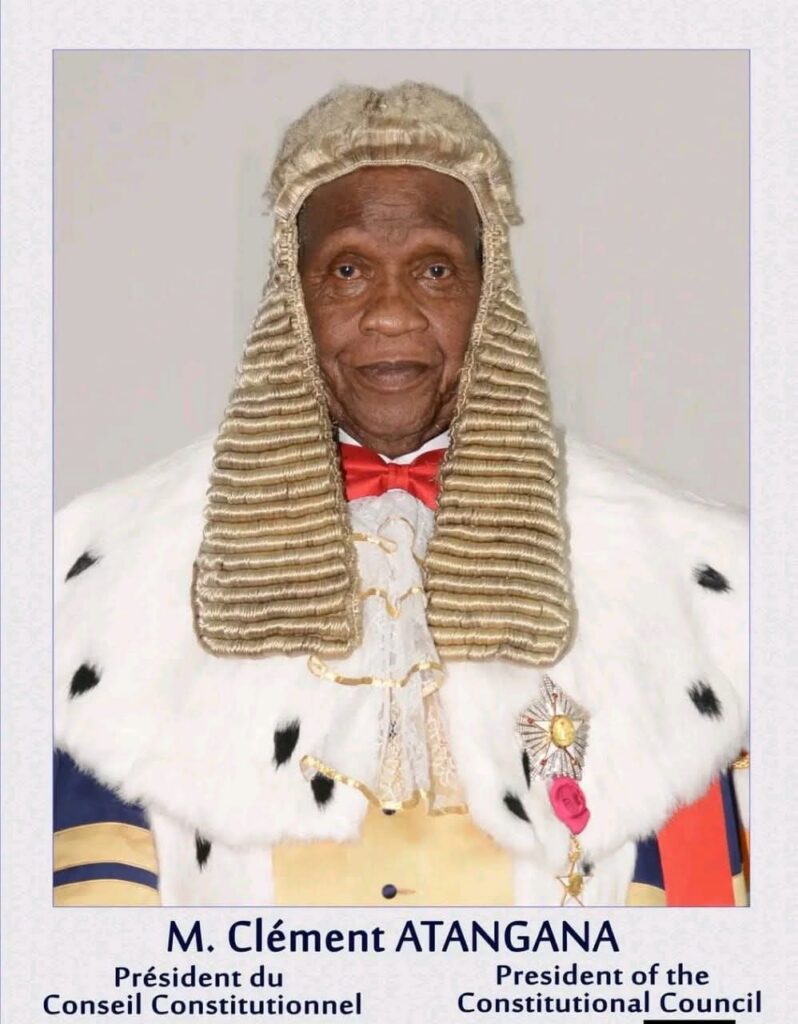
A void at the top of Cameroon’s electoral arbiter
Clément Atangana, the man who presided over Cameroon’s Constitutional Council, has died in Paris at the age of 85. He had been evacuated to France for intensive medical treatment, but the care he sought ultimately could not save him. His passing, confirmed this morning, closes a career that ended under a cloud of controversy and raises immediate questions about the direction of the institution he leaves behind.
From Ngomedzap to the heart of state power
Born in Ngomedzap, in the Nyong and So’o division, Atangana rose to the rank of magistrate outside the standard hierarchy. His tenure as head of the Constitutional Council, however, became synonymous with accusations of partiality. The 2018 presidential election petitions proved to be the defining moment: under his leadership, the Council dismissed every challenge with a single word — “irrecevable” (inadmissible). The public soon adopted that term as a nickname for the man himself, and the Council’s reputation as a body beholden to the ruling party and the RDPC took root.
Moments that fueled suspicion
Atangana often provided ammunition to his critics. On the evening the 2018 presidential results were announced, a video circulated on social media showing him celebrating with his family, boasting that they had secured victory for the incumbent, Paul Biya. Addressing his relatives, he referred to the RDPC candidate as “your candidate” — a remark that deepened suspicions of bias.
In 2025, he took part in a meeting of the Nyong and So’o Development Committee, which ended with a motion of support for Paul Biya and a call for him to run in the next presidential election. A reporter from the government-owned daily, present for media coverage, reported the event, sparking widespread debate and criticism. Atangana fought hard to clear his name, insisting he had attended a meeting of an apolitical association and had not taken part in the portion that produced the motion. Yet the perception of support for Biya had already taken hold among many opposition figures. He had also been filmed in a jubilant moment after his appointment, further cementing that image.
Reactions and the road ahead
News of his death has triggered a wave of reactions across Cameroon’s political class. For government supporters, Atangana leaves a legacy of institutional stability. For critics, his death marks the end of an era that tarnished the Council’s credibility. The coming days will reveal how the vacancy is filled and whether the next president can restore confidence in an institution whose role in electoral disputes remains under scrutiny.
What comes next for the Constitutional Council?
With no clear successor named, the question on many lips is whether the Council will continue on the same path or take a new direction. The appointment of a new president will be watched closely, both at home and abroad, as a test of Cameroon’s commitment to impartial electoral justice. For now, the nation waits — and debates — what Atangana’s departure means for the future of its democracy.