Cameroon’s strategic financial lever: unlocking infrastructure development through domestic savings
Cameroon, like many African nations, has experienced a tightening of access to traditional external funding sources for several years. This includes concessional multilateral loans, public development assistance, and increasingly expensive international bond markets.
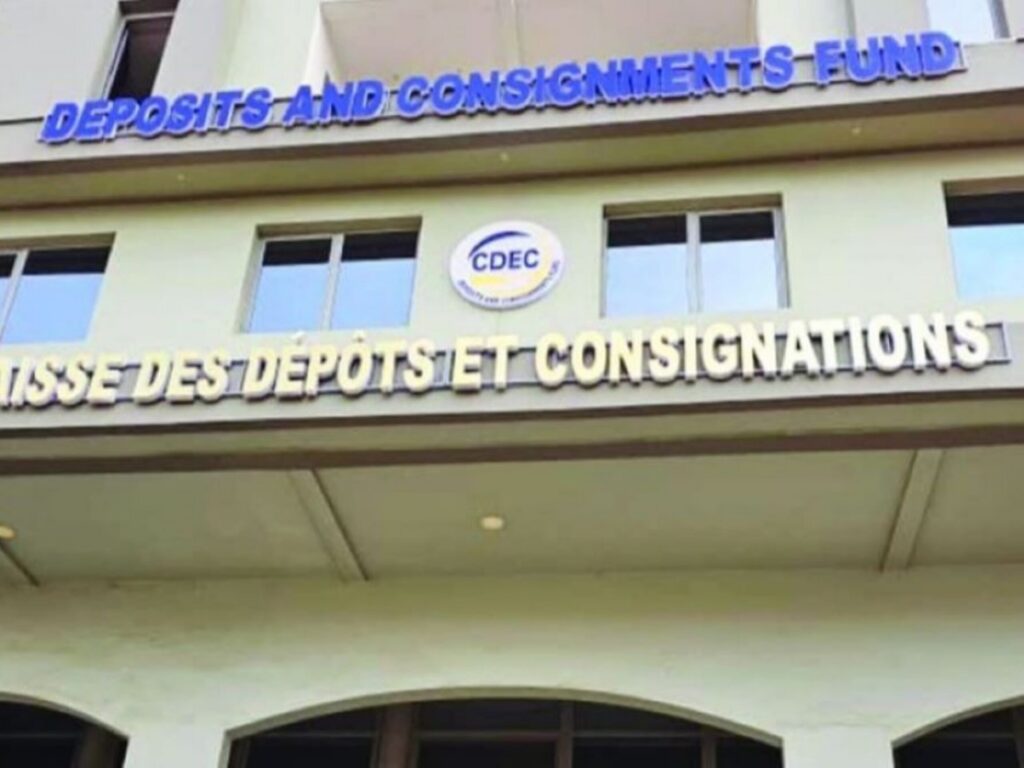
Given this environment, mobilizing domestic savings – both public and private – has become a critical strategic imperative. This is precisely the role of the Caisse des Dépôts et Consignations (CDEC), which officially became operational on January 20, 2023, through a presidential decree, fifteen years after its legal establishment by a 2008 law. This insight comes from analyst Patrick Duprix Anicet Mani.
A proven model: lessons from the French Caisse des Dépôts
The French experience highlights how a national deposit fund can effectively transform dormant savings into a robust tool for structural development. This is achieved through three core mechanisms:
- The centralization of regulated financial resources (such as Livret A savings accounts, notarial funds, and inactive accounts) within a secure public institution.
- The strategic conversion of short-term deposits into long-term loans, underpinned by a state guarantee.
- The creation of a significant leverage effect, where every centralized euro of savings directly finances crucial infrastructure projects like social housing, urban regeneration, fiber optic networks, and public transport systems.
The Cameroonian CDEC is designed to mirror this successful framework. Its mandate involves collecting, safeguarding, and ensuring the long-term profitability of resources that are typically idle, channeling them specifically to support key public policy initiatives.
CDEC’s progress: measurable growth and impact
Available data confirms that the CDEC is already demonstrating significant momentum:
Cadre juridique et catégories de ressources mobilisables
The foundational 2008 law and its 2011 implementing decree delineate the CDEC’s resources into four distinct categories: deposits (including notary funds and inactive bank accounts), administrative consignments (such as public contract bonds), judicial consignments (like bail and court-ordered settlements), and a fourth category encompassing similar funds.
Mécanisme coercitif de collecte
To ensure robust resource mobilization, a Prime Minister’s decree, issued on December 1, 2023, established a strict deadline for banks, insurance companies, notaries, and court registries to transfer their consigned funds. Failure to comply incurs external audits and late interest penalties, calculated at the BEAC marginal lending facility rate plus two percentage points. This binding legal framework is designed to secure the consistent growth of CDEC’s financial resources.
Résultats à trois ans
Richard Evina Obam, the Director General, announced that three years after its operational launch, the CDEC had centralized over 151 billion FCFA (approximately 260 million USD). While a significant sum, this amount still represents a fraction of the identified potential, with earlier estimates suggesting more than 1,000 billion FCFA lay dormant within the banking system.
The transformational vehicle: a dedicated banking subsidiary
The most pivotal element for realizing CDEC’s infrastructure ambitions is the planned creation of a specialized banking subsidiary, for which a feasibility study commenced in February 2025. This subsidiary is explicitly designed to:
- Assist the State, decentralized territorial communities (CTD), and enterprises in securing capital for infrastructure development.
- Provide support to Small and Medium-sized Enterprises (SMEs) seeking to participate in public procurement contracts.
- Facilitate initial public offerings (IPOs) and evaluate diverse business opportunities.
- Offer long-term financial products, including loans, guarantees, and leasing solutions, tailored to the needs of Cameroonian stakeholders.
This critical function structurally aligns the CDEC with the ‘Banque des Territoires’ model of the French CDC. It signifies a fundamental shift from merely acting as a custodian of regulated funds to becoming a patient, long-term investor in Cameroon’s real economy.
Potential application areas in Cameroon
The CDEC’s funding capabilities could be applied across various crucial sectors in Cameroon, mirroring the impact seen in France:
– Example: Housing
- In France: HLM loans funded by savings deposits.
- In Cameroon: Financing social housing initiatives and the ambitious 10,000 housing program.
– Example: Urban infrastructure
- France: ANRU (National Agency for Urban Renewal), Grand Paris Express.
- Cameroon: Development of urban road networks and sanitation projects in major cities like Yaoundé and Douala.
– Example: Digital sector
- France: Extension of fiber optics in rural areas.
- Cameroon: Expansion of high-speed internet coverage beyond metropolitan centers.
– Example: Local authorities
- France: Loans provided to municipalities.
- Cameroon: Funding for decentralized territorial communities (CTD) to bolster decentralization efforts.
– Example: Transport
- France: Concessions for motorway development.
- Cameroon: Investment in key road corridors, the Kribi port, and the creation of a national railway hub.
Conditions for success and areas requiring vigilance
However, a comparative analysis reveals several indispensable prerequisites for the CDEC’s optimal functioning. Without these, the institution risks remaining an underutilized tool:
- Effectiveness of Collection: The ongoing resistance from certain banks to transfer due funds (only Allianz Cameroun had completed a transfer by the end of 2023) indicates that resource mobilization remains an incomplete undertaking.
- Governance and Transparency: The institution’s credibility among savers and consignees is directly linked to the volume of voluntary deposits it can attract.
- Technical Expertise in Project Financial Engineering: Unlike a mere depositary, financing complex infrastructure demands specialized knowledge in project debt structuring, risk assessment, and guarantee formation.
- Coordination with other Funders: Effective collaboration with other financial partners (such as an implicit Cameroonian Bpifrance, multilateral donors, and the Public Treasury) is crucial to prevent duplication of efforts and maximize the overall leverage effect.
In summary, the CDEC possesses the necessary legal, institutional, and now operational foundations to evolve into a vital instrument for infrastructure development, following the successful model of the French Caisse des Dépôts. Its capacity to transform dormant regulated savings, currently estimated at several hundred billion FCFA, into long-term funding for critical infrastructure offers a credible domestic solution to the scarcity of external financing. The announced creation of a dedicated banking subsidiary for infrastructure funding marks a decisive shift from a simple collection mandate to a strategic investment focus. The ultimate success of this transformation will hinge on the effective coercive collection of outstanding funds and the rapid development of robust internal competencies in project financial engineering.