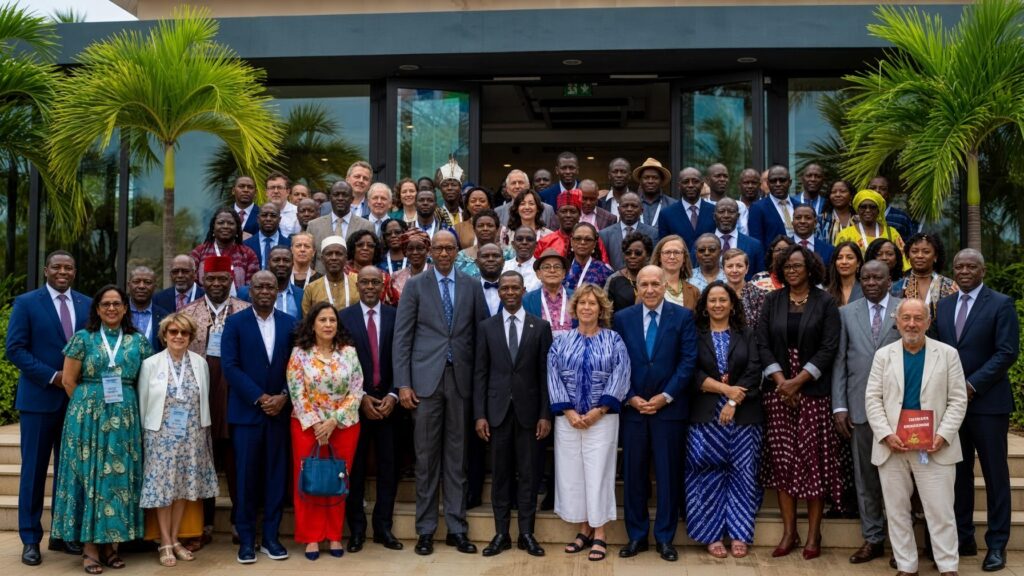
On 28 September 2026, the 16th ordinary plenary assembly of the Conference of International Non-Governmental Organisations (COING) of La Francophonie opened in Cotonou. For two days, civil society actors from across the French-speaking world are meeting to define their contribution ahead of the 20th Francophonie Summit, scheduled for 15–16 November in Cambodia, and to set a 2026–2028 roadmap.
Peace that goes beyond the absence of war
Under the theme “Reinvesting in peace: mobilising francophone civil society for shared prosperity, resilient territories and lasting stability,” the gathering stressed that peace is not merely the absence of conflict. It requires social justice, access to basic services, mediation, protection of human rights and the ability to withstand economic and security shocks.
A stronger citizen voice in decision-making
Participants called for close cooperation between states, parliamentarians and NGOs. Because citizen organisations work closest to the ground, they want a greater role in the decision-making processes of the International Organisation of La Francophonie (OIF), so that local recommendations can be turned into concrete public policies.
A pragmatic roadmap for 2026–2028
The Cotonou assembly aims to build a more operational COING. Its priorities include:
- Strengthening networks: structuring synergies among francophone NGOs.
- Mobilising resources: developing strategic financial and technical partnerships.
- Tracking impact: measuring the concrete effects of actions within communities.
By hosting this session, Benin reaffirmed its key role in francophone dialogue. Just weeks before the Cambodia meeting, civil society gathered in Cotonou is sending a clear message: the future of La Francophonie cannot be built without the active involvement of citizens and their representatives.



More Stories
Will Togo’s Faure Gnassingbé broker the breakthrough east DRC needs?
Can Nigeria’s military campaign end the kidnapping economy in the north?
Can Algeria’s expertise truly reshape Benin’s defense strategy?