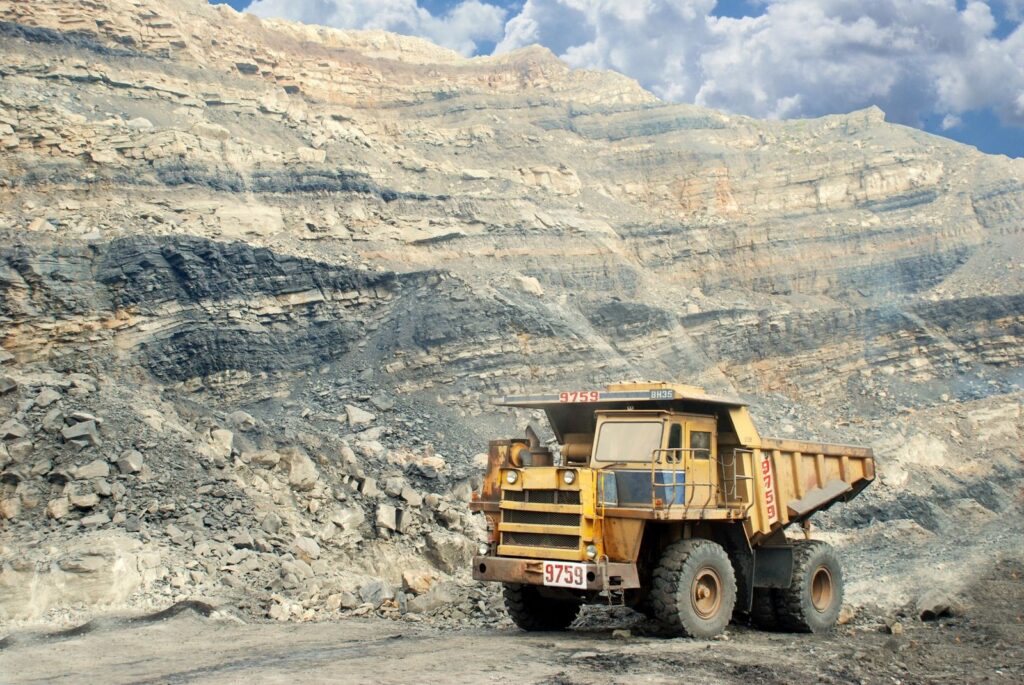
The Democratic Republic of Congo (DRC) has become an indispensable link in the supply chain of critical minerals. Cobalt, copper, lithium, coltan, and rare earth elements – the Congolese subsoil concentrates a decisive share of essential raw materials necessary for the energy transition and high-tech electronics. For Kinshasa, the question is no longer whether these resources are coveted, but how to convert them into sustainable industrial power without repeating the extractive model that has long deprived the country of added value.
The international context is in favor of the DRC. The race for electric batteries, the growing demand for semi-conductors, and the reconfiguration of logistics between Washington, Brussels, and Beijing place the country at the heart of a strategic competition. However, this geological centrality has never been enough to generate qualified jobs, stable budget revenues, and local transformation.
Turning mineral wealth into industrial fabric
The Congolese authorities’ strategy relies on a simple principle: capturing more value downstream from mining. This involves refining cobalt and copper locally, developing battery precursor production units, and, in the long term, assembling components for the continental market. The protocol signed with Zambia to create a regional battery value chain illustrates this ambition, as do the negotiations with American, European, Chinese, and Emirati partners.
In concrete terms, local transformation faces several structural obstacles. The energy deficit remains massive, despite the potential hydroelectric power of the Congo River. Logistical infrastructure costs and vulnerabilities remain high, from Katanga to ports in the Indian or Atlantic Oceans. Qualified labor is lacking in fine metallurgy and industrial chemistry fields. Each of these bottlenecks demands long-term investments, incompatible with short-political cycles.
The trap of debt and sovereignty
To finance this upgrade, Kinshasa has several levers: public-private partnerships, joint ventures backed by Gécamines, infrastructure-for-minerals trade mechanisms, and sovereign loans. Each carries risks. The trade model popularized by Sino-Congolese agreements secures construction sites but makes it difficult to evaluate the true value of ceded minerals. Classic debt from financial markets or multilateral institutions exposes the country to copper and cobalt price volatility.
Recent renegotiation of some mining contracts, particularly with Chinese partners, shows a willingness to rebalance the share of rent. The DRC seeks more revenue, increased control over exported volumes, and inscription of transformation clauses. The exercise is delicate: too much pressure discourages investment, too little perpetuates dependence. The government’s budgetary curve is narrow, especially since debt service weighs heavily on its maneuvering space.
Governance, regionalization, and 2030 horizon
The sustainability of the Congolese strategy depends also on the quality of mining governance. Cobalt artisanal tracing, combating informal circuits, transparency in contracts, respect for environmental and social norms: these demands, carried by both Western partners and Asian investors concerned with their image, become essential access conditions to markets.
Regional dimension will be crucial. The African Continental Free Trade Zone (AfCFTA) offers a framework to expand the market outlets of a future Congolese battery industry and advanced materials sector. The articulation with Zambia, Angola, and Tanzania, around the Lobito corridor and the Tazara railway, outlines the contours of an integrated production space. However, harmonizing fiscal and customs frameworks among the involved states remains essential.
At the end of the decade’s horizon, the DRC plays a decisive role. If Kinshasa manages to combine budgetary discipline, industrial growth, and diversified partnerships, it could shift from an economy of rent to one of transformation. Without this, the country’s mineral wealth will remain an unconverted potential for its hundred million inhabitants. According to Financial Afrik, the Congolese equation is now played out on the capacity to convert geological strength into effective economic sovereignty.
Going further
Mine of gold Bouboulou: Ouagadougou invests 32 billion FCFA · African Rainbow Capital wins a mining dispute in Tanzania · Zimbabwe: Bikita Minerals prepares a lithium sulfate factory