
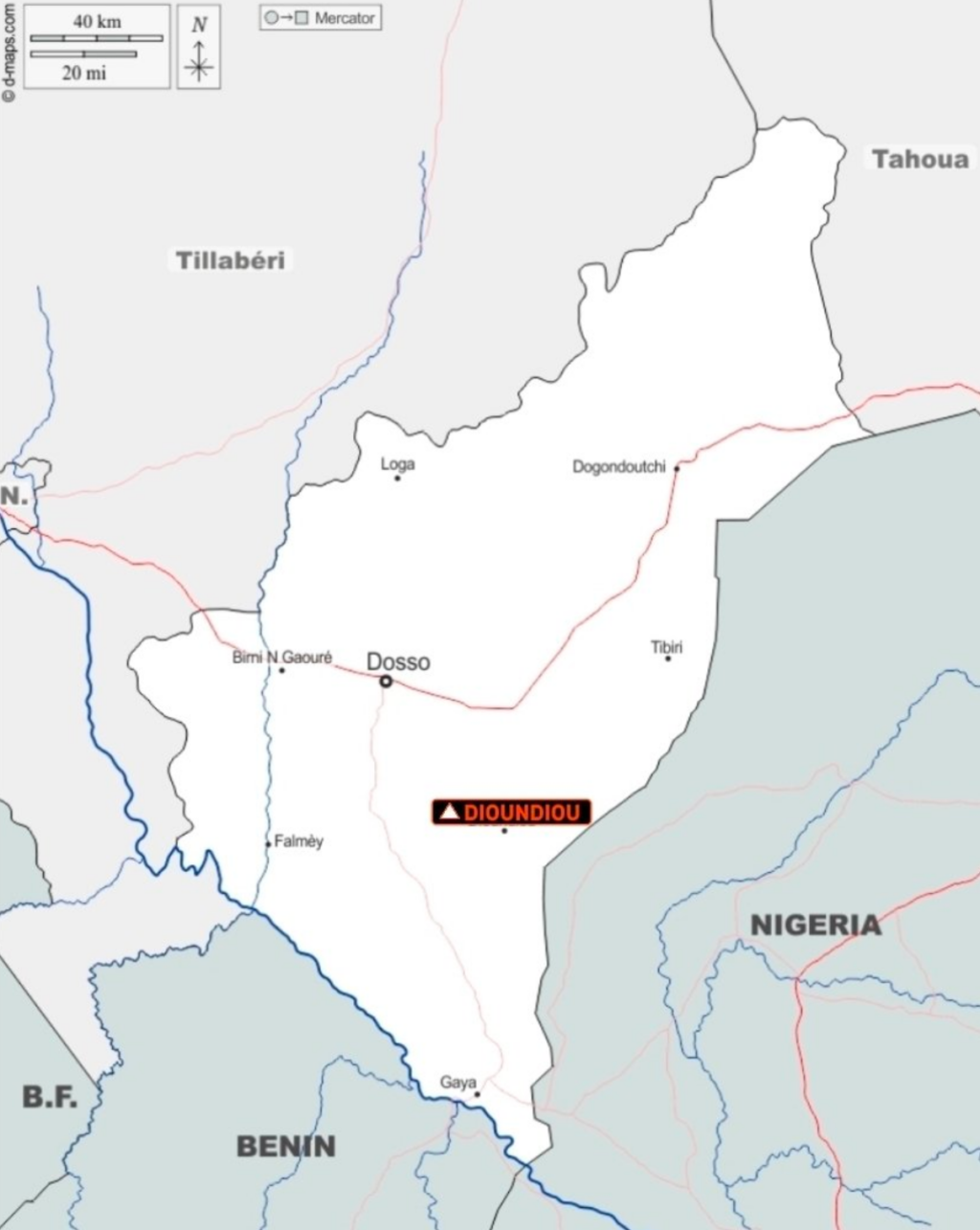
Niger’s southern region of Dosso has been plunged into deeper chaos following a series of coordinated attacks that left two villages in ruins.
Unprecedented violence rocks Libo I and Libo II
Within a span of just four days, the villages of Libo I and Libo II, located in Dioundou, became the latest targets of brutal assaults. On the night of May 25, 2026, armed assailants stormed the area, killing six civilians in a wave of indiscriminate gunfire. The attackers returned on May 28, this time with a calculated mission: to destroy what little remained.
A second wave of destruction
Returning with calculated precision, the attackers set fire to homes and granaries, reducing food reserves to ashes. Before fleeing, they stripped the survivors of nearly all their livestock, stripping these communities of their only means of survival. The psychological toll on the population has been devastating, leaving residents in a state of constant fear.
ISSP Lakurawa suspected in coordinated strikes
Local testimonies and security analyses strongly implicate the ISSP Lakurawa group, an Islamic State-affiliated faction operating in the Sahel. Known for its brutal tactics, the group has expanded its reach into previously calmer areas, exploiting porous borders and weak state presence.
The pattern of attacks—night raids, summary executions, systematic looting of livestock, and destruction of vital infrastructure—bears the hallmark of this extremist faction. For communities in Dioundou, which had until now remained relatively untouched compared to the volatile “three borders” zone, these attacks mark a disturbing shift in the conflict’s dynamics.
Military regime’s failure exposed yet again
The attacks have laid bare the National Council for the Safeguard of the Homeland’s (CNSP) inability to fulfill its core promise: restoring security nationwide. Since the 2023 coup, the security situation has deteriorated sharply, despite the regime’s shift in alliances, turning away from Western partners in favor of new strategic ties with Russian and regional forces.
Joint patrols and newly announced defense strategies have failed to shield rural civilians, leaving them vulnerable to mobile, heavily armed groups. The CNSP’s rhetoric of sovereignty and protection rings hollow in the face of such unchecked violence.
Terrorism spreads beyond rural areas
The tragedy in Dioundou is not an isolated incident but part of a growing trend of violence sweeping across Niger. Recent months have seen a surge in attacks targeting not just remote villages but also critical national infrastructure, including airports and major logistics hubs—areas previously considered secure.
If even these high-profile locations are under threat, how can isolated military outposts protect vulnerable border communities like Libo I and Libo II? The expanding reach of terrorists, coupled with their tactical advantage, underscores a systemic failure in the country’s security apparatus.
A nation at a crossroads
Today, Libo I and Libo II stand as hollowed-out shells of their former selves, with many residents displaced and struggling to survive. The loss of six lives and the devastation of livelihoods highlight the urgent need for decisive action.
The CNSP’s nationalist slogans and political posturing do little to mask the harsh reality on the ground. With groups like ISSP Lakurawa tightening their grip, Niger risks sliding further into chaos unless a fundamental reassessment of military strategies and civilian protection measures is urgently undertaken.




More Stories
Niger: Tiani faces fallout from special forces anger after Russian intervention
Mali : 17 morts dans les rangs des dozos, le JNIM accentue sa pression
Sahel : le pari des juntes tourne-t-il à l’échec sécuritaire ?