
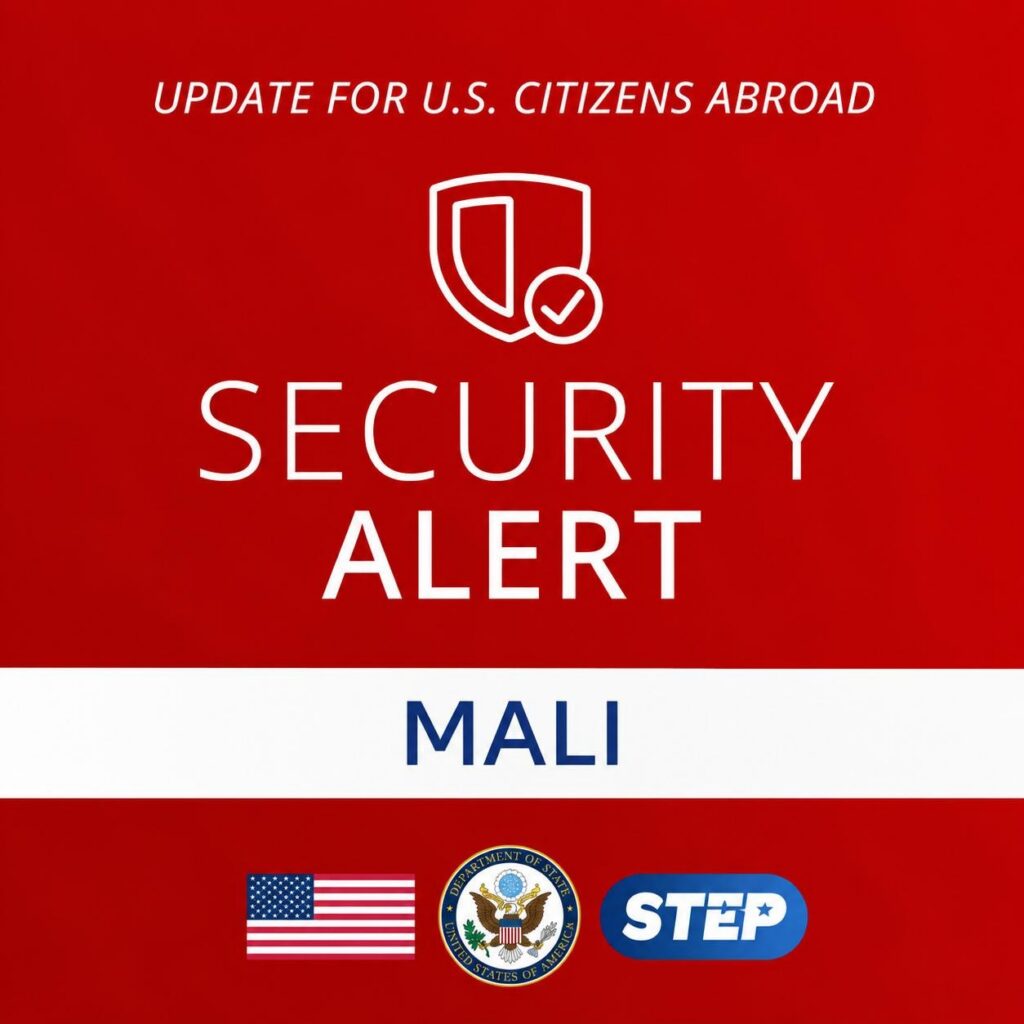
This weekend, Bamako finds itself under an unusual security spotlight as the United States Embassy in Mali issues a stringent travel advisory for its citizens. From Saturday, May 30, 2026, American nationals in the capital are strongly advised to curtail all non-essential movements, a directive that underscores the gravity of the current security landscape in Mali.
The timing and its implications
The timing of this alert is far from coincidental. In diplomatic circles, such advisories are never issued lightly or without solid intelligence backing. The restriction on movement for American citizens in Bamako suggests that U.S. intelligence services have detected credible threats or gathered actionable intelligence pointing to potential security risks during this specific period. Whether these threats stem from thwarted attack plans, suspicious movements, or precise operational indicators, the principle of maximum caution prevails.
Terrorist groups at the city’s doorstep
The alert comes at a time when Mali’s security situation remains precarious, particularly in the capital. The Group for the Support of Islam and Muslims (JNIM), Al-Qaeda’s primary Sahelian affiliate, has repeatedly demonstrated its ability to strike deep within Mali’s urban centers, including Bamako. Recent attacks on military installations and key peripheral locations have left a lingering sense of vulnerability.
Adding to the complexity is the deteriorating security situation in the country’s northern and central regions. The Permanent Strategic Framework—a coalition that has undergone recent reorganizations—has aligned with or inspired groups like the Front for the Liberation of Azawad (FLA), which continues to exert pressure on Malian armed forces (FAMa). The presence of sleeper cells and improvised explosive devices (IEDs) poses a daily challenge for Malian security forces, reinforcing the need for heightened vigilance.
Economic strangulation: a weapon of war
The impact of terrorist activities extends beyond direct attacks. A deliberate strategy of economic strangulation is unfolding across Mali’s critical road networks. Fuel tankers and commercial convoys supplying Bamako have become prime targets for militants, disrupting the flow of essential goods and services.
These blockades are not merely tactical disruptions; they are designed to instill fear and sever Bamako’s vital lifelines to the rest of the country. By cutting off fuel and basic supplies, terrorist groups aim to erode public trust in the government’s ability to secure key infrastructure. For the U.S. Embassy, the vulnerability of these routes heightens the risk of high-profile incidents in and around the capital.
Diplomatic caution in an unpredictable landscape
While Malian transitional authorities strive to reassure the public through increased patrols and checkpoints at city entrances, Western embassies adopt a more cautious stance. This disparity highlights the tension between political messaging and intelligence-driven risk assessments. For Western powers, the data speaks louder than assurances.
This weekend, Bamako will experience an intensified security presence. Malian security forces have already ramped up identity checks and vehicle inspections in several strategic neighborhoods, signaling a proactive approach to potential threats.
A city under siege
The U.S. Embassy’s alert serves as a stark reminder of Mali’s ongoing crisis management. Between the looming threat of asymmetric attacks by JNIM and the economic fallout from road blockades, Bamako remains trapped in a cycle of uncertainty. As the weekend begins, caution is the watchword for both locals and expatriates, with the hope that this heightened alert will pass without incident.



More Stories
Niger: Tiani faces fallout from special forces anger after Russian intervention
Mali : 17 morts dans les rangs des dozos, le JNIM accentue sa pression
Sahel : le pari des juntes tourne-t-il à l’échec sécuritaire ?