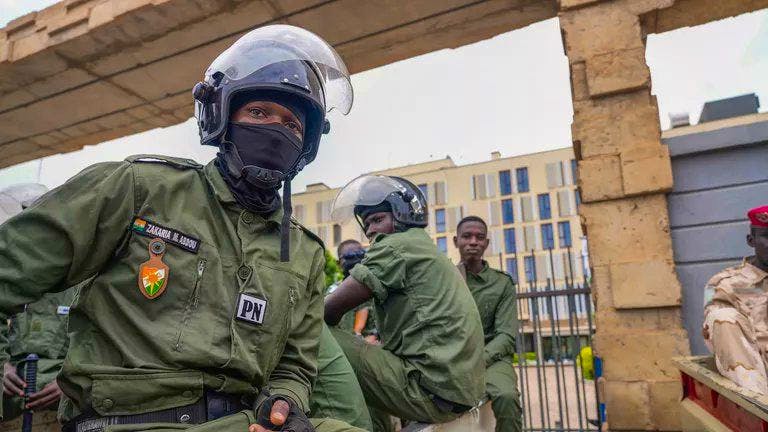
An audacious assault by suspected jihadist militants struck the heart of Niamey’s international airport on Thursday morning, leaving eleven soldiers and two civilians dead in a brutal exchange of gunfire and explosions.
what happened during the airport attack
The violence erupted just before 6:00 a.m. local time, when armed assailants opened fire near a key checkpoint on the airport’s only access road, barely hundreds of meters from the terminal. Eyewitnesses reported that some attackers detonated explosive belts as they attempted to breach the main concourse, triggering a fierce response from security forces.
According to a statement from Niger’s Ministry of Defense, the prompt intervention of security personnel prevented the attackers from reaching the terminal. The operation lasted over two hours before the area was declared secure. Despite the swift action, the attack claimed the lives of eleven defense and security personnel and two civilians, while four others were injured.
casualties and aftermath
The ministry confirmed that twenty-two assailants were killed and nearly twenty were detained during the operation. A large-scale security sweep is now underway in surrounding neighborhoods, where remaining attackers are believed to have fled. Flight tracking data shows that several incoming flights were either diverted or delayed, though the airport remains open and operational.
Local residents described chaotic scenes as gunfire echoed through the area, with attackers reportedly arriving in taxis before clashing with police units. One moto-taxi driver confirmed that many assailants were shot down, while others were captured with the assistance of civilians.
a recurring target in Niamey
This assault comes less than six months after a similar attack on January 29, which marked the first time jihadist militants targeted the airport. That incident resulted in four injuries and significant damage to infrastructure. The airport holds strategic importance, having recently handled a shipment of uranium concentrate awaiting export—though no movement of the material has been reported since.
Following the January attack, the military leadership, led by General Abdourahamane Tiani since the July 2023 coup, acknowledged security gaps and vowed to strengthen defenses. Measures implemented included extending the perimeter wall, installing over 350 surveillance cameras, and conducting a sweeping demolition of nearby neighborhoods to reduce potential hiding spots.