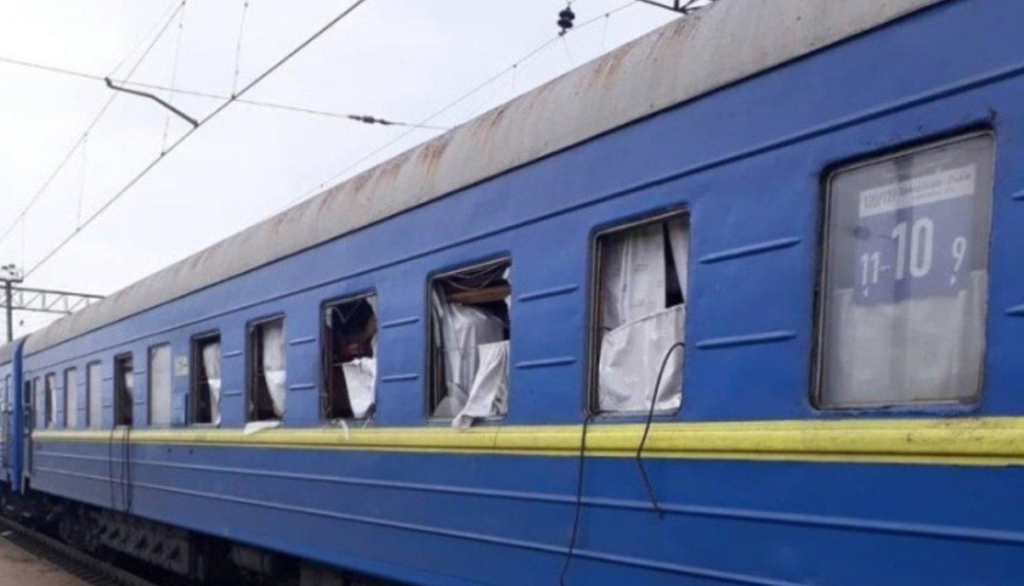
Civilian casualties mount after russian drone targets busy ukrainian railway hub
A russian jet-powered drone struck the crowded platform of Dnipro’s central train station on the morning of October 29, 2026, killing at least thirteen civilians and injuring several others. The attack occurred just as passengers were boarding Train No. 866 to Zaporizhzhia, a crucial route serving a region heavily impacted by the ongoing war. Among the dead were commuters, students, and travelers, their lives interrupted by a strike aimed directly at civilian infrastructure.
The immediate aftermath saw emergency teams rush to the scene, cordon off the area, and launch rescue operations. Local authorities confirmed that the drone’s payload detonated on a platform teeming with travelers, several of whom were still attempting to board their train when the explosion occurred. The strike’s timing—during a peak travel window—compounded the tragedy, transforming a routine journey into a scene of devastation.
Life-saving infrastructure now in the crosshairs
Ukraine’s railway system has long been a lifeline for millions, providing essential transport for civilians, refugees, and critical supply chains despite relentless attacks. Train stations have become symbolic of resilience, yet they remain among the most vulnerable public spaces in the war. This latest strike underscores a grim reality: no civilian area is safe when modern warfare prioritizes disruption over precision.
The presence of a passenger train at the moment of impact highlights the acute risks faced by travelers. Even with air raid alerts, full-scale evacuations are nearly impossible during peak hours or when trains are already in motion. Ukrzaliznytsia, the national railway operator, had issued warnings ahead of the attack, but the sheer volume of passengers at the Dnipro hub meant that not everyone could reach shelter in time. The attack left families separated, supply chains fractured, and entire communities questioning whether their next train ride could be their last.
Escalating drone threats strain Ukraine’s defenses
The Dnipro strike exemplifies the growing threat posed by jet-powered drones, which fly faster and higher than traditional unmanned systems, complicating detection and interception. Unlike slower reconnaissance drones, these jet-powered variants are designed for precision strikes, making them ideal tools for targeting critical infrastructure. For Ukraine, the challenge lies not only in intercepting these threats but also in safeguarding civilian spaces that serve as economic and social arteries.
Defense analysts warn that as Russia intensifies its drone campaign, the pressure on Ukraine’s air defense capabilities will only increase. The incident has sparked debates over whether existing protocols are sufficient to protect civilians in transit. With no clear indication of whether this was a precise strike or indiscriminate violence, the tragedy has drawn international attention to the humanitarian toll of prolonged warfare.
Political and humanitarian fallout intensifies
The attack on Dnipro’s train station has sent shockwaves through Ukraine’s political leadership. President Volodymyr Zelensky condemned the strike as a deliberate act of terror, calling for stronger diplomatic and military responses from Western allies. The timing of the assault—amid ongoing negotiations and shifting battle lines—suggests that Russia aims to cripple Ukraine’s morale and economic resilience by targeting the very systems that sustain daily life.
For the families of the victims, the consequences extend far beyond the immediate loss. Many were daily commuters, farmers transporting goods, or students returning home for holidays. Their deaths leave voids in homes, schools, and workplaces, while the injured face long recoveries under the strain of a healthcare system already stretched thin by years of war. The psychological toll is equally severe, with survivors and witnesses grappling with trauma that will linger long after the physical wounds heal.
Ukraine’s allies have responded with expressions of solidarity, yet the absence of a unified strategy to counter drone strikes leaves a critical gap in civilian protection. As the nation marks yet another attack on its infrastructure, the question lingers: how can Ukraine—and the international community—better shield non-combatants from the relentless cycle of violence?
A community in mourning, a nation on edge
In Dnipro, the city grieving its dead is also confronting a harsh reality. Train stations, once bustling hubs of activity, now evoke dread. Parents hesitate before sending their children to school, commuters weigh the risks of travel, and businesses struggle with disrupted logistics. The attack has forced a reevaluation of what safety means in wartime—a luxury few can afford.
As rescue workers sift through debris and medics attend to survivors, the death toll may rise further. Yet beyond the numbers lies a human cost that transcends borders and headlines. This is not just a story of infrastructure under fire; it is a testament to the resilience of the Ukrainian people in the face of unrelenting destruction. The question now is whether the world will act with the urgency required to protect the civilians still in the crosshairs.