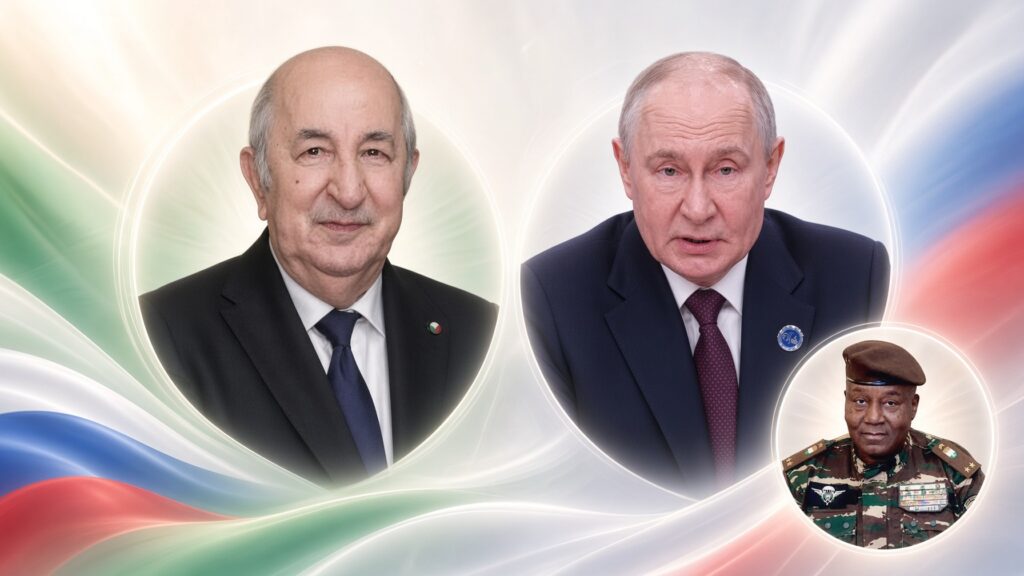
As Moscow’s diplomatic influence appeared solidified across the Sahel, geopolitical tremors surged through Niamey’s corridors of power. The Algerian Parliament’s approval of a historic troop deployment into Niger marks a seismic shift—not just for West Africa’s geopolitical map, but for the future of European energy supplies. This move dismantles Russia’s once-unassailable military dominance in the region, forcing governments and corporations to reassess the cost of Africa’s unfolding proxy war.
Why Algeria’s military intervention is a high-stakes gamble
The deployment of Algeria’s People’s National Army (ANP) into Niger is the first time in half a century that Algerian troops have crossed the border in force. But this isn’t just a symbolic act—it’s a calculated play to dismantle Moscow’s growing military and economic foothold in the Sahel. By intervening, Algeria is directly challenging the Kremlin’s carefully constructed model of supplying arms, mercenary forces, and extractive concessions to the Nigerien junta.
How Russia’s military grip on Niger is crumbling
Since the regime change in Niamey, Russia has aggressively expanded its military footprint. The Kremlin’s Africa Corps, augmented by the Wagner Group’s remnants, had secured lucrative contracts for advanced air defense systems, attack helicopters, and tactical drones—transactions worth hundreds of millions of dollars linked to concessions in oil, gas, and mining. Yet Algeria’s intervention throws a wrench into this strategy:
- End of exclusive arms dependency: Algeria’s own high-tech military, with advanced maintenance and logistical capabilities, offers Niger a viable alternative to Russian hardware. This reduces Niamey’s reliance on costly, politically binding arms purchases from Moscow.
- Undermining resource-for-security deals: Russia’s Africa Corps had used security contracts as leverage to secure mining and petroleum licenses, effectively monetizing influence. Algeria’s military presence weakens this model, reducing the Kremlin’s ability to extract long-term concessions.
- Disruption of Russian mercenary revenue streams: With Algeria capable of maintaining Soviet-era equipment—from Su-30 jets to armored units—Russia loses out on lucrative maintenance and modernization contracts, a cornerstone of its African revenue strategy.
Europe’s energy security hangs in the balance
The stakes are highest in Algeria’s effort to protect its strategic investments in Niger, particularly energy corridors vital to Europe’s gas supply. Two mega-projects now face existential risk:
- Kafra Oil Field: Operated by Algeria’s state-owned Sonatrach through its subsidiary SIPEX, this site holds tens of millions of barrels. Its stability is critical to the economic rebound of North and West Africa.
- Trans-Saharan Gas Pipeline (TSGP): This $21 billion project aims to deliver over 30 billion cubic meters of Nigerian gas annually to European markets via Algeria. Without secure transit zones, the pipeline’s feasibility becomes questionable.
Algeria’s deployment is a direct bid to seal off these assets from the reach of non-state armed groups tied to Russian-backed networks—groups whose presence threatens both production and transit.
Algiers vs. Moscow: A new geopolitical chess match
Algeria was once Russia’s top client in Africa, lavishly purchasing billions in weaponry over decades. But today, Algiers is weaponizing its own military power to counter Moscow’s agenda. By deploying forces into Niger, Algeria is forcing the junta to diversify its alliances, diluting its political dependence on the Kremlin. For Moscow, this signals a harsh reality: its Sahelian expansion, once touted as irreversible, is now stalling.
The Sahara is no longer a unipolar zone. It has become a contested battleground where yesterday’s arms deals no longer guarantee today’s military or economic dominance. For the Nigerien junta, Algeria’s move offers a rare opportunity to renegotiate terms—both financially and strategically. For Europe, it presents a fragile lifeline: a chance to reduce its reliance on Russian gas by securing alternative routes through the Sahel.
What’s next: consequences for the Sahel and beyond
The deployment has far-reaching implications. Algeria is asserting itself as the Sahel’s new power broker, countering Russian influence while reinforcing its own economic and energy interests. Meanwhile, the Kremlin is facing a humiliating setback as its Sahelian empire frays at the edges. The junta in Niamey now faces a critical choice: double down on Moscow’s failing model or diversify with Algerian protection. For global markets and energy buyers, this shift introduces new variables—volatility in supply chains, fluctuating prices, and geopolitical uncertainty in Africa’s heartland.
One thing is clear: in the sands of the Sahel, Algeria has drawn a line in the dust. The fallout from this move will echo across Africa—and into Europe—for years to come.