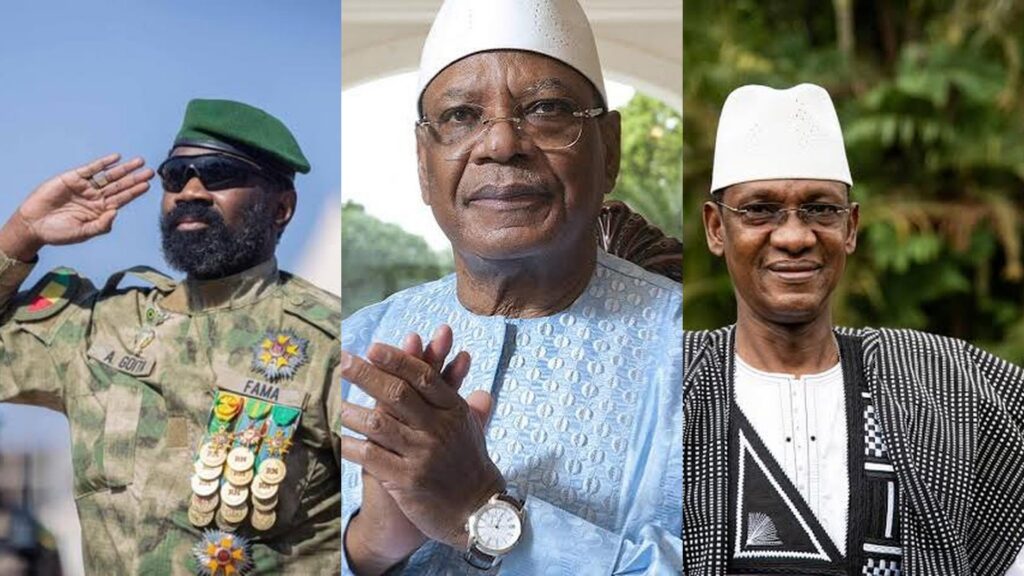
From dominance to disappearance: the decline of Mali’s political figures
The corridors of Mali’s power once echoed with the voices of seasoned politicians who shaped governments, dominated media debates, and steered the nation for decades. Today, those same voices have faded into the background—or vanished altogether. Since General Assimi Goïta and the military junta consolidated control, the political elite that once defined Mali’s democracy has been systematically sidelined, silenced, and dismantled.
Exile, prison, or silence: the tactics used to erase the old guard
The junta’s strategy has left little room for resistance. Through a combination of judicial pressure, forced exile, and institutional crackdowns, the traditional political class has been neutralized in stages. Three key methods stand out:
-
Judicial repression: Opposition leaders, former prime ministers, and party heads now face prolonged detention or trials on charges ranging from “undermining state security” to “financial misconduct.” Even those who once worked closely with the regime, like former Prime Minister Choguel Maïga, have found themselves behind bars, their influence stripped away overnight.
-
Forced exile: Rather than risk imprisonment, dozens of politicians, ministers, and civil society figures have fled to neighboring capitals like Dakar and Abidjan—or further abroad to Paris. From afar, they attempt to challenge the junta, but their voices are increasingly muffled by Bamako’s strict control over public narratives.
-
Self-censorship as survival: For those who remain, the message is clear: stay silent. Political parties have been suspended, independent media muzzled, and dissent equated with treason. Criticizing the regime now carries severe consequences, pushing even moderate voices into retreat.
The public’s shifting loyalties and the junta’s narrative
The junta didn’t just rely on repression—it also capitalized on deep public frustration. Many Malians, weary of decades of corruption, mismanagement, and unaddressed security crises under the prior political class, welcomed the military’s arrival as a chance for renewal. By blaming the traditional elite for the country’s collapse, Assimi Goïta positioned himself as the sole agent of change, a savior in a nation desperate for stability.
Yet what began as a populist push against corruption has morphed into a sustained project of political erasure. Elections have been postponed indefinitely, democratic institutions sidelined, and transition bodies stacked with loyalists. The message is unmistakable: Mali’s old political order is obsolete, and its architects will play no part in the country’s future.
What remains when opposition is erased?
The junta’s campaign to dismantle the political class has succeeded in one sense: it has dismantled the very structure of dissent. Once-powerful parties like ADEMA and RPM, which once decided the fate of governments, now operate as hollow shells. Their leaders, once untouchable, are either incarcerated, exiled, or forced into irrelevance.
But this victory comes at a cost. Without a structured opposition, Mali risks losing more than just political debate—it risks losing the chance for meaningful reform. A junta insulated from criticism may keep the country stable in the short term, but its long-term viability hinges on addressing the very issues that drove citizens to reject the old regime in the first place.
The danger of a politics without politics
As the junta’s grip tightens, Mali stands at a crossroads. The old elite is gone, its legacy buried under charges and exiles. Yet the vacuum left behind is not a blank page—it is a space primed for new narratives, ones that may not be democratic or inclusive. When voices of dissent are silenced entirely, power becomes unchecked, and the needs of the people risk being forgotten.
The question now is not just where the old political figures have disappeared to, but what will rise in their place. And whether that replacement will serve Mali—or merely the interests of those who hold the guns.