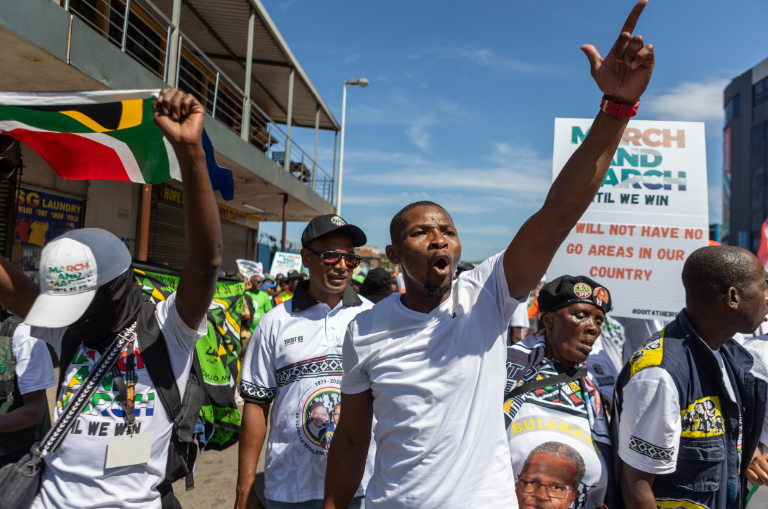
The brutal murder of a foreign national in Durban has sent shockwaves through South Africa, forcing a reckoning over the country’s spiraling xenophobic violence and its devastating human toll. As mob justice replaces the rule of law, citizens and businesses alike are left to grapple with the consequences of unchecked hatred.
What happened in Durban—and why it’s more than ‘just another incident’
On the evening of October 22, 2026, a foreign man in his thirties or forties was beaten to death by a crowd of nearly fifty people in Durban’s city center. Authorities report the victim was targeted while walking near a roadway, succumbing to his injuries before help could arrive. While his nationality and the attack’s precise motives remain unconfirmed, the timing—amid escalating anti-immigration protests—has drawn severe condemnation from human rights bodies.
The killing follows a disturbing pattern of vigilante violence targeting foreigners, particularly African migrants, in communities already strained by economic hardship and social unrest. Durban, South Africa’s third-largest city, has become a flashpoint where frustration over immigration policies has boiled over into destruction, looting, and threats against foreign-owned businesses.
Can South Africa’s government curb the tide of mob violence?
Both the African Commission on Human and Peoples’ Rights and South Africa’s own Human Rights Commission have labeled the Durban killing a possible crime against humanity—a legal classification that underscores the gravity of systemic failures. While the term requires rigorous judicial scrutiny, their warnings signal a widening crisis: one where the state’s duty to protect lives is increasingly overshadowed by unchecked mob actions.
The government now faces a critical test. Authorities must balance public demands for stricter border controls with their constitutional obligation to safeguard all individuals within South Africa’s borders, regardless of nationality. Legal experts warn that without decisive action—including immediate, transparent investigations and prosecutions—the cycle of violence could escalate further.
A justice system under pressure
For victims’ families and community leaders, the Durban case exemplifies a disturbing trend: when institutions fail to deliver justice, individuals take it into their own hands. The fatal beating reflects a broader collapse of trust in law enforcement, particularly in areas like Durban, where tensions between locals and migrants have festered for years.
Key questions remain unanswered:
- Were police or municipal authorities aware of rising tensions in the area beforehand?
- What measures are being taken to prevent retaliatory violence against foreign communities?
- Can South Africa’s legal system hold perpetrators accountable while addressing root causes of xenophobia?
Beyond Durban: How xenophobia reshapes South Africa’s social fabric
Behind the headlines lies a deeper crisis: the normalization of xenophobic rhetoric in public discourse. Political leaders, activists, and even some media outlets have amplified narratives blaming foreigners for unemployment, crime, and pressure on public services. In a nation grappling with 30%+ youth unemployment, these messages resonate dangerously.
Yet the consequences stretch far beyond policy debates. Migrant communities—many of whom are long-term residents or even born in South Africa—live in fear of harassment, eviction, or worse. Businesses owned by foreigners, from spaza shops to tech startups, have been vandalized or forced to close, draining local economies of investment and opportunity.
The Durban tragedy is a stark reminder: when hatred goes unchecked, the entire country pays the price. Tourist arrivals have dipped in coastal cities like Durban and Cape Town, while foreign investors eyeing South Africa’s markets hesitate amid reports of instability.
The continental ripple effect: What this means for Africa
South Africa’s struggle with xenophobia isn’t just a domestic issue—it threatens the ideals of pan-African unity. The African Union’s condemnation of the Durban murder highlights a painful contradiction: while the continent celebrates its history of solidarity, citizens are being hunted within its borders.
During apartheid, neighboring African nations played a pivotal role in supporting South Africa’s liberation. Today, their governments are growing vocal about Pretoria’s failure to protect migrants. The contradiction isn’t lost on observers: if South Africa’s doors remain open to African unity in theory, its streets are closing to Africans in practice.
Legal experts and activists are urging the African Commission to push for stronger regional mechanisms to monitor and sanction member states that tolerate or enable xenophobic violence. The question is no longer just about justice for one victim in Durban—it’s about South Africa’s—and Africa’s—moral credibility.
What’s next? From outrage to action
The path forward requires more than condemnation. Here’s what’s at stake in the coming months:
- Enforcement over rhetoric: Will South Africa’s government move beyond speeches and deploy resources to protect vulnerable communities?
- Economic reconciliation: Can foreign-owned businesses rebound, or will the fear of violence drive talent and capital away permanently?
- Regional accountability: Will the African Union impose concrete consequences for states that fail to uphold human rights?
- Legal precedents: Will prosecutors treat the Durban killing as an isolated act—or as evidence of a broader pattern requiring systemic change?
The death of one man in Durban has become a turning point. If South Africa fails to act, the cost won’t just be measured in lives lost—but in a fractured society, a weakened economy, and a continent’s eroding trust in its most influential nation.
What you can do to support change
For South African citizens and the global community, the choice is clear: speak out, demand accountability, and reject narratives that scapegoat the vulnerable. Supporting organizations like Lawyers for Human Rights and Migration Alliance for Africa can help amplify voices fighting for justice. Locally, community leaders can advocate for policies that integrate migrants rather than ostracize them—because safety and solidarity go hand in hand.