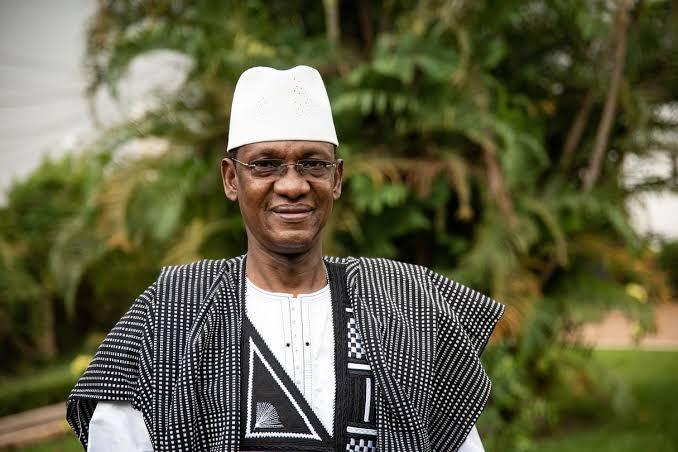
Bamako is witnessing a grim milestone: 440 days of pre-trial detention for Choguel Kokalla Maïga, a figure who once shaped the military junta’s political narrative. The relentless incarceration of Mali’s former prime minister shines a spotlight on the junta’s authoritarian drift and the fragility of its internal alliances.
The fall of a once-powerful voice in Mali’s junta
Choguel Maïga was no ordinary official. As a prominent theorist of the military-led transition, he stood at the podiums of global forums, advocating for Mali’s “reclaimed sovereignty” and defending the junta’s every strategic move. His speeches were not just rhetoric; they gave the regime its ideological backbone and bridged the divide between civilian leaders and the military command.
Yet today, he languishes in detention, a stark reminder that loyalty in Bamako’s corridors of power is conditional. The moment Maïga dared to assert his own political agenda or question the junta’s direction, his influence evaporated. His rapid downfall underscores a harsh truth: in Mali’s current political climate, even the slightest deviation from the official line carries severe consequences.
Detention as a tool of political control
The 440-day mark is no accident—it’s a calculated strategy. By stretching legal proceedings indefinitely, the junta weaponizes pre-trial detention, turning justice into a tool of suppression rather than fairness. This approach reveals glaring contradictions in the junta’s promises of institutional reform and accountability:
- The justice of fait accompli: Despite official rhetoric about dismantling impunity, the regime repeatedly relies on prolonged detentions to silence dissenters. Arbitrary detention has become the go-to method for neutralising inconvenient figures.
- The irony of self-destruction: Maïga now bears the brunt of the very security and judicial mechanisms he helped establish during his time in government—mechanisms he once championed as pillars of Mali’s transition.
- A chilling warning to politicians: His detention sends a clear message: no past service to the regime guarantees immunity. Any deviation from the official script risks severe retribution.
How 440 days of silence reveal the junta’s true nature
Bamako’s insistence on keeping Maïga behind bars isn’t just about punishing an individual—it’s a deliberate move to erase civilian influence from the transition process. By locking him up, the junta signals its intolerance for internal dissent, even among its own architects. The message is unmistakable: compliance is the only path to survival.
But this strategy has consequences. The prolonged detention of a former head of government doesn’t just harm Maïga—it broadcasts to Malians and global observers alike that the regime prioritises control over dialogue. In doing so, it confirms fears that the transition isn’t evolving toward democracy but rather toward deeper authoritarianism.
What’s next for Mali’s fractured transition?
The junta’s decision to keep Maïga detained indefinitely suggests it’s willing to sacrifice its own to maintain power. Whether this approach will stabilise the country or further destabilise it remains to be seen. What is clear, however, is that 440 days in detention without trial isn’t just a legal anomaly—it’s a political statement.
For Mali’s citizens and political class, the message is unsettling: the transition promised change, but today, it’s feeding on its own.