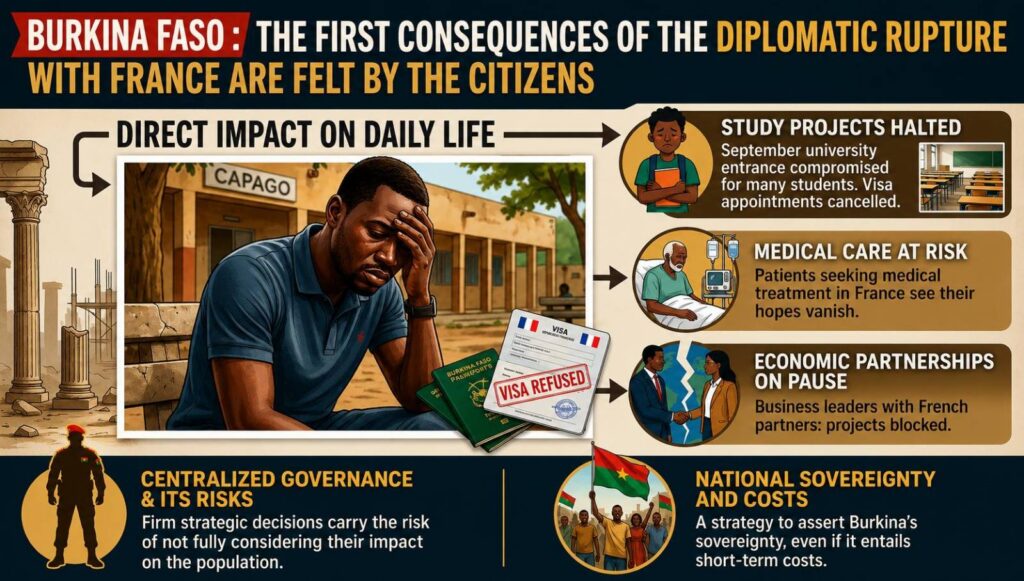
The severance of diplomatic ties between Burkina Faso and France has transitioned from political rhetoric to tangible consequences for the Burkinabè population. This shift in international relations is now manifesting in the daily lives of citizens, particularly those with aspirations involving travel to Europe.
Recently, approximately 200 individuals with pending visa applications were summoned to the CAPAGO offices. Rather than receiving the expected travel authorizations, these applicants were handed back their passports accompanied by formal rejection notices. This development has caught many by surprise, as they had maintained hope for a favorable outcome regarding their documentation.
The scope of this situation affects a diverse range of people. Among those facing these denials are patients requiring specialized medical treatment in France, entrepreneurs managing international commercial interests, and students who were preparing for their academic intake in September. Furthermore, the abrupt cancellation of appointments for student visa submissions has introduced significant instability for families planning their children’s educational futures.
The intersection of policy and personal lives
This evolution highlights a stark reality: high-level state decisions can have immediate and profound repercussions on the general public. Citizens, who are not direct participants in diplomatic negotiations, find themselves navigating the fallout of these strategic orientations.
Some observers suggest that this situation reflects a highly centralized governance style under Captain Ibrahim Traoré. Critics argue that strategic decisions are being made with a level of firmness that may overlook the practical difficulties imposed on the population. From their perspective, the administration of state affairs currently prioritizes political objectives over the immediate welfare and mobility of the citizenry.
Conversely, supporters of the administration defend these choices as essential components of a strategy to assert the sovereignty of Burkina Faso. They maintain that while these shifts may result in short-term challenges, they are necessary for the country’s long-term independence and dignity.
A future in limbo for many citizens
Regardless of the political interpretation of this diplomatic rupture, the human impact is undeniable. Hundreds of Burkinabè are currently witnessing the sudden interruption of their educational, medical, and professional projects. Beyond the realm of international politics, these decisions affect real lives and families whose future prospects have been rendered uncertain.