
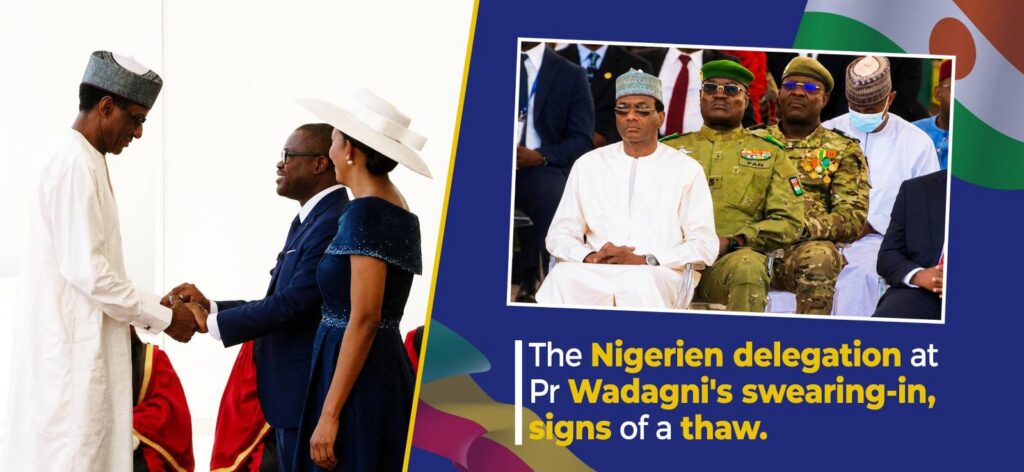
The official ceremony in Cotonou witnessed an unprecedented diplomatic development, as the Prime Minister of Niger’s transitional government, accompanied by the Foreign Ministers of Burkina Faso and Mali, made a high-profile appearance, suggesting a significant shift in regional relations.
An unexpected yet pivotal moment unfolded on the steps of Benin’s official premises. During the inauguration of Romuald Wadagni’s new role, Ali Mahamane Lamine Zeine, Niger’s Prime Minister, personally traveled to Cotonou, the country’s economic capital.
Geopolitical implications of the visit
This official visit extends beyond mere protocol, carrying substantial geopolitical weight. It coincides with a period of heightened tensions between Niger and Benin, marked by persistent disagreements since mid-2023. These disputes have centered on critical issues, including the prolonged closure of their shared border and recurring disputes over the transportation of Nigerien oil through the Port of Sèmè-Podji.
The AES front in full display
Ali Lamine Zeine’s arrival was not an isolated gesture. The Nigerien Prime Minister was accompanied by a strategic delegation, including the Foreign Ministers of Burkina Faso and Mali. The joint presence of the three member states of the Alliance of Sahel States (AES) at a Beninese official event underscores two key interpretations:
- Economic diplomacy remains intact: Romuald Wadagni, a pivotal figure in Benin’s financial architecture and a frequent interlocutor with international institutions, continues to maintain open channels of communication with Sahelian authorities.
- Thaw in relations: Following months of logistical and customs disruptions at Benin’s northern border, the attendance of Niger’s transitional leadership in Cotonou signals a mutual willingness to ease tensions.
Economic imperatives driving the visit
While the political fallout from the July 2023 coup in Niamey has strained institutional ties, economic realities appear to have regained precedence. Benin is grappling with substantial revenue losses due to the border blockade, while Niger faces mounting logistical hurdles affecting its exports and critical supply chains.
At the heart of the matter lies the Gordian knot of a land border that has remained closed for nearly three years, stifling historic trade corridors. This high-level meeting could lay the groundwork for a technical reopening timetable.
By successfully convening Niger’s Prime Minister alongside the top diplomats of Mali and Burkina Faso, Cotonou has secured a significant diplomatic respite. It serves as a reminder that, despite ideological fractures across the region, geographical proximity and financial pragmatism remain the shared denominators driving regional dynamics.



More Stories
Niger: Tiani faces fallout from special forces anger after Russian intervention
Crisis in Niger, IMF agreement in Sénégal, and Moroccan elections: Five essential stories
RDC-Israël : un rapprochement aux enjeux multiples