
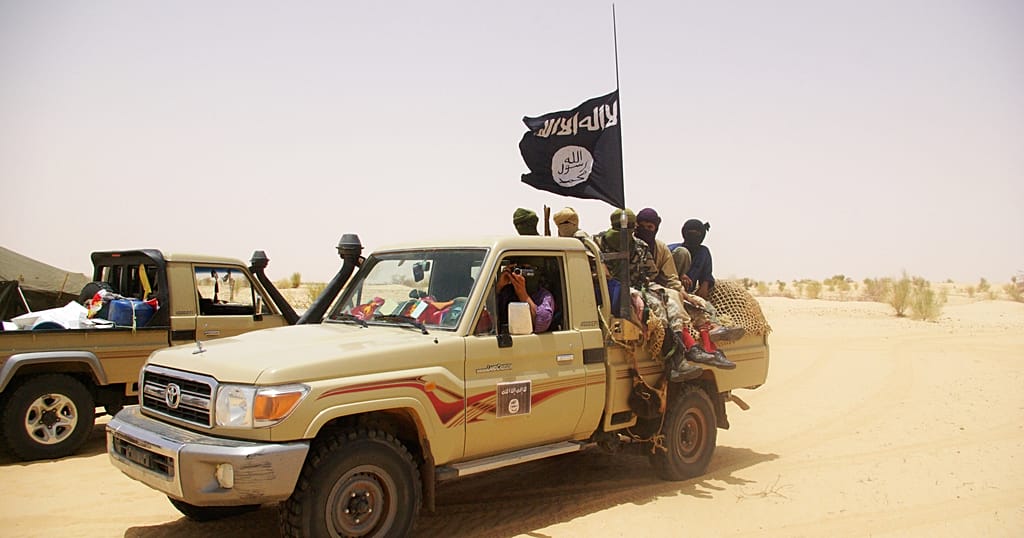
For the first time in three decades, residents of Bamako will celebrate Tabaski away from their hometowns this year. The festive tradition, deeply rooted in Malian culture, has been disrupted by a tightening jihadist blockade around the capital.
Alpha Amadou, a 40-year-old native of Mopti in central Mali, has spent years traveling back to his village for the holiday. This year, he won’t make the journey. « This is the first time in thirty years that I’ll be celebrating Eid in Bamako, » he shared.
Since late April, fighters from the Sahel branch of Al-Qaïda have enforced roadblocks on key routes into Bamako, torching buses and cargo trucks. Though the blockade remains partial, the sight of charred vehicles has deterred transport services and travelers from risking the trip.
Tabaski in Mali is more than a religious observance—it’s a vital social tradition where families, often separated for months due to work, reunite. Yet this year, the usual pre-holiday bustle in Bamako’s bus stations has vanished. Beyond security fears, fuel shortages have crippled the transport sector.
Transport sector grapples with losses and delays
A local travel agency owner, speaking anonymously, described the impact: « We’re not only running low on diesel, but recent attacks have destroyed several buses. It’s a severe economic blow. »
Typically, transport companies ferry over 50,000 passengers from Bamako to other regions in the lead-up to Eid al-Adha. This year, one operator admitted, « We’ve canceled all scheduled trips. »
Wara Bagayoko usually drives his family from Bamako to Ségou for the celebrations. This year, he won’t. « Even private cars are being targeted, » he said. « It’s the first time in thirty years I won’t be with my family for Tabaski. The roads are too dangerous. »
Oumar Diarra echoed the sentiment. « We used to ride together on motorcycles to Sikasso in the south. Now, we’ll stay in Bamako. » Some minibuses still navigate secondary routes under military escort, but options are slim.
Rising costs and scarcity of sacrificial animals
The blockade has also strangled the livestock trade, critical for the Eid al-Adha sacrifice. Traders struggle to transport animals to Bamako, the country’s main consumption hub.
Alassane Maiga, a transporter, reported a staggering surge in costs: « Moving an animal now costs 15,000 to 18,000 CFA francs (26–31 dollars), up from the usual 2,500–2,750 francs (4–5 dollars). »
The scarcity and inflated prices have left consumers reeling. « Djihadists have burned trucks full of sheep, » said Hama Ba, a Bamako merchant. « Normally, I’d have over 1,000 animals in stock. Now, I have none. »
Iyi, searching for an affordable sheep, noted the stark contrast: « Before, we could buy sheep for 75,000 francs. Now, they’re selling for 300,000 francs. Choice is gone—they’re almost impossible to find. »
Daily life disrupted: power and water shortages
The security crisis is seeping into everyday life as essential services falter. Bamako faces prolonged power cuts and severe shortages of clean drinking water, compounding the challenges of the holiday season.



More Stories
Côte d’Ivoire’s coffee and cocoa sector prepares for new campaign with crucial price announcements
Ebola and conflict: a deadly combination in eastern DRC
Morocco azrou college that shaped berber elite