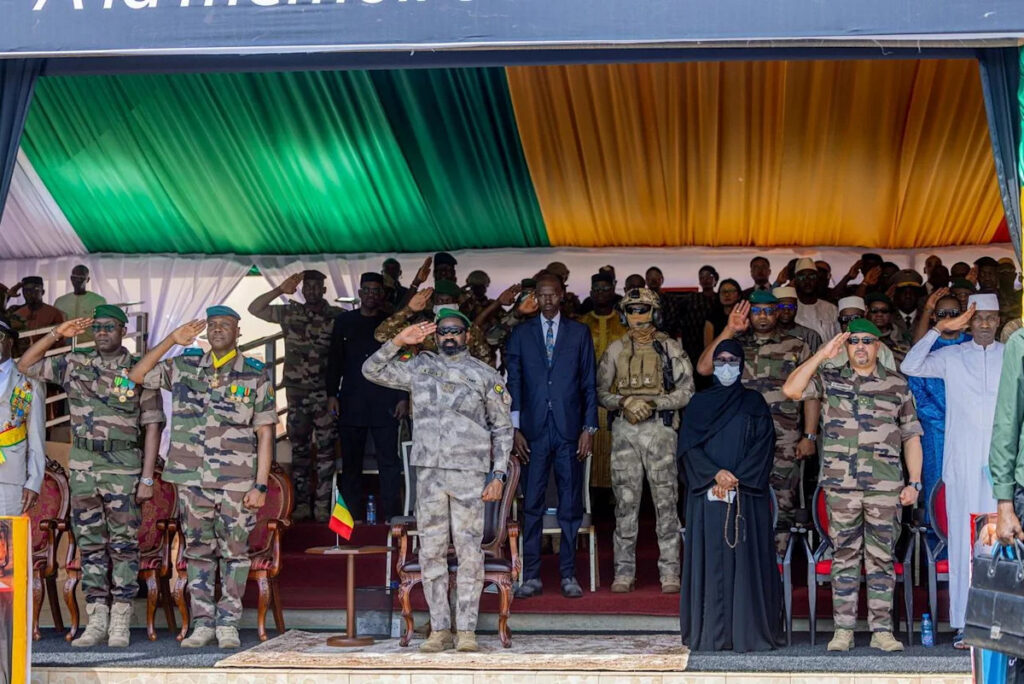
What once seemed unthinkable has now become official. In a dramatic reversal, Mali and Algeria have restored full diplomatic relations, marking the end of more than a year of frozen ties. The announcement came just days after both nations simultaneously reopened their airspaces to each other’s aircraft—a symbolic yet significant gesture that signals a new chapter in their relationship.
This rapprochement follows months of tense exchanges. As recently as February 2026, Bamako had dismissed reports of its ambassador’s return to Algiers as “deliberate misinformation”, accusing unnamed actors of attempting to destabilize the government. Officials went so far as to label such claims “completely false and baseless,” while denying any alignment with neighboring Niger, which had already mended fences with Algeria earlier in the year.
The shift in stance came swiftly. On July 10, Mali’s transitional government issued a statement—Communiqué No. 2026-003—confirming the return of its ambassador to Algeria and the resumption of unrestricted air travel between the two countries. Hours later, Algiers reciprocated by announcing its own ambassador’s return to Bamako. What had begun as a slow thaw had, in a matter of hours, become a full diplomatic restoration.
Security pressures drive regional realignment
The catalyst for this reconciliation lies in the shifting sands of the Malian north. Since late April 2026, coordinated offensives by the Tuareg-led Azawad Liberation Front (FLA) and the Group to Support Islam and Muslims (JNIM), an Al-Qaida affiliate, have forced Bamako into a precarious position. These groups, once adversaries, have united against a common foe: the Malian junta and its Russian-backed allies, the Africa Corps. The loss of Mali’s Defense Minister, Sadio Camara, during the clashes near Kidal underscored the gravity of the situation and thrust the northern city back into the spotlight as a hotspot of regional instability.
The offensive has not only weakened Mali’s grip on the north but also exposed vulnerabilities that extend beyond its borders. With Niamey and Ouagadougou also seeking closer ties with Algiers, the Algerian capital has positioned itself as a pivotal mediator in the Sahel, leveraging its influence to broker stability where other regional powers have struggled.
For Bamako, the decision to reconcile with Algiers represents more than a diplomatic gesture—it is a strategic necessity. The junta, facing mounting military setbacks and international isolation, has little choice but to seek new alliances. Algeria, with its long-standing influence in the region and experience in conflict mediation, offers a lifeline. The simultaneous reopening of airspaces serves as both a confidence-building measure and a tangible step toward rebuilding trust.
While the road to full reconciliation remains long, the rapid normalization of relations between Algeria and Mali signals a turning point in the Sahel’s fragile geopolitical landscape. As Bamako recalibrates its alliances and Algiers expands its diplomatic footprint, the implications for regional security—and the balance of power in West Africa—could be profound.