« Natural wealth transforms into a blessing only when it strengthens a nation’s sovereignty rather than fueling its instability. » This principle now guides the Democratic Republic of the Congo’s bold diplomatic shift on the world stage.
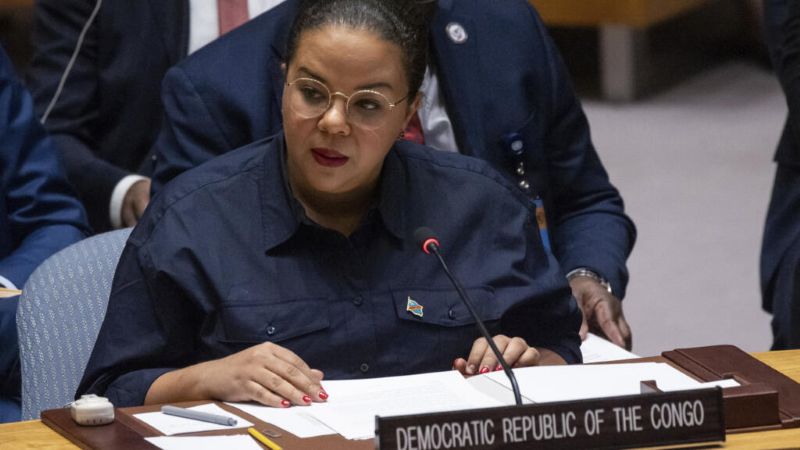
In a decisive move at the United Nations, Kinshasa has not merely defended its economic interests—it has launched a scathing critique of a global system it deems fundamentally unfair to resource-rich countries. Speaking at the High-Level Meeting on Critical Minerals for the Energy Transition, the DRC made a powerful case for reimagining how the world governs the minerals essential to electric vehicles, digital technologies, and renewable energy.
From raw exporter to industrial leader: A vision for the DRC
Foreign Minister Thérèse Kayikwamba Wagner delivered a speech that was as much a geopolitical statement as it was a diplomatic address. She argued that the global energy transition cannot be called just if producing nations continue to export unrefined minerals without capturing the added value generated by processing and manufacturing.
« The time has come to ask not just where critical minerals come from, but where the value they create actually remains, » she declared, calling for investments in infrastructure, energy, research, technology, and the modernization of artisanal mining in the DRC.
The minister made it clear: the DRC is no longer willing to be confined to the role of a mere supplier of raw materials. Instead, Kinshasa is positioning itself as a future African hub for the industrial transformation of critical minerals, essential for batteries, digital infrastructure, and clean energy systems.
To achieve this, the government is pushing for international partnerships built on technology transfer, capacity building, and a fairer distribution of wealth across global value chains.
Rwanda under scrutiny: illicit mineral trade linked to armed groups
The DRC’s diplomatic offensive extended beyond economic ambitions—it directly confronted the security crisis in the country’s eastern regions. Minister Kayikwamba cited findings from a UN expert panel, highlighting the case of Rubaya, a mining zone supplying nearly 15% of the world’s tantalum demand.
According to the experts, at least 1,400 tons of coltan were illegally smuggled into Rwanda after the M23 rebel group—backed by Kigali—took control of the area. These operations reportedly generate approximately $800,000 monthly for the armed faction, yet Rwanda has not faced UN sanctions despite these accusations.
The foreign minister condemned this situation, calling it a failure of the international system to curb the financing of conflicts through the illicit exploitation of natural resources. She emphasized that without stronger accountability across the supply chain—from miners to industrial buyers—efforts to combat fraud and armed group financing will remain ineffective.
A call for systemic change in global mineral governance
During its presidency of the UN Security Council, the DRC is advocating for a more integrated approach linking natural resource governance to international peace, security, and sustainable development. The goal? To ensure that mineral traceability is used not to penalize legitimate artisanal miners, but to dismantle smuggling networks and cut off revenue to armed groups.
This diplomatic push represents more than a plea for fairer trade—it is a demand for a complete overhaul of how the world manages the transition to cleaner energy. The DRC is insisting that producing nations must finally benefit from the economic returns of their natural wealth, rather than watching as those profits enrich foreign industries and distant financial centers.
By taking this stance at the UN, Kinshasa is not only defending its own interests—it is reshaping the global conversation on critical minerals, tying resource governance to peace, security, and equitable development across the African continent and beyond.